2026 Best Automatic Weigh Price Labelling Machines?
Choosing the 2026 best Automatic Weigh-Price Labelling Machines requires more than comparing speed.
A reliable machine must weigh accurately, calculate prices consistently, and apply readable labels. It should handle changing product sizes without creating excessive waste. In a busy fresh-food line, small errors become expensive quickly. A misplaced label can stop production. A slow printer can leave workers waiting beside the conveyor.
Thomas R. Cutler, a manufacturing automation analyst and founder of the Manufacturing Media Consortium, states, “Automation earns its value through repeatability, visibility, and operator control.” This principle fits modern weighing and labelling operations. The strongest systems combine precise load cells, intuitive software, fast thermal printing, and traceable production data. They also support practical cleaning routines. Hygiene matters every day.
Not every expensive machine is the best choice.
This guide compares leading Automatic Weigh-Price Labelling Machines for 2026 through operational details, not promotional claims. We examine weighing accuracy, throughput, label flexibility, software integration, maintenance access, and total ownership cost. Energy use and staff training also deserve attention. They are often overlooked.
Real factories are rarely perfect. Product moisture changes. Packages arrive unevenly. Operators make mistakes. A machine that performs well only in ideal conditions may disappoint on Monday morning. That is why this outline considers field experience, supplier support, and long-term reliability alongside technical specifications. The final ranking may still involve judgment. However, clear criteria make that judgment more useful, transparent, and easier to challenge.
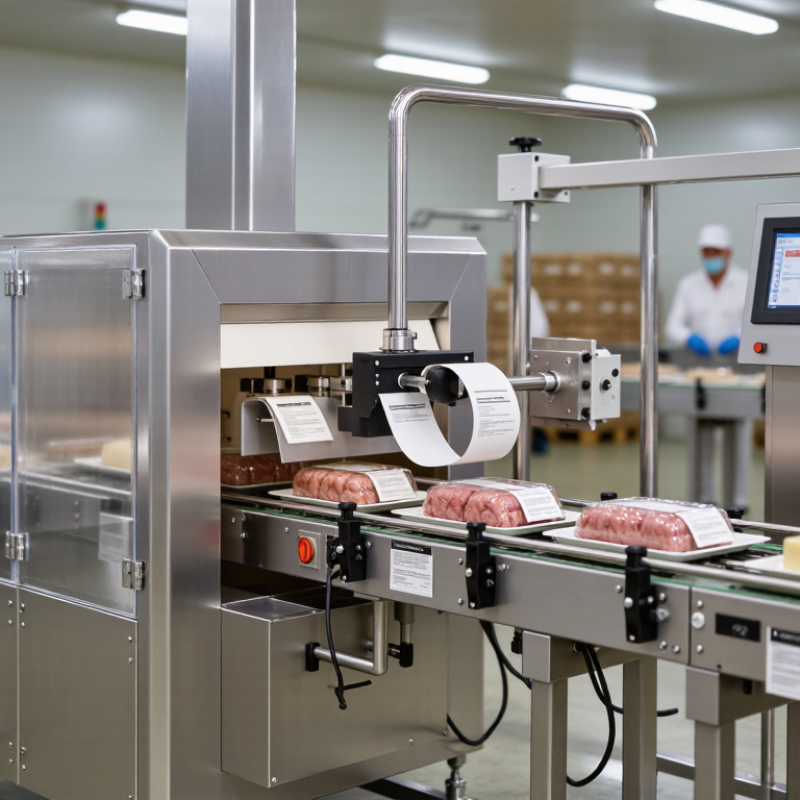
What Are Automatic Weigh Price Labelling Machines?
An automatic weigh price labelling machine combines a weighing scale, conveyor, control software, and label applicator. It weighs each product, calculates its price, and prints product information in real time. The label may show weight, unit price, total price, production details, or traceability data.
Inside the machine, load cells detect weight changes within seconds. Software then compares the result with stored product settings. A printer applies the correct label to the tray, pouch, or container. Some systems also remove products outside the permitted weight range.
According to the 2024 UNEP Food Waste Index Report, households and food services wasted about 1.05 billion tonnes of food in 2022. Accurate portion control cannot solve this problem alone, but it can reduce avoidable overfilling and pricing errors.
The best 2026 models should offer stable weighing, fast label changes, clear data records, and simple cleaning access. GS1’s standards work also highlights the value of consistent product identification across supply chains. In practical use, operators should test labels, sensors, and barcode readability every shift. Calibration still matters. A dirty conveyor can affect results. Labels can drift. Even advanced equipment needs trained staff, suitable product settings, and routine verification. The choice should match product shape, moisture, speed, and required label information, rather than relying only on advertised output.
How Do Automatic Weigh Price Labelling Machines Work?
An automatic weigh price labelling machine combines a conveyor, load cells, control software, and a label applicator. Products enter on a moving belt and pass over a weighing platform. The load cells detect force and convert it into a digital weight reading. A stable reading matters. Vibration, belt movement, and uneven product placement can create errors. The controller checks the weight against programmed product data, including tare, unit price, and label format. It then calculates the sale price using the measured net weight.
When the calculation is approved, a printer produces a label with product details, weight, price, time, and traceability information. An applicator places it on the package, often near the top or side. Sensors confirm package position and label presence. If a reading falls outside an assigned range, the system can pause or divert the item for inspection. This step protects data quality, but it still needs trained staff. Automation does not replace judgment.
In daily operation, technicians should verify zero readings, clean the weighing surface, and check label alignment. Calibration should follow equipment instructions and applicable measurement requirements. Cold rooms create practical problems. Condensation, sticky packaging, and changing product temperatures may affect performance. The process is not flawless. A rushed setup can produce neat labels with incorrect information. Reviewing sample packages, print clarity, and recorded weights helps reveal weaknesses before routine production. Operators should document adjustments instead of trusting the display alone.
Which Features Define the Best Machines in 2026?
The best automatic weigh price labelling machines in 2026 do more than print a price. They connect accurate weighing, label application, and production records in one controlled workflow. A high-resolution load cell should remain stable near zero, even when trays arrive quickly. In practical testing, repeatability matters more than a dramatic top-speed claim. Operators also need tool-free cleaning access, sealed controls, and food-contact surfaces that tolerate daily sanitation. Small gaps become large maintenance problems.
Software now defines much of the machine’s value. A strong system stores product data, label layouts, tare values, and audit trails with clear user permissions. It should exchange data with inventory or enterprise systems through reliable network interfaces. A bright screen, barcode scanner, and guided fault messages reduce training time. The best interfaces show the actual cause of an error, not only a code. That detail saves minutes beside a busy line. Cybersecurity deserves attention too, although many buyers still treat it as an afterthought.
Flexible machines support different tray sizes, film types, label positions, and weighing ranges without lengthy changeovers. Servo-controlled feeding can improve placement accuracy, but only when the infeed is aligned and maintained. No machine is perfect. Humidity, vibration, sticky products, and rushed calibration can still damage results. Buyers should request live trials using their own packaging, then inspect rejected labels, weight variation, cleaning time, and operator workload. A polished demonstration can hide inconvenient habits.
2026 Best Automatic Weigh-Price Labelling Machines
Which Features Define the Best Machines in 2026?
Throughput is shown as a typical reference value for different machine configurations. In 2026, the strongest systems combine reliable checkweighing, high-speed label application, automatic product recognition, clear thermal printing, quick format changeovers, stainless-steel construction, and data connectivity for production traceability. Actual performance depends on product size, pack shape, label format, and legal-metrology requirements.
How to Compare Machine Types, Accuracy, and Production Capacity
2026 Best Automatic Weigh Price Labelling Machines?
Choosing an automatic weigh price labelling machine starts with the product, not the advertised speed. Linear weighing systems suit stable products with moderate variation. Multihead systems usually handle mixed portions and higher output more effectively. Integrated checkweighing and labelling lines add control, but they require more floor space and maintenance. Compact systems work well for smaller batches, although frequent refilling can reduce real production capacity.
Accuracy depends on more than the load cell. Vibration, uneven product flow, moisture, and changing package sizes can affect every reading. During machine trials, test the exact product, tray, and film used in production. Record average error, rejected packs, label position, and changeover time. A machine that reaches 60 packs per minute in a demonstration may manage only 42 with sticky or irregular products. That gap matters.
Capacity should be measured through a complete shift, not one short test. Ask for stable output, cleaning time, operator workload, and downtime data. Check whether the software stores weight records and supports traceable adjustments. In my experience, simple controls often outperform complicated interfaces during busy shifts. Still, manual inspection remains useful. Sensors can drift, labels can wrinkle, and packaging can change unexpectedly. A practical comparison should include training, spare parts, calibration routines, and the cost of rejected packs. The cheapest machine may become expensive when small interruptions happen every hour.
2026 Best Automatic Weigh Price Labelling Machines? - How to Compare Machine Types, Accuracy, and Production Capacity
| Machine Type | Typical Product Format | Typical Speed | Typical Weighing Accuracy | Common Weight Range | Label Application | Best Production Capacity | Typical Footprint | Relative Investment | Main Advantages | Important Limitations |
| Static Weigh-Price Labeller | Preformed trays, tubs, cartons, and rigid packs | 15–35 packs/min | Typically ±1–3 g | 50 g–15 kg | Top, side, or bottom | Low to medium | Approx. 1.5–3.0 m² | Low | Simple operation, flexible pack handling, suitable for varied product weights | Lower throughput and more manual product loading |
| In-Line Weigh-Price Labeller | Trays and sealed packs transported on a conveyor | 40–100 packs/min | Typically ±1–2 g | 100 g–20 kg | Top, side, or wrap-around | Medium to high | Approx. 2.5–5.0 m² | Medium | Good line integration, consistent label placement, reduced labor | Requires stable pack spacing and conveyor synchronization |
| Checkweigher with Price Labeller | Finished packaged food, produce, meat, seafood, and prepared meals | 60–150 packs/min | Typically ±0.5–2 g | 50 g–25 kg | Top, side, or bottom | High | Approx. 3.0–6.0 m² | Medium to high | Verifies target weight, rejects underweight packs, supports traceability | Needs accurate product spacing and regular calibration |
| Multi-Head Weighing and Labelling Line | Loose products filled into trays, pouches, or containers | 40–100 weighments/min | Typically ±0.2–1 g | 10 g–5 kg | Applied after filling and sealing | Medium to high | Approx. 5.0–12.0 m² | High | High portioning accuracy, minimizes giveaway, suitable for repetitive products | Higher capital cost, more complex setup, less suitable for fragile or sticky products |
| Rotary Weigh-Price Labeller | Uniform trays, cups, and rigid containers | 50–120 packs/min | Typically ±1–2 g | 50 g–10 kg | Top or side | Medium to high | Approx. 3.0–7.0 m² | Medium to high | Stable product positioning and rapid indexing between weighing stages | Best results require consistent container size and shape |
| Manual-Load Automatic Label Scale | Irregular cuts, fresh meat, seafood, bakery, and produce | 10–30 packs/min | Typically ±1–3 g | 50 g–15 kg | Top or side | Low to medium | Approx. 1.0–2.5 m² | Low to medium | Handles irregular products and frequent product changes with limited automation | Labor remains significant and output depends on operator loading speed |
How to compare machines: Confirm the required pack weight range, product dimensions, label position, line speed, acceptable weight tolerance, washdown requirements, data connectivity, reject requirements, and available floor space. The figures above are typical operating ranges; actual performance depends on product characteristics, pack stability, environmental conditions, label size, and machine configuration.
How to Choose the Right Machine for Your Business
Choosing an automatic weigh price labelling machine starts with your products, not the machine’s advertised speed. Measure your usual package range, product shape, moisture, and daily output. A machine handling soft produce may perform poorly with sticky or irregular items. Request a live test using your actual products. Small differences matter.
Accuracy should remain stable during long shifts. Check the weighing resolution, calibration process, label readability, and printer performance. The machine should support your required label sizes, weights, prices, dates, and traceability information. Confirm whether operators can change settings easily. Complicated menus create avoidable mistakes. Cleaning access also matters, especially around conveyors and weighing areas.
Tips: Compare total ownership costs, not only the purchase price. Include installation, training, spare parts, software updates, energy use, and routine maintenance. Ask for documented accuracy tests and response times for technical support. A service agreement can protect production, but read its limits carefully. During evaluation, record rejected packages, label jams, and changeover time. One weakness may appear after several hours, not during a short demonstration. I have found that “automatic” does not always mean effortless. Operators still need training and regular checks. A cheaper machine may become expensive when cleaning takes too long or support is difficult to reach. Leave room for future products, but avoid paying for features your team will never use.

