What Are the 2026 Top Lightweight TPE Compound Types?

What Are the 2026 Top Lightweight TPE Compound Types?

In 2026, Lightweight Tpe Compounds are gaining attention across automotive interiors, consumer products, footwear, and soft-touch electronics. Their appeal is practical: lower part weight, easier handling, and improved material efficiency. Yet lightweight design involves more than reducing density. Engineers must also protect softness, tear strength, surface quality, and dimensional stability.

This guide examines the leading compound types expected to shape the market. These include foamed TPE grades, low-density SEBS compounds, lightweight TPV formulations, and selected TPU systems. Each type offers a different balance. Foamed grades can reduce weight significantly, but their cell structure may affect sealing performance. SEBS compounds provide a smooth touch and flexible processing. TPV materials often deliver stronger heat and weather resistance. TPU can support demanding wear applications, although its cost may remain higher.

Real production decisions require more than supplier brochures. Laboratory testing should measure density, tensile strength, compression set, abrasion, aging, and processing consistency. Small differences can become visible on a vehicle console or a handheld product. Mold design matters too. A lighter formulation may fill unevenly or show surface marks.

No single grade wins every test. That is important. Some 2026 forecasts may overstate performance gains without discussing tooling changes or recycling limits. Buyers should request traceable data, verified samples, and application-specific trials. This introduction sets a practical foundation for comparing the top Lightweight Tpe Compounds and selecting options with credible performance, not attractive claims alone.
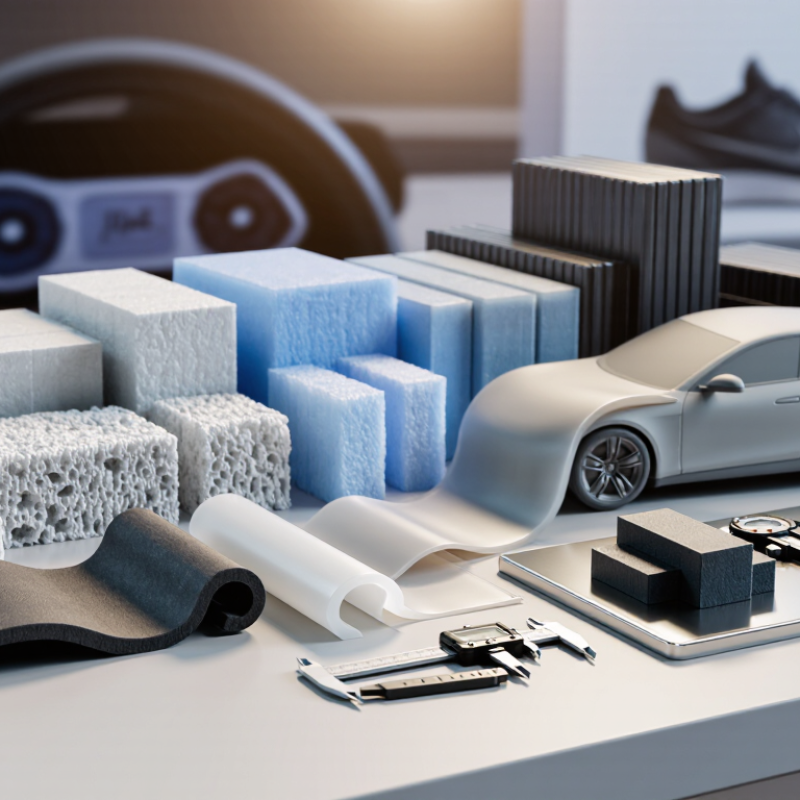
What Are the 2026 Top Lightweight TPE Compound Types?

How 2026 Lightweight TPE Compounds Are Classified by Density and Chemistry

What Are the 2026 Top Lightweight TPE Compound Types?

Lightweight TPE compounds are classified by density and chemical family. Density shows how much material is used in a molded part. Chemistry predicts flexibility, heat resistance, recovery, and processing behavior.

Density Classification

Very-low-density compounds often use controlled foaming or lightweight fillers. They may feel soft and cushion-like, but their surface can become less uniform. Low-density compounds usually balance weight reduction with better dimensional stability. Medium-density grades offer stronger tear resistance and more consistent sealing. These ranges are not universal. Each compound supplier may define them differently.

Chemical Family Classification

Styrenic block copolymers support soft grips, seals, and flexible covers.

Thermoplastic polyolefins provide low density, chemical resistance, and efficient processing.

Thermoplastic polyurethanes offer strong abrasion resistance, although they can be heavier and more moisture-sensitive.

Thermoplastic vulcanizates combine rubber-like recovery with thermoplastic processing.

Thermoplastic polyester elastomers suit demanding temperature and fatigue applications, but cost and density require careful review.

Tips:

Compare density after molding, not only in the datasheet. Check compression set, hardness, tensile strength, and cell structure. A lighter compound is not automatically better. Test the finished part.

In practical development, engineers should match chemistry with the part’s real environment. A lightweight seal may need stable compression after repeated heating. A soft handle may need grip and clean appearance.

My own caution is simple: density targets can distract from durability. Weight reduction should be measured beside performance, not alone.

Foamed SEBS Compounds: 0.65–0.90 g/cm³ for Soft-Grip Applications

What Are the 2026 Top Lightweight TPE Compound Types?

Foamed SEBS compounds are gaining attention for soft-grip parts, especially handles, seals, and wearable components. Their typical density ranges from 0.65 to 0.90 g/cm³. This is substantially lighter than many solid TPE grades. Lower density can reduce part weight without removing the elastic feel users expect. The surface often feels warm and slightly cushioned. That matters in hand-held products.

A 2024 market assessment by Grand View Research identifies automotive, consumer goods, and medical products as major TPE demand sectors. These applications increasingly value lightweight design and tactile comfort. SEBS-based foams can also provide good compression recovery and chemical resistance. However, density alone does not prove performance. Process temperature, cell structure, hardness, and skin quality must be tested together. Small changes can alter the grip noticeably.

Testing should follow consistent procedures. ISO 1183-1 provides methods for measuring plastics density, while ASTM D2240 is widely used for Shore hardness. Practical trials should include repeated squeezing, surface cleaning, and temperature cycling. A 0.70 g/cm³ compound may feel excellent initially. It may still lose resilience after long compression. That weakness is easy to overlook. Recycled content, pigment loading, and expansion control can further change foam behavior. Engineers should question supplier data and verify molded samples under real handling conditions.

What Are the 2026 Top Lightweight TPE Compound Types?

Foamed SEBS Compounds: 0.65–0.90 g/cm³ for Soft-Grip Applications

The chart shows representative density points across the 0.65–0.90 g/cm³ range. The relative mass index is calculated for an equal-volume part using 0.90 g/cm³ as the reference, so lower-density foam uses less material while preserving the soft-grip design objective. Actual hardness, compression set, strength, and surface feel depend on the SEBS grade, oil content, foaming process, and final formulation.

Microcellular TPU: 0.20–0.60 g/cm³ and 10–40% Weight Reduction

Microcellular TPU is emerging as a leading lightweight TPE compound for 2026 applications. Its cellular structure lowers material density without removing TPU’s abrasion resistance and elastic recovery. Typical densities range from 0.20 to 0.60 g/cm³. That range is wide. Processing conditions matter.

Compared with solid TPU components, microcellular grades can reduce part weight by approximately 10–40%. This benefit suits footwear midsoles, protective pads, flexible housings, and lightweight seals. A 100-gram solid part may weigh only 60–90 grams after controlled foaming. The final result depends on mold design, cell uniformity, skin thickness, and cooling time. A lower density does not automatically mean better performance.

Grand View Research’s 2024 thermoplastic polyurethane market analysis valued the global market at about USD 3.5 billion in 2023 and projected a compound annual growth rate near 7.6% through 2030. MarketsandMarkets also identifies transportation, footwear, and medical products as important TPU demand sectors in its 2024 market study. These trends support lightweight development, but they do not replace component testing. Engineers should measure density using ISO 845 and verify compression set, tensile strength, tear resistance, and fatigue performance. I would treat the 40% reduction figure carefully; thin skins and unstable cells can distort real-world savings. Better foam is not always better.

What Are the 2026 Top Lightweight TPE Compound Types? – Microcellular TPU: 0.20–0.60 g/cm³ and 10–40% Weight Reduction

Representative technical comparison of lightweight thermoplastic elastomer compound families

Lightweight TPE Compound Type Typical Density Typical Weight Reduction vs. Solid Grade Common Hardness Range Primary Lightweighting Method Key Performance Characteristics Typical Applications
Microcellular TPU 0.20–0.60 g/cm³ 10–40% 60–95 Shore A Physical or chemical foaming that creates a fine, closed-cell structure High abrasion resistance, strong tear performance, good elastic recovery, and broad processing flexibility Footwear components, protective padding, grips, seals, lightweight molded parts, and cushioning elements
Microcellular SEBS-Based TPE 0.35–0.75 g/cm³ 15–35% 20–70 Shore A Foaming of oil-extended styrenic block copolymer compounds Soft touch, good colorability, low compression set potential with suitable formulation, and easy overmolding Soft-touch handles, consumer products, seals, grips, and lightweight flexible components
Foamed TPV 0.45–0.85 g/cm³ 10–30% 55–90 Shore A Cellular expansion of dynamically vulcanized thermoplastic elastomer compounds Good heat and weather resistance, low density, elastic behavior, and improved resistance to permanent deformation compared with many soft TPEs Automotive sealing profiles, ducts, gaskets, protective covers, and lightweight under-hood components
Foamed TPO 0.35–0.75 g/cm³ 15–35% 55–90 Shore A Expansion of polypropylene-based olefinic compounds using physical or chemical blowing systems Low moisture absorption, good chemical resistance, low specific gravity, and useful stiffness-to-weight efficiency Automotive trim, impact absorbers, protective panels, packaging components, and lightweight covers
Foamed TPU with Supercritical-Fluid Processing 0.25–0.65 g/cm³ 20–45% 70–95 Shore A Injection or extrusion foaming with nitrogen or carbon dioxide in a controlled microcellular process Fine and relatively uniform cells, reduced sink marks, good surface quality potential, and retained TPU durability Lightweight footwear parts, sports goods, transportation components, and precision cushioning structures
Foamed Polyester-Based TPE 0.45–0.85 g/cm³ 10–30% 40–90 Shore A Cellular expansion of thermoplastic polyester elastomer compounds Good fatigue resistance, dimensional stability, temperature capability, and resistance to many oils and chemicals Bellows, flexible couplings, vibration-control parts, cable protection, and technical seals
Low-Density TPE Compound with Hollow Fillers 0.70–1.00 g/cm³ 5–20% 40–85 Shore A Incorporation of lightweight hollow microspheres or low-density mineral fillers Lower density without a fully cellular structure; can improve dimensional control, but excessive filler may reduce elongation and tear strength Automotive interiors, housings, grips, sealing parts, and weight-sensitive molded components

Data note: Values are representative engineering ranges rather than guaranteed material specifications. Actual density, weight reduction, hardness, cell size, surface quality, and mechanical performance depend on polymer family, formulation, blowing-agent level, mold design, and processing conditions.

Lightweight TPO and TPV: 0.75–0.95 g/cm³ for Automotive Parts

What Are the 2026 Top Lightweight TPE Compound Types?

In 2026, lightweight thermoplastic elastomer compounds are gaining attention in automotive design. TPO and TPV grades remain strong choices for weight-sensitive parts. Their typical density ranges from 0.75 to 0.95 g/cm³. This range supports lower mass without removing useful flexibility. TPO usually combines a polyolefin matrix with elastomeric modifiers. It suits trim, seals, air ducts, and protective covers. TPV uses dynamically vulcanized rubber particles within a thermoplastic phase. It offers stronger elastic recovery and better heat resistance.

Material selection must match the part’s real working conditions. A dashboard seal may face heat, vibration, and repeated compression. A door module may need low odor and stable dimensional behavior. Lightweight TPO can simplify processing and support efficient injection molding. TPV may perform better where long-term sealing pressure matters. Small density reductions can also lower shipping weight across high-volume production. That saving is practical, not merely numerical.

Still, density alone can mislead engineers. Foaming, mineral fillers, and processing settings can change final performance. A very light compound may lose stiffness or surface quality. We learned this during trials: the lowest-density sample was not always the best part. Testing should include compression set, tensile strength, aging, and weld-line behavior. Engineers should also check shrinkage after molding. Results can vary between laboratory plaques and production parts. That gap deserves more attention.

Bio-Filled TPE Compounds: Up to 30 wt% Renewable Fillers by Formulation

What Are the 2026 Top Lightweight TPE Compound Types?

Bio-filled TPE compounds are gaining attention for lightweight designs, especially when formulations contain up to 30 wt% renewable fillers. Typical fillers include wood flour, cellulose, rice husk, and other plant-derived fibers. These materials can lower fossil-based content while adding a natural texture. They do not automatically make a compound biodegradable.

The European Bioplastics and nova-Institute market data report projects global biobased plastics capacity to grow from about 2.47 million tonnes in 2024 to 5.73 million tonnes by 2029. However, this figure covers all biobased plastics, not TPE compounds alone. That distinction matters. In practical development, bio-filled SEBS, TPU, and TPO systems remain important lightweight options for grips, seals, interior parts, and soft-touch housings. Density must be measured under ISO 1183, not estimated from filler weight.

Renewable fillers can improve stiffness, but they may reduce elongation and surface smoothness. Moisture control is critical. A poorly dried filler can create bubbles during extrusion and weaken weld lines. I would not treat 30 wt% as a universal target. The best loading depends on particle size, coupling chemistry, processing temperature, and required compression set. Some formulations also need a softer TPE phase to offset filler-induced hardness. The trade-off is easy to underestimate. Testing should include tensile strength, tear resistance, odor, humidity aging, and repeated flexing before production approval.