2026 Top PCB Fab Trends You Need to Know?
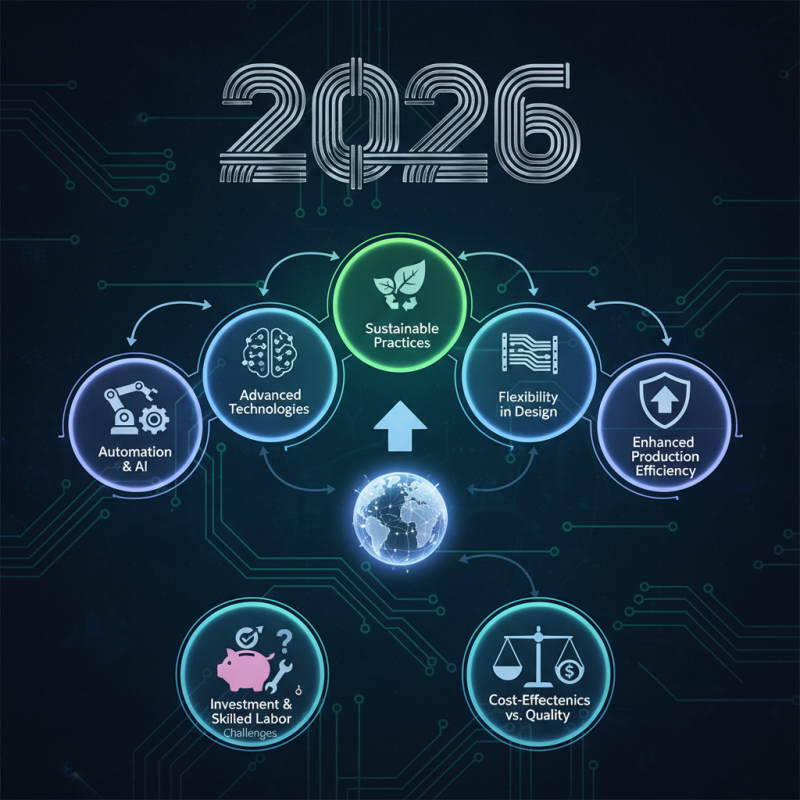
As the electronics industry evolves, understanding the latest trends in PCB fab is vital. In 2026, innovation is driving the future of printed circuit board manufacturing. Companies are prioritizing advanced technologies and sustainable practices to enhance production efficiency.
New techniques like automation and AI are transforming traditional PCB fab processes. These technologies promise to improve precision and reduce costs. However, challenges exist. Adopting these innovations requires significant investment and skilled labor. Some companies struggle to keep pace, risking obsolescence.
Flexibility in design and production is becoming essential. Customized solutions are in high demand. The ability to adapt quickly can give businesses a competitive edge. Yet, achieving this is not without hurdles. Balancing cost-effectiveness with high-quality output remains a critical concern in the PCB fab landscape.
Emerging Technologies in PCB Fabrication for 2026
As we approach 2026, the landscape of PCB fabrication is rapidly evolving. Emerging technologies are reshaping how we design and manufacture printed circuit boards.
Automation is one prominent trend. This technology is increasing efficiency and reducing human error. However, businesses must invest in skilled workforce training to leverage automation effectively.
Additive manufacturing is transforming traditional PCB fabrication methods. It enables the creation of complex structures that conventional techniques cannot achieve.
This presents new design possibilities but also poses challenges in quality control. Robust testing processes will be crucial to ensure reliability.
Another notable trend is the integration of AI in PCB design and production. AI algorithms can optimize layouts and predict potential failures. While this offers great promise, it also raises concerns about dependency on technology. Engineers must remain vigilant in their roles to maintain oversight.
Balancing innovation with human expertise will be essential in navigating these changes in PCB fabrication.
Sustainability Practices in PCB Manufacturing
Sustainability in PCB manufacturing is becoming increasingly critical. According to a recent report from the IPC, approximately 44% of manufacturers have implemented sustainable practices. This shift is driven by both regulatory demands and consumer expectations for environmentally friendly products.
One significant practice is the reduction of hazardous materials. The adoption of lead-free solder and the minimization of chemical waste are vital steps. Manufacturers are exploring alternative materials that are less harmful. A survey revealed that 32% of companies are investing in greener technologies. These investments not only meet compliance but also attract eco-conscious customers.
Recycling processes are also evolving. Many firms are now designing PCBs for easier disassembly, enhancing reuse opportunities. Research highlights that recycled PCBs can reduce raw material demand by up to 25%. However, challenges persist. The recycling infrastructure for PCBs is still underdeveloped in many regions. Continuous innovation and collaboration are essential for tackling these issues. Sustainability is not just a trend; it is reshaping the future of PCB manufacturing.
2026 PCB Manufacturing Sustainability Practices
Automation and AI Integration in PCB Production
The integration of automation and AI in PCB production is reshaping the industry. Several reports indicate that automation can reduce operational costs by up to 30%. Manufacturers are increasingly adopting AI tools. These tools streamline processes and enhance precision. Quality control becomes more efficient with machine learning algorithms, interpreting data in real time.
Automation enhances productivity but introduces challenges. Workers may fear job displacement. A study found that 65% of employees are concerned about their roles as machines take over tasks. However, this shift also creates opportunities for skilled positions in AI maintenance and programming. Training employees in these new technologies is essential for success.
In the coming years, AI is expected to revolutionize design processes. Some estimates predict AI-driven design could increase PCB design efficiency by 50%. Yet, integrating these technologies isn’t without hurdles. Companies must invest in reliable software and training. Ensuring data security during AI integration remains a priority. Balancing technology with human expertise is key for future growth.