2026 Top PCB Micro Switch Manufacturers for Global Buyers?

2026 Top PCB Micro Switch Manufacturers for Global Buyers?

Choosing a Pcb Micro Switch manufacturer in 2026 involves more than comparing unit prices. Buyers need components that match the board layout, switching load, and expected operating life. A few millimeters matter. So do actuation force, travel distance, terminal style, and contact ratings. These details can affect assembly yield and performance inside a finished product.

This guide helps global buyers assess manufacturers using practical, verifiable criteria. It covers product range, engineering support, sample availability, production capacity, quality documentation, and communication during customization. Ask for current datasheets and test conditions, not only headline cycle-life figures. Confirm that the proposed footprint and soldering method suit your process. If a supplier cannot explain these points clearly, pause before committing to a large order. That is not always easy when schedules are tight.

Manufacturer lists are useful starting points, not guarantees of fit. Capabilities, lead times, and service can change, and a polished website is not proof of consistent production. Request representative samples, compare them against your requirements, and clarify inspection and traceability arrangements. A small pilot order can reveal issues that a product page misses. No shortcut here. The right choice balances technical suitability, dependable delivery, and responsive support, while leaving room to revise assumptions when testing reveals a mismatch.
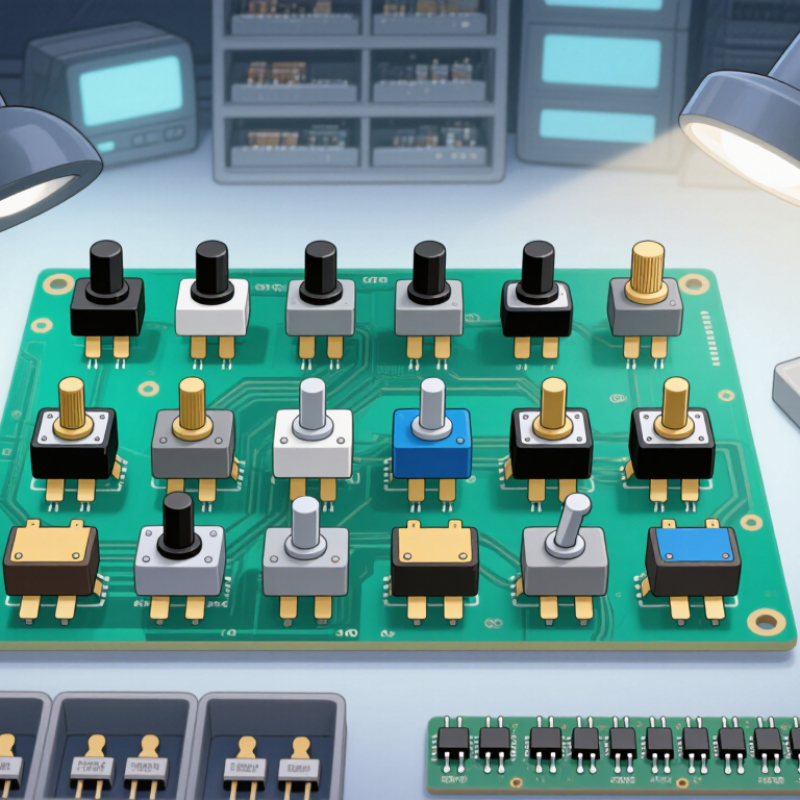
2026 Top PCB Micro Switch Manufacturers for Global Buyers?

What PCB Micro Switches Are and How They Work

PCB micro switches are compact electromechanical components mounted directly on a printed circuit board. They let a user or moving part open or close an electrical circuit with a small press. You may find them in control panels, appliances, and handheld devices. Their small size saves space, but leaves little room for careless layout.

Inside, an actuator presses a spring-loaded contact mechanism. At a set point, the contacts snap between positions, changing the circuit state. Many versions are normally open, while others are normally closed. The sharp action can produce a noticeable click. That click matters. It can help confirm operation, but it does not guarantee a reliable electrical signal. Contact bounce may briefly create several transitions, so a circuit may need debounce handling. A loose fit or excessive force can also affect service life.

Tips: Check the datasheet for pin layout, operating force, travel, and electrical ratings before choosing a part. Match the footprint carefully; even small spacing errors can make assembly difficult. Keep soldering heat within the specified limits. In a dusty or frequently pressed device, consider sealing and endurance requirements. A switch may look simple, but its mounting details deserve a second look.

What PCB Micro Switches Are and How They Work

A PCB micro switch is a compact mechanical switch mounted on a printed circuit board. Pressing its actuator moves internal contacts, changing the circuit from open to closed. This illustrative waveform shows a 3.3 V pull-up input dropping near 0 V when the switch closes; brief transitions represent possible contact bounce. Values and timing are illustrative, not product specifications.

Key Types, Specifications, and Common Applications

PCB micro switches are compact snap-action components that change contact state with a small actuator movement. Common versions use a pin plunger, a short lever, or a roller lever. Plunger types suit direct, vertical pressure on a board-mounted mechanism. Lever options tolerate a little more misalignment. Surface-mount parts save space, while through-hole terminals can provide stronger mechanical support. Fit matters.

Check the operating force, pre-travel, differential travel, and release point against the mechanism’s movement. Electrical ratings must match the actual load; a motor or lamp can create a higher switching surge than a resistive test load. Review contact resistance, insulation resistance, operating temperature, and expected electrical life. Terminal pitch and body dimensions should be confirmed against the PCB layout, not just a catalog image. Datasheets vary in test conditions, so compare like with like.

These switches appear in appliance door interlocks, compact control panels, small-position sensing assemblies, and consumer equipment. In a tight enclosure, a roller lever may reduce side loading, but it can also collect dust if poorly protected. Sealed options help in exposed environments, though sealing alone does not guarantee suitability. Check the specified ingress rating and test the assembled product. A small detail, easily missed. Real-world wear may differ from bench results.

2026 Top PCB Micro Switch Manufacturers for Global Buyers? - Key Types, Specifications, and Common Applications
PCB Switch Type Typical Mounting and Actuation Common Specification Range or Example Typical Applications Key Buyer Checks
PCB Tactile Switch
Momentary, normally open
Through-hole or surface-mount; top-push or side-push actuator Low-level signal examples include 12 VDC, 50 mA; operating force commonly about 1–5 N; travel often about 0.15–0.5 mm Control panels, consumer electronics, instrument keypads, and reset or menu buttons Check rated load, contact arrangement, actuator height, mounting footprint, operating force, and expected cycle life.
Subminiature Snap-Action Micro Switch
PCB-terminal version
Usually through-hole terminals; lever, roller, pin-plunger, or button actuator Ratings vary substantially by model; examples range from low-current DC switching to several amperes at specified AC or DC voltages. Operating force and travel depend on actuator and mechanism. Position detection, interlocks, appliance controls, equipment covers, and compact limit-switch functions Verify the exact AC/DC rating, contact form, terminal layout, operating and release positions, overtravel, and electrical versus mechanical endurance.
SMT Detector Switch
Low-profile detection switch
Surface-mount; usually actuated by a sliding part, cam, or enclosure feature Generally intended for signal-level loads; permissible voltage, current, travel, and force are model-specific and should be taken from the datasheet. Portable devices, removable modules, access-panel detection, and compact position sensing Check pick-and-place compatibility, reflow profile, actuator direction, PCB keep-out area, contact bounce, and minimum-load requirements.
Sealed PCB Detection Switch
Dust- or moisture-resistant variant
Through-hole or SMT, depending on design; plunger or lever actuation Electrical ratings and ingress-protection levels differ by construction; confirm the tested IP rating and any restrictions on voltage, current, or operating environment. Outdoor or exposed controls, automotive subassemblies, appliances, and equipment subject to dust or splashes Confirm sealing applies to the complete installed assembly, and check temperature range, chemical exposure, terminal sealing, and actuation force.
Selection note: Values and descriptions are general purchasing guidance, not guaranteed specifications for every product. “PCB micro switch” can refer to different switch mechanisms; confirm dimensions, contact configuration, rated load, endurance, environmental rating, and compliance documentation against the individual datasheet before design-in.

How to Evaluate PCB Micro Switch Manufacturers

When evaluating PCB micro switch manufacturers, start with the switch’s actual operating requirements. Confirm dimensions, terminal layout, actuator style, operating force, and travel against your board drawing. A mismatch of even a fraction of a millimeter can affect assembly. Ask for rated electrical load and mechanical life, then check the test conditions behind those figures. Numbers without context can mislead.

Request samples from the same production process used for volume orders. Test them on your own PCB, including repeated operation and expected environmental conditions. Review inspection records, material traceability, and how production changes are controlled. A polished datasheet is not proof. Notice how clearly the supplier answers technical questions and reports defects. Communication can be imperfect, but unexplained gaps deserve follow-up. Compare lead times and capacity using your forecast, not a vague promise of fast delivery.

Tips: Send a dimensioned drawing and target operating force. Ask for sample quantities, test reports, and a written tolerance range. Keep a few samples for later comparison. Recheck your assumptions; I would not treat one successful prototype as evidence of consistent production.

Leading Manufacturer Profiles for Global Buyers in 2026

For global buyers, a useful 2026 manufacturer profile should show more than a broad product list. It should explain how a supplier controls contact resistance, switching force, and PCB mounting tolerances. Ask for drawings, material specifications, and inspection records for the exact part under review. A sample that clicks crisply is encouraging, but it does not prove consistent production.

Look for documented process controls, traceable batches, and clear communication about custom requirements. Can the manufacturer provide test data for electrical life and operating temperature? Do sample dimensions match the production drawing? These practical checks reveal more than polished catalog language. Small details matter. A terminal that sits slightly high can complicate assembly, while inconsistent actuation force may affect the feel of a finished device.

Strong supplier profiles also describe engineering support, lead-time expectations, and how design changes are reviewed. For cross-border projects, confirm packaging details and whether technical documents are available in usable formats. Compare several suppliers against the same checklist, rather than relying on rankings without transparent criteria. Some information may remain unclear at the first contact; note that gap and ask again before qualification. A careful review takes time, but it can prevent avoidable redesigns and production delays.

Sourcing, Quality, and Compliance Considerations for International Buyers

For international buyers, a PCB micro switch must fit the board, operating conditions, and production process. Check its footprint, terminal layout, mounting method, and actuator travel against the actual assembly drawing. A switch may look identical in a catalogue yet behave differently under side pressure or repeated operation. Ask suppliers for current datasheets and samples from the production line, not only engineering prototypes. Small details matter.

Quality checks should reflect how the switch will be used. Review operating force, contact resistance, electrical rating, and mechanical life. Then test sample units on your own PCB, including soldering and post-assembly operation. Request inspection records, lot identification, and a clear process for handling defects. A low unit price can lose its appeal when a shipment contains inconsistent actuation. I have seen buyers focus on specifications and overlook packaging; bent terminals can still create costly delays.

Compliance needs equal care. Confirm which declarations, material records, and test reports apply to the destination market and product configuration. Check that documents match the supplied model and production site. Keep revision-controlled copies with purchasing records. Also clarify who will notify you about component or process changes. Cross-border sourcing can make follow-up slower, and paperwork is not proof of stable quality. That distinction deserves attention.