2026 Top Quick Coupler Types and How to Choose

2026 Top Quick Coupler Types and How to Choose

In 2026, choosing a Quick Coupler is about more than connecting two hoses. The right design can reduce changeover time, limit fluid loss, and help equipment work reliably. Common options include hydraulic flat-face, poppet-style, threaded, and push-to-connect couplers. Each suits different operating conditions. A flat-face design, for example, can help reduce spills during connection, while threaded styles may suit applications where vibration makes a secure connection important. Small details matter.

This guide explains the main Quick Coupler types and the factors that influence selection. Start with the machine and task, then check the required flow rate, working pressure, fluid compatibility, connection size, and expected operating environment. Dust, temperature changes, repeated connection cycles, and awkward access can all affect performance. A coupler that fits the port may still be a poor match for the system. That is easy to overlook.

Manufacturer specifications should be checked before purchase, especially when replacing an existing part or combining components from different suppliers. Product descriptions do not always make compatibility obvious, and a quick visual comparison is not enough. This overview offers practical criteria, not a substitute for equipment-specific guidance. The best choice depends on the application, and that judgment may need revisiting as operating conditions change.
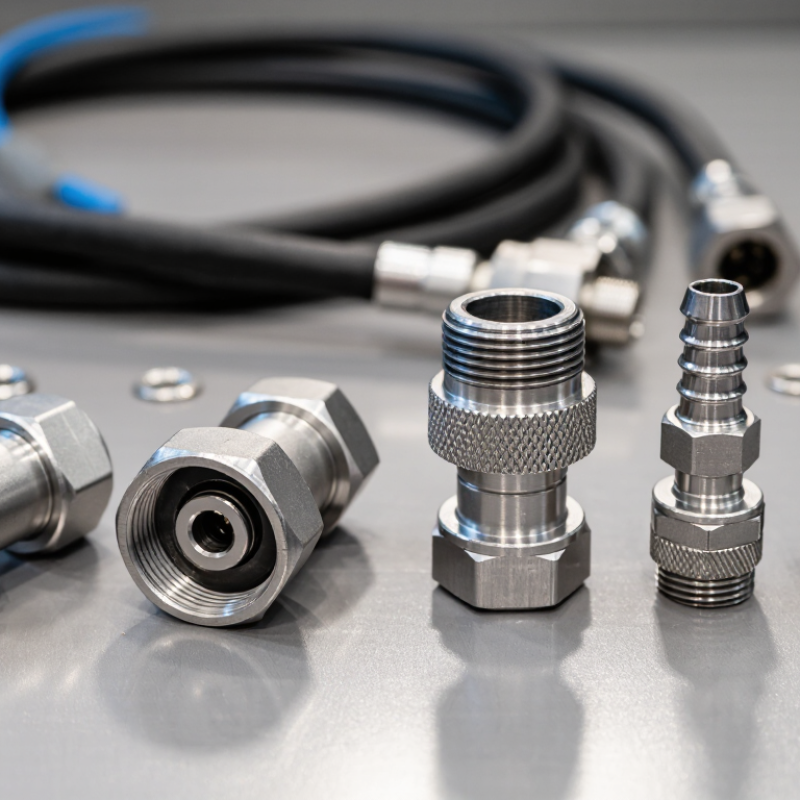
2026 Top Quick Coupler Types and How to Choose

What Quick Couplers Are and How They Work

Quick couplers connect and disconnect fluid or air lines without dismantling the whole system. A typical pair has a plug and a socket. When joined, an internal valve opens to allow flow; when separated, spring-loaded valves usually close to limit leakage. The exact mechanism varies by design. Some couplers use a sleeve that slides back, while others rely on threads or a push-to-connect action.

Common types include hydraulic poppet couplers, flat-face couplers, and pneumatic couplers. Poppet designs use valves that open as the halves connect. Flat-face designs leave less exposed fluid on the mating surfaces, which can help reduce spills during routine changes. Pneumatic push-to-connect fittings are often used for air lines and release by pressing a collar. Small parts matter. A worn seal or trapped dirt can cause leaks or make connection difficult.

Choose a coupler to match the working fluid, pressure, flow rate, temperature, and hose size. Check the manufacturer’s specifications rather than judging by appearance; similar-looking parts may not be compatible. Connections should be clean and fully seated before equipment runs. One detail is easy to overlook: residual pressure can make some couplers hard to connect. A quick visual check helps, but it does not replace the equipment’s safe depressurization procedure.

Quick Coupler Types and How They Connect

Each type is marked for its defining connection mechanism: 1 = characteristic of the type; 0 = not its defining mechanism. Specific designs can vary.

Push-to-connect couplers are common in pneumatic lines; flat-face, threaded, and ball-lock designs are used in hydraulic systems. Cam-and-groove couplings use cam arms to secure the connection. Choose a coupler that matches the fluid, pressure, flow, temperature, connection standard, and required spill control.

The Main Types of Quick Couplers in 2026

Quick couplers generally fall into three operating types: manual, semi-automatic, and hydraulic. Manual models use pins or bolts to secure an attachment. Changing tools may require hand tools and direct access to the connection. They can suit machines that change attachments infrequently. Slow, but straightforward.

Semi-automatic couplers allow quicker changes, while still requiring a manual safety step on many designs. Hydraulic couplers engage from the cab, reducing the need to handle pins during routine changes. Convenient, but not automatically safer. Operators should confirm the lock indicator and follow the coupler’s operating instructions every time.

Couplers also differ by attachment interface. Pin-grabber designs can accommodate a range of compatible pin sizes; dedicated interfaces are matched to specific attachments. Before choosing, check pin dimensions, machine capacity, hydraulic requirements, and the clearance needed when tilting tools. A practical inspection includes looking for worn pins, debris, and uneven contact surfaces. Speed matters, but fit matters more.

I would not choose by speed alone; compatibility details are easy to overlook.

Where Different Quick Coupler Types Are Used

Quick couplers serve different jobs, and the worksite often reveals which type makes sense. Flat-face hydraulic couplers are common on excavators and skid-steer loaders, where operators change attachments in dusty conditions. Their faces are easier to wipe clean, and they help limit fluid loss during connection. Not spill-proof, though. Agricultural equipment often uses push-pull hydraulic couplers for quick implement changes, such as switching between a loader bucket and a mower. The exact fit still matters; similar-looking halves may not connect safely.

Threaded hydraulic couplers suit circuits exposed to vibration or higher working pressures, including some construction and industrial machinery. They take longer to connect, but the threaded joint resists accidental separation. In workshops, pneumatic quick couplers connect air tools to hoses, while cam-and-groove types are used on low-pressure fluid-transfer lines, such as water or fuel handling. Check the intended fluid and operating limits. A fitting that works well for air may be unsuitable for hydraulic oil.

Selection takes more than matching diameter. Confirm pressure, flow, temperature, material compatibility, and the connection standard specified by the equipment maker. Relieve trapped pressure before disconnecting, and inspect seals for cuts or flattened spots. In practice, a coupler can feel secure yet leak after repeated dirty changes. That is a useful reminder to include cleaning and routine inspection in the choice.

Key Factors to Compare Before Choosing a Quick Coupler

2026 Top Quick Coupler Types and How to Choose

Choosing a quick coupler starts with the machine, not the catalog. Common options include flat-face, poppet-style, and threaded couplers. Flat-face designs help limit fluid spills during connection and are easier to wipe clean. Poppet-style couplers are widely used, but dirt around the valve can interfere with sealing. Threaded couplers resist accidental disconnection under vibration, though they take longer to connect. Check the required connection standard and verify both halves are compatible.

Compare pressure rating, flow capacity, size, material, and seal compatibility. A coupler that restricts flow can make an attachment run slowly or heat the hydraulic system. Pressure ratings should cover the machine’s operating pressure and possible surges. Also consider dust, rain, temperature changes, and how often connections are made. On a muddy worksite, a protective cap and an easy-to-clean face may matter more than a small difference in connection time. Bigger is not automatically better.

Tips: Match the coupler to the hose and attachment specifications. Confirm pressure and flow limits before installation. Keep mating surfaces clean, and replace damaged seals promptly. One detail is easy to overlook: trapped pressure can make connection difficult. A convenient coupler still needs a safe, manufacturer-approved way to relieve pressure. No option suits every setup; compare the actual operating conditions, not just the listed size.

2026 Top Quick Coupler Types and How to Choose - Key Factors to Compare Before Choosing a Quick Coupler
Quick Coupler Type Connection and Common Standard Typical Uses Main Advantages Trade-Offs and Checks
ISO 7241-A hydraulic Poppet-valve design; commonly used in general-purpose hydraulic systems. Confirm the matching ISO 7241-A size and connection details. Agricultural equipment, industrial hydraulics, and general mobile equipment. Widely used format with a broad range of sizes and configurations. Poppet valves can create pressure drop. Verify working pressure, flow capacity, materials, and exact series; similar-looking couplers may not be interchangeable.
ISO 7241-B hydraulic Poppet-valve design in a different dimensional series from ISO 7241-A. Industrial hydraulic circuits, processing equipment, and applications using the matching B-series interface. A standardized option for systems designed around the B-series profile. Do not assume A- and B-series halves fit each other. Check standard, nominal size, pressure rating, flow, and connection method.
ISO 16028 flat-face hydraulic Flat mating faces with a standardized interface; many designs connect by pushing together and locking a sleeve. Mobile machinery, construction equipment, and systems where clean connections are important. Helps limit fluid loss and air entry during connection and disconnection; exposed faces are easier to wipe clean. Residual fluid may still be present. Check whether connection under residual pressure is permitted, along with cleanliness, pressure, and flow requirements.
Screw-to-connect hydraulic Threaded sleeve or nut draws the mating halves together; interfaces and dimensions vary by design. Hydraulic lines exposed to vibration or demanding operating conditions, where the selected coupler is rated for the duty. Threaded engagement can help resist accidental disconnection when correctly installed. Usually takes longer to connect than push-to-connect designs. Verify pressure and impulse ratings, thread compatibility, and whether connection under pressure is allowed.
Agricultural hydraulic (ISO 5675) Agricultural quick-coupling interface specified by ISO 5675; confirm the applicable size and mating profile. Tractor remote hydraulic connections and compatible agricultural implements. Designed for common agricultural implement connections and frequent equipment changes. Compatibility depends on the correct standard and size. Check pressure, flow, contamination protection, and whether both sides can be connected with trapped pressure.
Pneumatic quick coupler Push-to-connect plug and socket; profile, size, and valve arrangement depend on the applicable system. Compressed-air tools, air hoses, and pneumatic equipment. Fast tool changes; many sockets include an automatic shut-off valve when disconnected. Profiles are not universally interchangeable. Match the plug profile, nominal size, pressure, airflow, and air-quality requirements.

Selection note: Compare the required standard and mating profile first, then verify working pressure, flow capacity, fluid or air compatibility, temperature range, connection conditions, and the manufacturer’s current technical data. Do not connect or disconnect a pressurized hydraulic line unless the coupler is specifically designed and rated for that operation.

How to Select a Quick Coupler for Your Equipment and Operating Conditions

Choosing a quick coupler starts with the equipment, not the catalog photo. Check the machine’s required flow rate, working pressure, connection size, and fluid type. A coupler that fits the hose may still restrict flow or exceed its safe operating range. Fit is not enough. Flat-face hydraulic couplers help limit fluid loss during connection, while screw-to-connect designs can resist separation under vibration. Push-to-connect styles allow faster changes, but their suitability depends on pressure and duty cycle. For pneumatic lines, confirm the coupler’s airflow capacity and compatibility with the tool.

Operating conditions often decide between otherwise suitable options. In dusty work areas, protective caps and clean connection surfaces help reduce contamination. For hot equipment or cold outdoor shifts, verify the coupler’s temperature range and seal compatibility. If workers change attachments repeatedly, consider connection effort and whether the system can be safely depressurized before disconnection. Small details matter. I find it easy to focus on connection speed and overlook maintenance access; that trade-off deserves a second look. Compare the coupler’s ratings with the equipment manual, and ask a qualified technician to review uncertain specifications before installation. A quick check can prevent leaks, restricted performance, or premature wear.