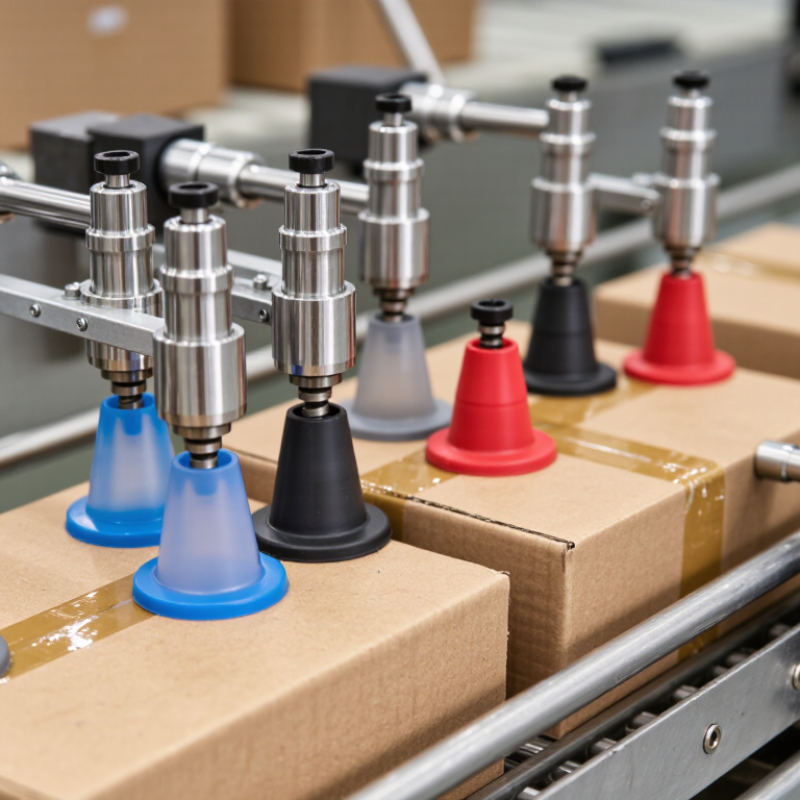
10 Best Carton Suction Cups for Packaging Buyers?
How to Choose and Maintain the Right Carton Suction Cup
Choosing a carton suction cup starts with the carton, not the catalog. Check whether its surface is coated, dusty, ribbed, or slightly porous. A smooth, sealed box may grip with a smaller cup, while rough recycled board can let air leak around the lip. Measure the heaviest carton and consider acceleration, not just its resting weight. Leave a safety margin.
Cup diameter, material softness, and vacuum level should match the pick speed and carton shape. If cartons vary by supplier, test several real samples before choosing a design. One successful lift proves little.
During routine checks, look for flattened lips, tiny cuts, trapped fibers, and hardened surfaces. Small details matter. Wipe cups with a compatible, lint-free cloth, and use solvents only when the material supplier confirms they are safe. Inspect hoses and filters too; a clean cup cannot compensate for a restricted line.
Track missed picks and carton drops by shift, since patterns may reveal a leak or worn edge. Replace damaged cups promptly, but confirm the replacement fits the holder and vacuum circuit. Operators may raise vacuum to hide poor contact, yet that can waste energy without fixing unreliable handling. After any change, run a short trial with actual cartons. There is no perfect setting for every box, and yesterday’s setting may not suit today’s load.