A Face Mechanical Seal is a small component with a demanding job: keeping fluid contained while shafts rotate under pressure, heat, and vibration. For global buyers, choosing a supplier means looking beyond catalog breadth. Material traceability, dimensional control, test records, and responsive engineering support matter when a seal must fit an existing pump or mixer. A low quoted price can look attractive. It may not cover the cost of a poor fit or delayed replacement.
The broader market is growing. Fortune Business Insights estimated the global mechanical seals market at USD 3.26 billion in 2023 and projected USD 4.71 billion by 2032. That figure covers mechanical seals generally, not Face Mechanical Seals alone, so it is useful context—not a niche-market measure. Machinery reliability author Heinz P. Bloch has written extensively about failure prevention; a practical paraphrase of his reliability guidance is: “Understand the operating duty before choosing the component.” That distinction matters. A seal suited to clean water may not suit abrasive slurry or hot process fluid.
This guide compares seven suppliers for buyers assessing product range, customization, quality systems, and international service. Check the details: face materials, elastomer compatibility, operating limits, and documentation for the exact model. A polished website is not proof of performance. Supplier claims still need verification. No single company is right for every application, and this shortlist should be a starting point—not a substitute for engineering review.
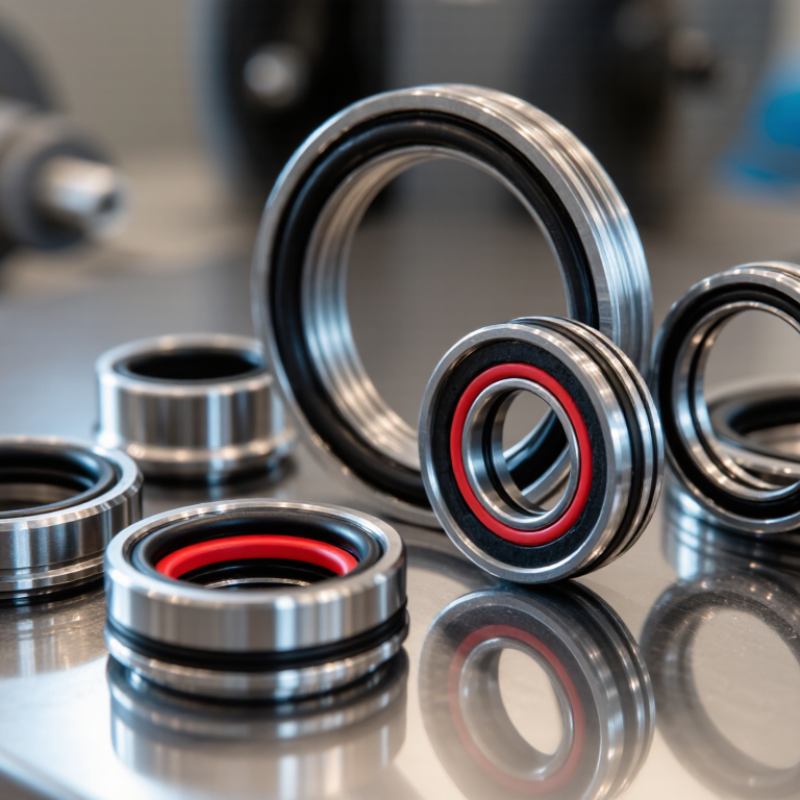
Face mechanical seals limit leakage around rotating shafts in pumps and mixers. Two precision-lapped faces form the sealing interface: one rotates with the shaft, while the other remains fixed. A thin fluid film can lubricate and cool the faces during operation. That gap matters. Spring force and system pressure help maintain the seal as equipment starts, stops, or changes load. Secondary elastomers seal around the shaft and gland.
Without suitable sealing, process liquid may escape, contaminants may enter, and nearby equipment can be damaged. A seal does not simply block fluid; it manages an interface exposed to pressure, heat, vibration, and changing fluid properties. Dry running, abrasive solids, or poor alignment can quickly wear the faces. This is why operating conditions matter as much as dimensions.
When comparing suppliers, ask how a design suits the actual fluid, pressure, temperature, shaft speed, and start-stop pattern. Request material details, installation guidance, and evidence from comparable applications, not just a catalog rating. Ratings can look reassuring on paper. Real service is less tidy. Even a well-made seal may fail early if flushing, fit, or maintenance is overlooked, so the surrounding system deserves equal attention.
A reliable supplier should understand the pump, not just the seal dimensions. Share operating pressure, temperature, shaft speed, fluid properties, and start-stop frequency. Ask how the proposed face materials suit those conditions. Carbon and silicon carbide, for example, behave differently under wear and dry-running risk. Details matter. A technically confident answer should explain trade-offs, not promise that one design fits every application.
Review drawings, material records, inspection procedures, and test reports before placing an order. Check that the documents match the exact seal configuration, including elastomers and metal components. Ask how the supplier handles dimensional changes and replacement parts. A clear process reduces delays when a seal must fit an existing shaft sleeve or gland. No checklist catches everything. Site conditions can still surprise you, so leave room for engineering review.
Compare more than unit price. Confirm production lead times, packing methods, export documentation, and access to technical support across time zones. Ask for relevant application references, while respecting customer confidentiality. If a supplier cannot explain its quality checks or gives vague answers about delivery, treat that as useful information. A polished catalogue is not proof of dependable service. One gap in my own assessment would be relying too heavily on paperwork; practical communication matters just as much.
Global buyers evaluating seven face mechanical seal suppliers should compare capabilities, not just prices. One supplier may engineer custom seal faces for unusual pressures. Another may focus on standard replacement sizes and shorter lead times. A third may offer production aligned with original equipment requirements. Materials specialists can help match carbon, ceramic, or silicon carbide to the fluid and operating conditions. Regional stockists may simplify urgent replenishment. Application-focused suppliers can review shaft dimensions, temperature, and pressure before quoting. Export-oriented providers may coordinate packaging and shipping documents. Each serves a different sourcing need.
Ask for dimensional drawings, material specifications, inspection records, and clear warranty terms. For a wastewater pump, for example, confirm the seal suits the fluid and expected solids. For hot process equipment, check the stated temperature range and face pairing. Not every listing proves capability. That distinction is easy to miss. Request references for similar applications, and verify sample parts against approved drawings before larger orders. Compare response times and communication quality, too; a technically sound offer can still create delays when details remain unclear. Supplier claims deserve review. I would still verify them.
| Supplier Type | Typical Products or Services | Best Fit for Buyers | What to Verify Before Ordering | Global Sourcing Considerations |
|---|---|---|---|---|
| 1. Mechanical Seal Manufacturers | Complete mechanical seal assemblies, replacement seals, and application-specific designs. | Buyers needing a purpose-built seal or a direct technical review of an application. | Operating pressure, temperature, shaft speed, fluid compatibility, drawings, and material specifications. | Confirm export experience, technical support coverage, production lead time, and shipment documentation. |
| 2. Pump Original-Equipment Suppliers | Replacement seals and related parts specified for the supplier’s own pump models or equipment. | Buyers replacing a seal on an identified pump model and seeking a model-specific replacement. | Pump model and serial number, seal arrangement, dimensions, and whether the part is suitable for the installed configuration. | Check spare-parts availability, delivery to the destination country, and local service options. |
| 3. API 682 Application Specialists | Seal systems and technical support for applicable process-pump duties in petroleum, petrochemical, and natural-gas service. | Project teams whose procurement specifications call for API 682 requirements. | Specified edition, seal type and arrangement, piping plan, materials, and project documentation. API 682 applies to seal systems for centrifugal and rotary pumps in its stated industry scope. | Confirm that the supplier’s proposal addresses the project specification; do not assume every seal or service is API 682 compliant. |
| 4. Cartridge Seal Suppliers | Preassembled seal units designed to simplify installation and reduce assembly steps at the equipment site. | Maintenance teams seeking a packaged replacement for a compatible pump or rotating-equipment configuration. | Installation dimensions, sleeve and gland details, shaft fit, seal arrangement, and compatibility with the pump. | Request installation instructions and confirm that replacement parts and technical assistance are available in the destination market. |
| 5. Seal-Face and Component Producers | Seal faces and components made from materials such as carbon graphite, silicon carbide, and tungsten carbide. | Seal assemblers, repair facilities, or buyers sourcing specified components rather than complete seal assemblies. | Exact material grade, dimensions, surface finish, tolerances, and compatibility with the counter-face and operating fluid. | Confirm material traceability, inspection records, packaging requirements, and whether the supplier provides finished assemblies or components only. |
| 6. Authorized Industrial Distributors | Procurement and distribution of mechanical seals and related parts from represented manufacturers. | Buyers needing local inventory, consolidated purchasing, or regional order support. | Authorization status, part-number accuracy, product origin, warranty terms, and traceability documentation. | Compare local stock, import duties, delivery terms, and the process for handling returns or technical queries. |
| 7. Seal Repair and Service Providers | Inspection, repair, refurbishment, and failure analysis for selected mechanical seals. | Operators looking to restore serviceable seals or investigate recurring seal failures. | Repair scope, inspection criteria, replacement-part quality, test methods, and written findings. | Check service-location coverage, turnaround time, shipping requirements, and whether repaired seals meet the original equipment or project specification. |
Face mechanical seal suppliers differ most in how they match face materials to the actual operating duty. Carbon-graphite can suit clean, lubricating fluids, while silicon carbide or tungsten carbide may better handle abrasive particles and higher wear. These choices are not interchangeable. A supplier should explain how fluid chemistry, temperature, pressure, shaft speed, and dry-running risk affect the proposed combination. Ask for documented limits, not just a materials list.
Application experience matters, too. A seal for a clean-water pump may fail quickly in a slurry line carrying fine grit. In chemical service, elastomer compatibility can be as important as the seal faces.
The U.S. Department of Energy’s Improving Pumping System Performance: A Sourcebook for Industry estimates that pumping systems use nearly 20% of global electricity demand.
That figure underscores the value of reliable pump operation, though it does not measure seal performance directly. Small details matter. Request case histories, inspection records, and test conditions for comparable duties. A polished datasheet can still leave gaps; buyers should verify how suppliers handle unusual fluids, start-stop cycles, and field failures.
A face mechanical seal can look correct in a catalog and still fail in service. Before ordering across borders, send the supplier the fluid, temperature range, pressure, shaft size, speed, and equipment model. Ask for a dimensioned drawing with tolerances, plus the seal-face, elastomer, and metal material grades. If the application requires a particular industry standard, name it in the inquiry rather than assuming every supplier interprets it the same way.
Small details matter. Confirm units, drawing revision, and inspection records before approving production. Request a material certificate and, where relevant, a pressure or leak-test report tied to the order. UNCTAD’s Review of Maritime Transport 2024 notes that over 80% of world trade by volume moves by sea, making moisture-resistant packaging and clear shipping marks practical concerns. Still, paperwork is not proof of fit. Compare the delivered dimensions with the approved drawing, especially when converting between metric and imperial measurements.
Transit time and customs handling can also affect maintenance schedules. The World Bank’s 2023 Logistics Performance Index assesses 139 economies across areas including customs, infrastructure, tracking, and timeliness. Use those factors when estimating delivery buffers, but confirm current routes and lead times with the supplier. A small spare seal is easy to overlook in a shipment plan. Ask how replacement parts will be identified and whether the packing list uses the same part number as the drawing.
When comparing suppliers, check that the proposed secondary-seal material suits your operating temperature and process fluid. These are indicative ranges; actual limits vary by compound, fluid, pressure, and operating conditions. Confirm compatibility and the exact material specification with the supplier before ordering.
| Cookie | Duration | Description |
|---|---|---|
| cookielawinfo-checkbox-analytics | 11 months | This cookie is set by GDPR Cookie Consent plugin. The cookie is used to store the user consent for the cookies in the category "Analytics". |
| cookielawinfo-checkbox-functional | 11 months | The cookie is set by GDPR cookie consent to record the user consent for the cookies in the category "Functional". |
| cookielawinfo-checkbox-necessary | 11 months | This cookie is set by GDPR Cookie Consent plugin. The cookies is used to store the user consent for the cookies in the category "Necessary". |
| cookielawinfo-checkbox-others | 11 months | This cookie is set by GDPR Cookie Consent plugin. The cookie is used to store the user consent for the cookies in the category "Other. |
| cookielawinfo-checkbox-performance | 11 months | This cookie is set by GDPR Cookie Consent plugin. The cookie is used to store the user consent for the cookies in the category "Performance". |
| viewed_cookie_policy | 11 months | The cookie is set by the GDPR Cookie Consent plugin and is used to store whether or not user has consented to the use of cookies. It does not store any personal data. |