10 Best Lead Radial Capacitors for Global Buyers?

10 Best Lead Radial Capacitors for Global Buyers?

A Lead Radial Capacitor may look like a small component, yet its specifications can shape a product’s reliability and service life. Buyers often compare capacitance, rated voltage, operating temperature, ripple current, equivalent series resistance, and expected endurance. Lead spacing and body dimensions matter too. A part that fits the schematic may still crowd a compact circuit board. Details matter.

This guide reviews ten options for global buyers, from familiar manufacturers to alternatives suited to different budgets and supply needs. It considers documented specifications, product range, availability, and practical selection factors—not price alone. Not always. Datasheets can use different test conditions, so apparently similar ratings may not support a direct comparison. Buyers should check the exact series and part number, then confirm operating conditions against the equipment design. Fit comes first.

The shortlist is a starting point, not a universal ranking. Requirements differ between a power supply, audio equipment, and an industrial control board. Some manufacturers publish clearer lifecycle and performance data; others may require closer supplier follow-up. That takes time. Before placing a large order, request current documentation and evaluate samples where practical. Also consider lead times, lot traceability, and continuity of supply. A tidy list cannot remove every sourcing risk, and that is worth admitting. The right capacitor is the one whose verified characteristics, physical fit, and dependable availability match the application.
10 Best Lead Radial Capacitors for Global Buyers?

What Lead-Radial Capacitors Are and How They Work

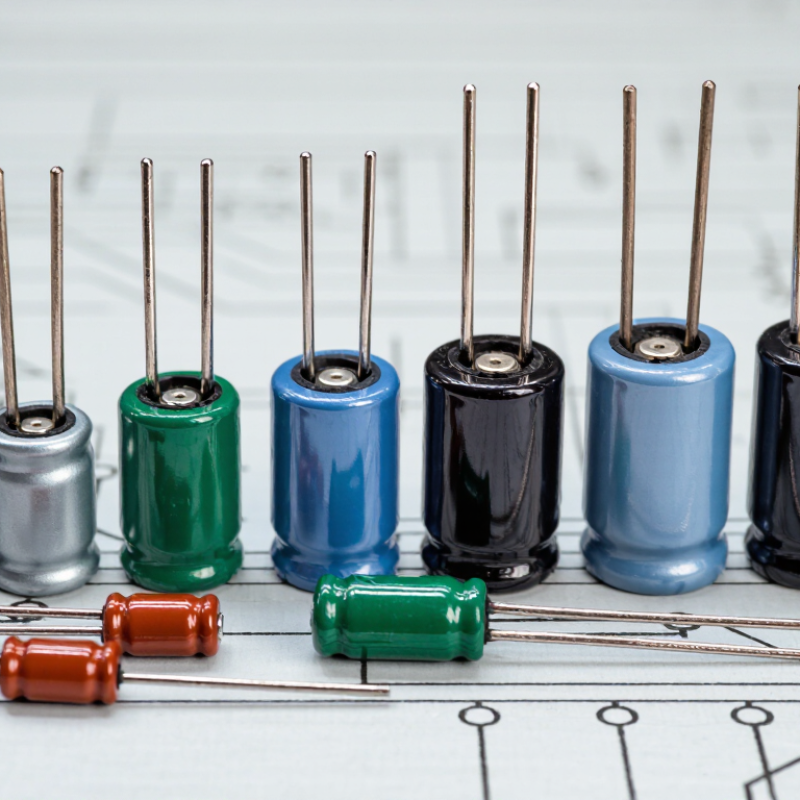
Lead-radial capacitors have two leads that emerge from the same end of a cylindrical or compact package. The leads pass through holes in a circuit board, while the body sits above the board surface. “Radial” describes this physical layout, not one specific capacitor technology. Radial parts may use aluminum electrolytic, ceramic, or film construction, each suited to different electrical needs.

A capacitor stores energy by separating electrical charge across an insulating layer called a dielectric. When voltage is applied, an electric field forms inside that layer. The capacitor can then release stored energy as circuit conditions change. In an aluminum electrolytic type, a very thin oxide layer serves as the dielectric, allowing substantial capacitance in a small package. Many electrolytic versions are polarized. Their positive and negative leads must match the circuit markings. A mistake here can damage the part.

That detail matters. When choosing a radial capacitor, engineers check capacitance, voltage rating, temperature range, ripple-current capability, and equivalent series resistance. They also consider lead spacing and body size, especially when replacing a part on an existing board. Datasheets do not always make comparisons easy; ratings can depend on frequency and temperature. A capacitor that fits the footprint may still perform poorly under heat or pulsed load. Measuring the circuit’s actual operating conditions is often more useful than relying on capacitance alone.

How a Lead-Radial Capacitor Charges

A capacitor stores electrical energy in an electric field. In this idealized example, a 100 µF capacitor charges from a 5 V supply through a 10 kΩ resistor. Its voltage rises exponentially, reaching about 63% of the supply voltage after one time constant (RC = 1 second). Actual components may vary due to tolerance, leakage, and equivalent series resistance.

Key Types and Specifications Buyers Should Know

Radial-lead capacitors differ in dielectric, polarity, and operating behavior. Aluminum electrolytic types offer high capacitance in compact cans, but require correct polarity and careful ripple-current checks. Ceramic parts suit compact, high-frequency circuits; Class 1 types generally offer steadier capacitance, while Class 2 types provide more capacitance per volume. Film capacitors are often chosen for pulse handling and stable performance. Small details matter. Buyers should compare capacitance, rated voltage, tolerance, temperature range, lead spacing, body diameter, and maximum height against the actual board footprint.

For line-interference applications, IEC 60384-14:2023 defines safety classes and test requirements for capacitors connected to mains circuits. Its X2 classification includes a 2.5 kV impulse test in the applicable rated-voltage range; this is a test condition, not permission to exceed a part’s marked rating. IEC 60384-1 provides general requirements for fixed capacitors. For electrolytics, check ESR, ripple-current rating, and specified endurance at temperature; for ceramics, check capacitance loss under DC bias. Datasheets do not always make these comparisons easy. I would verify test conditions, not just headline values, and confirm dimensions from drawings before ordering.

How to Evaluate Lead-Radial Capacitors for Global Use

For global use, evaluate a lead-radial capacitor against the circuit and its actual operating environment. Check capacitance tolerance, rated voltage, ripple-current capability, equivalent series resistance, and specified lifetime. A voltage rating alone is not enough. In a warm power-supply enclosure, ripple heating can shorten service life. IEC 60384-4 provides a framework for testing and qualifying aluminum electrolytic capacitors; compare the supplier’s test conditions with the standard and the product datasheet.

Mechanical details matter too. Measure lead spacing and body diameter against the board footprint, then confirm polarity marking and packaging. For equipment exposed to transport or vibration, request relevant environmental test data and inspect samples for bent leads or damaged sleeves. Ask for lot traceability, production date codes, and a clear change-notification process. These checks take time. They can prevent a costly redesign.

Market figures offer context, not proof of quality. Allied Market Research’s 2023 capacitor-market report estimated a 2022 market value of US$22.3 billion and projected US$38.8 billion by 2032. That broad forecast says little about any individual part. A useful supplier comparison should include test reports, tolerance limits, and delivery consistency. I would still verify a sample in the real circuit; paper specifications do not reveal every weakness.

10 Best Lead-Radial Capacitors for Global Buyers

Global buyers comparing the 10 best lead-radial capacitors should start with application fit, not a ranked list. Grand View Research estimated the global capacitor market at USD 22.5 billion in 2023, with a projected 6.3% compound annual growth rate through 2030. That figure covers many capacitor types, not lead-radial parts alone. WSTS forecast semiconductor sales of USD 627.6 billion for 2024, reflecting broad electronics demand rather than capacitor demand specifically. The context matters.

For each candidate, match capacitance, rated voltage, ripple-current capability, equivalent series resistance, temperature range, lifetime, body size, and lead spacing to the actual circuit and PCB. Check the fine print. A part rated for 2,000 hours at its maximum temperature may not deliver that life in a hot enclosure with heavy ripple current. On a sample board, inspect lead fit and clearance before approving a large order. Also confirm the datasheet revision, tolerance, polarity marking, and packaging details with the supplier. One weak point in many buying checklists is treating identical headline ratings as equal performance. They are not always equal. Ask for traceable test data when operating conditions are demanding, and document any substitution before production.

10 Best Lead-Radial Capacitors for Global Buyers

A technology-based comparison of common leaded radial capacitor options. Specification ranges are representative examples, not guaranteed values; confirm exact ratings, dimensions, endurance, and approvals in the individual part datasheet.

Rank Radial Capacitor Type Representative Capacitance Representative Rated Voltage Typical Temperature Range Typical Endurance Range Best-Fit Applications Selection Note
1 Low-impedance aluminum electrolytic 10–10,000 µF 6.3–100 V DC About −40°C to +105°C Approximately 2,000–5,000 hours at rated conditions Switch-mode power supplies, DC rails, and output filtering Check ESR and ripple-current ratings at the intended frequency and temperature.
2 Long-life aluminum electrolytic 100–10,000 µF 6.3–100 V DC Commonly −40°C to +105°C Approximately 5,000–10,000 hours at rated conditions Industrial controls, standby supplies, and equipment with long service intervals Rated life depends on core temperature, ripple current, and operating voltage.
3 High-ripple aluminum electrolytic 100–6,800 µF 10–100 V DC Typically −40°C to +105°C Often approximately 2,000–5,000 hours at rated conditions Power conversion, motor drives, and high-current smoothing Verify allowable ripple current and resulting self-heating.
4 High-temperature aluminum electrolytic 10–4,700 µF 6.3–100 V DC Series are available for operation up to +125°C Varies by series; commonly specified for 1,000–2,000 hours at maximum temperature Automotive-adjacent electronics and hot industrial enclosures Confirm the rated temperature and endurance test conditions for the exact part.
5 General-purpose aluminum electrolytic 0.1–10,000 µF 6.3–450 V DC Commonly −40°C to +85°C or +105°C Often approximately 1,000–2,000 hours at rated conditions General-purpose filtering, coupling, and energy storage A broad, economical option when ripple and lifetime requirements are moderate.
6 Hybrid polymer aluminum electrolytic 10–2,200 µF 6.3–100 V DC Commonly −55°C to +125°C Often approximately 2,000–4,000 hours at rated conditions Compact power supplies, automotive electronics, and low-ESR filtering Combines a polymer cathode with electrolyte; check leakage and surge specifications.
7 Solid polymer aluminum electrolytic 10–2,200 µF 2.5–100 V DC, depending on series Commonly −55°C to +105°C or +125°C Often approximately 2,000–5,000 hours at rated conditions Low-voltage converters, digital power rails, and compact electronics Usually offers low ESR; observe voltage derating and surge-current limits.
8 Metallized polyester film 1 nF–10 µF 50–1,000 V DC, depending on construction Commonly −40°C to +105°C Typically specified by environmental and electrical test standards rather than electrolytic life hours Coupling, bypass, timing, and general-purpose AC/DC signal circuits Offers stable capacitance and low leakage; check pulse and AC-current ratings.
9 Metallized polypropylene film 1 nF–10 µF 100–2,000 V DC, depending on construction Commonly −40°C to +105°C Typically specified by environmental and electrical test standards rather than electrolytic life hours Pulse circuits, resonant networks, and low-loss filtering Low dielectric loss is useful in AC and pulse applications; check peak voltage and dV/dt limits.
10 Leaded ceramic disc 10 pF–1 µF, depending on dielectric 16 V to several kilovolts, depending on series Often −25°C to +85°C or −55°C to +125°C No standard electrolytic endurance-hour rating; qualification depends on dielectric and application Decoupling, RF circuits, snubbers, and high-voltage applications Dielectric class matters: high-capacitance classes can vary more with temperature and DC bias.

Common Applications Across Industries and Regions

Lead radial capacitors serve compact power supplies, control boards, chargers, lighting drivers, and household electronics. Their upright bodies fit crowded circuit boards, while two through-hole leads simplify assembly and repair. In a switching power supply, they can smooth low-voltage output; in an industrial controller, they may help filter supply noise. The right choice depends on capacitance, voltage rating, ripple current, temperature, and expected service life. The details matter. A physically small part may run hot when ripple current is high, so checking the datasheet is not optional.

Demand for electronics keeps these applications relevant across regions. The WSTS Fall 2024 forecast projected global semiconductor sales of about $611 billion in 2024, up 16 percent year over year. That forecast is not a capacitor-market measure, but it reflects expanding electronic systems where board-level components are used. The IEA’s Global EV Outlook 2024 estimated electric car sales would exceed 17 million that year, supporting demand for vehicle electronics, charging equipment, and auxiliary power circuits. In humid coastal factories, sealing and corrosion resistance deserve attention; in hot installations, temperature and lifetime ratings matter more. Regional conditions vary. A specification copied from one project can fail in another. Check operating temperature, ripple current, lead spacing, and local supply availability before selecting a radial capacitor.