10 Best Stainless Steel Coil Manufacturers Worldwide?
Choosing the 10 Best Stainless Steel Coil Manufacturers Worldwide requires more than comparing production volume or factory size. A dependable supplier must deliver consistent chemistry, accurate thickness, stable surface quality, and traceable documentation. These details matter on a factory floor, where a small gauge variation can disrupt stamping, welding, or roll forming.
J. R. Davis, editor of ASM Specialty Handbook: Stainless Steels, explains, “The corrosion resistance of stainless steels is due to the formation of a thin, adherent, self-healing oxide film on the surface.” That principle reminds buyers to examine material performance, not marketing language. A capable Stainless Steel Coil Manufacturer should clearly identify grades such as 304, 316L, 430, or duplex stainless steel. It should also provide mill test certificates, heat numbers, inspection reports, and reliable information about origin.
The manufacturers reviewed in this guide are considered through practical criteria. These include melting capacity, cold-rolling technology, annealing control, surface finishes, coil weight, slitting precision, and export experience. Certifications can help. They do not replace independent verification. Buyers should request samples and inspect actual 2B, BA, or brushed surfaces before placing large orders.
There is no perfect supplier.
A low price may conceal longer lead times, inconsistent packaging, or limited technical support. A famous producer may still be unsuitable for small custom orders. This comparison therefore recognizes both strengths and weaknesses, including service gaps that are easy to overlook. The final selection should match the application, environment, budget, and required delivery schedule.
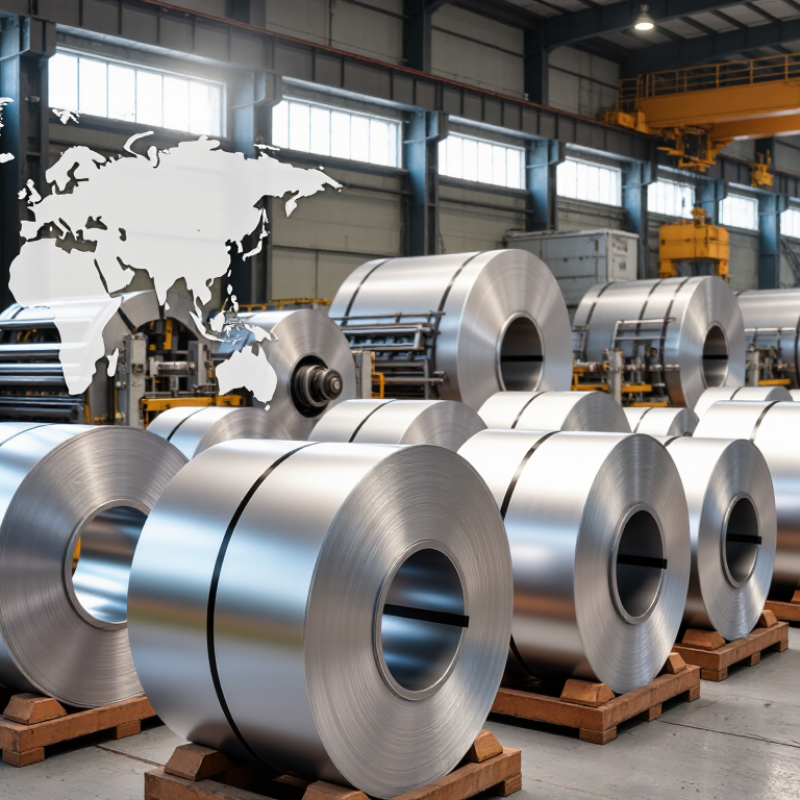
Global Stainless Steel Output: 58.4 Million Tonnes Recorded in 2023
Global stainless steel output reached 58.4 million tonnes in 2023, showing the scale of this competitive industry. Behind that figure are producers serving construction, food processing, energy, transport, and medical equipment markets. However, high output does not automatically indicate superior coil quality. A reliable manufacturer must combine consistent metallurgy, accurate rolling, and disciplined surface control.
When comparing the 10 best stainless steel coil manufacturers worldwide, buyers should examine more than production volume. Experienced mills normally provide clear grade documentation, heat numbers, mechanical test results, and traceable inspection records.
Coil thickness, width tolerance, edge condition, and surface finish should match the purchase specification. For example, a bright annealed coil may require tighter handling than a standard mill finish. Packaging also matters, especially during long ocean shipments.
Quality is visible in details. It is not always obvious.
Independent testing can verify chemical composition and corrosion resistance before shipment. Site audits may reveal whether calibration, storage, and nonconformance procedures are properly managed. Delivery reliability deserves equal attention, because a delayed coil can stop an entire fabrication line. Rankings can change as capacity, energy costs, and export conditions shift. I would also question any list based only on annual tonnage. Large producers may offer impressive scale, yet smaller specialists can sometimes provide better tolerances or faster technical support. That distinction requires evidence, not confident marketing language.
Ranking Criteria: ASTM A240, EN 10088, Capacity, Grades, and Export Reach
A credible ranking of the 10 best stainless steel coil manufacturers must begin with standards, not advertising.
ASTM A240 verifies chemistry, mechanical properties, dimensions, and testing for stainless sheet and strip. EN 10088 adds European rules for grades, surface finishes, and technical delivery conditions. Suppliers meeting both standards deserve stronger consideration, especially for construction, food processing, and industrial equipment.
Capacity should be measured beyond headline tonnage. A serious review checks melting capacity, hot rolling, cold rolling, annealing, slitting, and monthly coil availability. World Stainless reported global stainless crude steel production of about 58.4 million tonnes in 2023. This figure shows market scale, but it does not prove consistent quality.
Grade coverage also matters. Reliable producers commonly offer 304, 316L, 430, 321, and selected duplex grades. Traceability remains essential.
Export reach needs practical evidence. UN Comtrade records under HS 7219 and HS 7220 can help compare international shipment activity. However, export volume alone can mislead. A manufacturer may ship widely but provide weak technical support or unstable lead times. The ranking should therefore assess mill certificates, independent test reports, packaging quality, port access, and complaint response.
I would also verify recent production samples, not only certificates. No ranking is perfect. Real buyers should recheck capacity, grade availability, and compliance before signing contracts.
Top 10 Stainless Steel Coil Manufacturers by Capacity and Product Range
10 Best Stainless Steel Coil Manufacturers Worldwide?
The top ten stainless steel coil manufacturers are best compared by capacity, product range, and delivery strength. Large producers often operate integrated melting, hot rolling, cold rolling, and finishing lines. This control can improve traceability and reduce delays between production stages. Capacity figures should include actual coil output, not only stated mill potential. That distinction matters.
A strong manufacturer usually supplies 304, 316L, 430, and duplex grades. Product ranges may include hot-rolled, cold-rolled, annealed, pickled, brushed, and mirror-finished coils.
Common thicknesses can range from thin precision strip to heavy industrial coil. Width options, edge quality, surface tolerance, and slitting services also separate leading suppliers. Ask for test certificates.
The best-ranked companies generally combine high annual capacity with regional warehouses and stable export logistics. They support construction, food equipment, chemical processing, energy, and automotive applications. Technical teams should review forming requirements, corrosion exposure, weldability, and surface protection before purchase. No ranking is perfect. Public capacity data can lag behind plant upgrades, while a broad catalog does not guarantee consistent quality. In practice, supplier audits, sample testing, and delivery records deserve equal weight. A mill with slightly lower output may perform better when tolerances are strict. That is easy to overlook.
Regional Comparison: Asian Mills, European Producers, and North American Suppliers
Choosing the ten best stainless steel coil manufacturers requires more than production volume. The International Stainless Steel Forum reported 58.4 million tonnes of global crude stainless output in 2023. Asia supplied roughly four-fifths of that volume. This scale gives Asian mills strong advantages in availability, coil width, and price. Large integrated facilities often support demanding grades, including 304, 316L, and duplex stainless steel.
Scale is not everything. European producers typically compete through tighter process control, sustainability reporting, and detailed material traceability. The European Steel Association has repeatedly highlighted decarbonization and energy efficiency as major competitiveness factors. Buyers should examine recycled content, mill certificates, surface consistency, and dimensional tolerance. A polished coil may look excellent under warehouse lighting, yet reveal uneven finishing after fabrication.
North American suppliers can offer shorter delivery routes, domestic technical support, and easier communication across regional specifications. The American Iron and Steel Institute reports that stainless demand remains closely linked to construction, food equipment, energy, and transportation. However, regional supply can be less flexible during capacity disruptions. That matters. Freight, tariffs, and lead times may outweigh a small price difference. My ranking would therefore change by application, not reputation alone. This is the uncomfortable part: no regional group is automatically best. A reliable comparison should score quality records, inspection practice, delivery performance, and lifecycle cost together.
Buyer Evaluation: 2B Finish, Thickness Tolerance, MOQ, and Mill Certificates
Choosing among the 10 best stainless steel coil manufacturers worldwide requires more than comparing price lists. According to the International Stainless Steel Forum’s 2024 statistics, global crude stainless steel production reached about 58.4 million tonnes in 2023. That scale increases choice, but not necessarily quality. Request a 2B-finish sample from every shortlisted mill. The surface should look uniform under warehouse lighting, without streaks, oil marks, or edge bruising. However, 2B describes a production finish, not one universal roughness value. Specify acceptable Ra limits, inspection lighting, and packaging conditions in the purchase contract.
Thickness tolerance needs equal attention. Compare the supplier’s stated tolerance with ASTM A480/A480M or EN 10088-2 requirements, then confirm measurement locations. A coil listed as 1.00 mm may vary across width and along its length. Ask for actual inspection records, not only catalog claims. MOQ also changes the real cost. A low price becomes unattractive when the mill requires several tonnes, custom slitting, or expensive storage. Start with a pilot coil when possible. It may expose hidden problems.
Mill certificates should identify the heat number, grade, chemical composition, mechanical results, dimensions, finish, and applicable test standards. ISO 9001 registration supports process control, but it does not replace a material certificate. Verify that the certificate matches the coil label and packing list. I have seen attractive samples fail during forming because the buyer checked appearance, but ignored yield strength. That mistake is easy to repeat.