How to Choose the Best Photovoltaic Bracket for Your Needs?
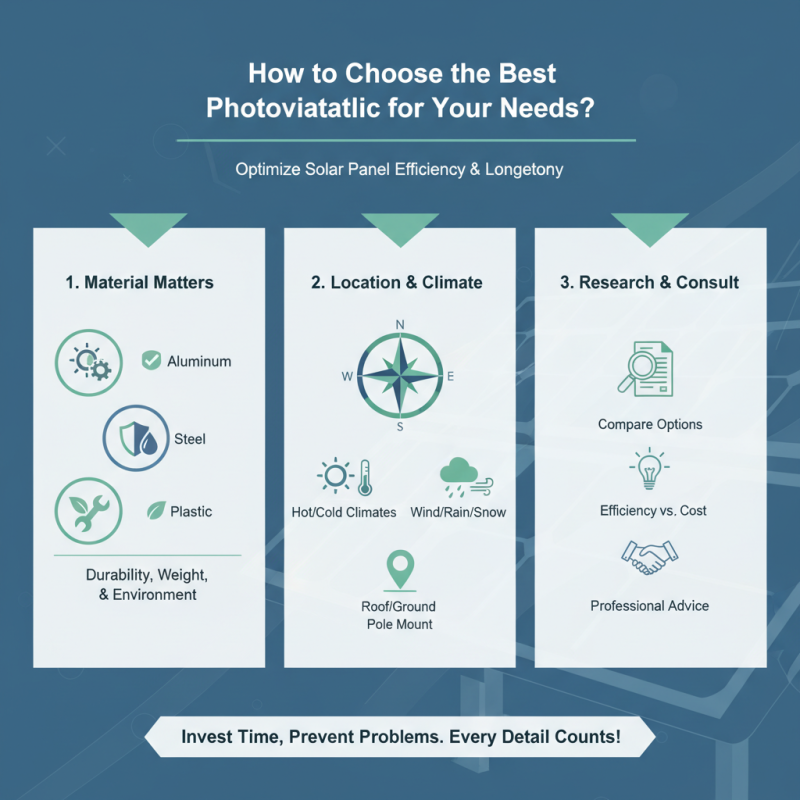
Choosing the right Photovoltaic Bracket can significantly impact your solar panel's efficiency and longevity. According to Dr. Emily Johnson, a leading expert in renewable energy, "The stability of your solar setup depends greatly on the bracket you choose." This highlights the importance of this component in photovoltaic systems.
Photovoltaic Brackets come in various designs and materials. Some are made from aluminum, while others use steel or plastic. The choice affects durability, weight, and resistance to environmental factors. It’s crucial to assess your specific needs, such as location and climate. Each bracket type has pros and cons.
While an expensive bracket may promise high quality, this is not always the case. It's vital to research and possibly consult with professionals. The wrong choice could lead to issues over time. Investing time in understanding your options can prevent future problems. Every detail counts in optimizing your solar energy experience.
Understanding Photovoltaic Brackets: Types and Functions
Photovoltaic brackets are crucial for solar panel installations. They provide support and stability. Understanding the different types is important for effectiveness.
There are several types of photovoltaic brackets. Fixed brackets are common. They hold panels at a set angle. Adjustable brackets allow for angle changes. This flexibility offers better sunlight capture. However, they can be more complex to install. Ground-mounted systems often use pole mounts, which raise panels above obstacles. Each type has unique functions and benefits.
Choosing the right bracket isn’t simple. You must consider factors like location and weather. Some brackets may not be suitable for high winds. Additionally, a less durable option might save money but lead to costly repairs. Thoughtful selection can enhance efficiency and longevity. A well-supported panel will perform better over time.
Comparison of Different Types of Photovoltaic Brackets
Assessing Your Specific Needs for Solar Panel Installation
When considering solar panel installation, assess your specific needs carefully. Understanding the local climate is crucial. In areas with heavy snowfall, choose brackets that can withstand the weight. In contrast, if you live in a region prone to storms, opt for durable materials designed for high winds.
Further, examine the space available for installation. Limited roof space may require adjustable brackets. These allow for better angles, optimizing sunlight exposure. However, installation may become tricky. You might face challenges aligning panels correctly. Reflect on these factors before proceeding.
Finally, think about future plans. If you anticipate expanding your solar setup, select versatile brackets. This could prevent future costs and hassle. Balancing current requirements and potential obstacles is essential. Every decision impacts performance and efficiency.
Key Factors to Consider When Selecting Photovoltaic Brackets
Choosing the right photovoltaic bracket is crucial. It determines the efficiency and longevity of your solar system. One key factor is the material. Stainless steel is strong but heavy. Aluminum is lightweight but can corrode in saline environments. Think about your local climate. This may affect button life.
Next, consider the design. Fixed brackets are simple and cost-effective. However, adjustable brackets can optimize sunlight capture. They might require more maintenance. Check installation options. Some brackets need professional help. Others can be DIY-friendly.
Finally, always think about your requirements. How much weight will they hold? What size are your panels? Each choice matters. Reflect on your space too. Limited rooftops require compact solutions. Sometimes, the perfect choice is less obvious. Balancing durability with flexibility is essential.
How to Choose the Best Photovoltaic Bracket for Your Needs?
| Criteria | Description | Importance Level |
| Material Quality | Assess the durability and corrosion resistance of the bracket materials. | High |
| Load Capacity | Ensure the bracket can support the weight of the photovoltaic panels. | High |
| Installation Ease | Evaluate how easy it is to install the brackets based on design. | Medium |
| Compatibility | Check if the bracket is suitable for the type and size of panels being used. | High |
| Weather Resistance | Consider how well the bracket can withstand environmental conditions. | High |
| Cost | Analyze whether the price fits within the overall budget for PV system installation. | Medium |
| Aesthetic Considerations | Look at how the bracket design complements the installation aesthetics. | Low |
Materials and Durability: Choosing the Right Construction for Brackets
When selecting photovoltaic brackets, material choice is crucial. Aluminum and steel are common options. Aluminum is lightweight and corrosion resistant. It is ideal for coastal areas but may not be as robust in heavy snow regions. Steel, while heavier, often offers greater strength. It can withstand harsher weather conditions but may require additional treatments to prevent rust.
Durability also plays a significant role. The lifespan of the brackets directly affects the integrity of your solar panel system. Look for brackets that can handle dynamic loads. Consider the environment. If you live in an area with high winds or heavy precipitation, your brackets need to endure those extremes. Pay attention to the finishing coats as well. Some coatings improve weather resistance, while others may not hold up as well over time.
Always reflect on your specific needs. What works for one installation might not work for another. A bracket that seems perfect could falter under certain conditions. Ensure to think ahead, and perhaps consult with experts if needed. This helps prevent costly mistakes in the future. Balancing cost, quality, and durability is key in making the right choice.
Cost-Effectiveness: Balancing Quality and Budget in Your Selection
When selecting the best photovoltaic bracket, cost-effectiveness is crucial. A tight budget can limit choices. However, quality should not be sacrificed. Cheaper options may result in higher costs later due to maintenance or replacement. It’s important to find a balance between price and longevity.
Tip: Research various materials used in brackets. Aluminum and stainless steel are common choices. They are durable but often come at a higher price. Evaluate what you need based on your installation environment.
The installation process also impacts costs. DIY setups could save money, but mistakes might lead to greater expenses. Consider hiring professionals if unsure. Their expertise can ensure proper installation and longevity.
Tip: Check for warranties. A good warranty can signify quality and provide peace of mind. It’s a small investment that can pay off significantly. Prioritize options that give you both performance and reliability without straining your budget.