Choosing a Gas Brick Oven is a practical business decision, not just a matter of picking the largest flame or most impressive finish. The right oven should fit your menu, service pace, kitchen layout, and budget. A neighborhood pizzeria making steady evening batches may need different capacity from a restaurant serving varied dishes throughout the day. Details matter. Think about the oven’s cooking surface, heat recovery, fuel connection, ventilation needs, and access for cleaning. These factors affect daily work as much as the oven’s advertised temperature.
It is easy to focus on burner power alone. That is a tempting shortcut, but an incomplete one. Ask suppliers for clear specifications, installation requirements, warranty terms, and references from businesses with similar menus. If possible, test the oven with the dough, toppings, and serving rhythm your staff will actually use. Watch how evenly it cooks, how quickly it recovers between pizzas, and whether employees can handle routine tasks comfortably. Small observations count.
There is no universally best model, and comparing options can feel tedious. Still, a careful comparison may prevent costly surprises later. This guide explains how to assess capacity, construction, operating costs, maintenance, and supplier support before you buy. It also considers trade-offs: a larger oven may offer flexibility, yet take up valuable floor space and require more investment. The goal is not to find a perfect machine. It is to choose one that reliably supports your business and leaves room for realistic growth.
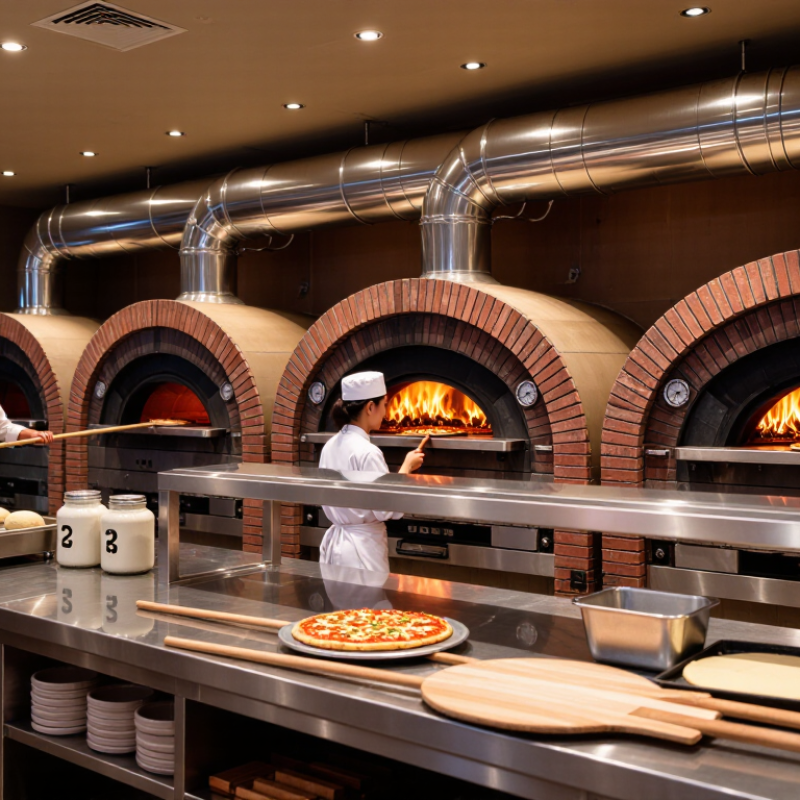
How to Choose the Best Gas Brick Oven for Your Business?
Define Your Business’s Menu, Output, and Space Requirements
Start with the food you plan to sell. Neapolitan-style pizzas need intense, even heat and quick recovery between batches. Flatbreads or roasted vegetables may need different temperatures and cooking times. List your core items, their bake temperatures, and expected peak-hour orders. Then estimate how many pizzas or trays must leave the oven each hour. A busy Friday service is a better measure than an average afternoon. It is easy to overestimate demand. Check actual sales, if available.
Tips: Measure the installation area, doorway, and route into the kitchen. Include room for safe access, ventilation, and nearby prep stations. Sketch where staff will load, turn, and unload food. A few centimeters can matter.
Compare oven capacity with both your menu and workflow. A larger cooking floor may help during rushes, but it also needs more space and careful heat management. Consider how quickly the oven returns to its target temperature after repeated loading. Ask suppliers for capacity details under realistic operating conditions, not just maximum claims. Also confirm that the gas supply and ventilation can support the proposed setup with a qualified installer. Review the plan with kitchen staff; they may spot awkward movement you missed. A paper layout is useful, but it cannot reveal every bottleneck.
| Business Requirement | Indicative Oven Size | Typical Menu Fit | Approximate Peak Output | Approximate Installed Footprint | Planning Considerations |
|---|---|---|---|---|---|
| Small café, bar, or limited pizza menu | About 30–36 in (76–91 cm) internal cooking floor diameter | Individual pizzas, flatbreads, and a small selection of baked sides | Approximately 20–40 12-in pizzas per hour | About 4–6 ft wide × 4–6 ft deep (1.2–1.8 m × 1.2–1.8 m), including a typical stand; confirm the specific unit dimensions | Suitable where demand and kitchen space are limited. Check that the oven opening accommodates the intended pizza size and turning tools. |
| Neighborhood pizzeria with steady service | About 36–42 in (91–107 cm) internal cooking floor diameter | Several pizza sizes, flatbreads, and occasional roasted or baked dishes | Approximately 35–65 12-in pizzas per hour | About 5–7 ft wide × 5–7 ft deep (1.5–2.1 m × 1.5–2.1 m), including a typical stand; verify clearances separately | A practical middle range for many independent restaurants. Allow enough working space in front of the oven for loading, turning, and unloading. |
| High-volume pizzeria or restaurant with peak-time rushes | About 42–48 in (107–122 cm) internal cooking floor diameter | High-volume pizza service, multiple pizza sizes, and a broader baked menu | Approximately 50–90 12-in pizzas per hour | About 6–8 ft wide × 6–8 ft deep (1.8–2.4 m × 1.8–2.4 m), including a typical stand; larger units may need more | Requires more floor area and a workable loading pattern. Check staffing, preparation capacity, and whether the oven can maintain temperature during continuous service. |
| Broad menu with substantial roasting or baking alongside pizza | Large cooking floor, often 48 in (122 cm) or more, selected for the cookware and batch sizes | Pizza plus roasting pans, bread, vegetables, or other oven-finished dishes | Pizza output varies; capacity for pans depends on their dimensions and the usable floor area | Often 7 ft (2.1 m) or more in at least one dimension; use the chosen oven’s installation drawing | Measure the actual pans and trays before choosing. Consider how non-pizza dishes will be scheduled alongside pizza during busy periods. |
| Restricted kitchen or retrofit project | Choose the largest model that fits the verified access route and approved installation area | A focused menu matched to the available floor area and workflow | Set expectations from the oven’s usable cooking floor and the supplier’s documented production data | Measure the unit, stand, clearances, doorways, corridors, and route to the installation location | Check floor loading, heat clearances, ventilation, gas supply, and local fire and building requirements before purchase. |
Planning note: Output figures are indicative estimates, not guaranteed production rates. Actual results vary with pizza size, bake time, oven temperature recovery, loading technique, menu mix, and operator workflow. Confirm dimensions, gas requirements, ventilation, clearances, and installation specifications with the oven supplier and relevant local authorities.

