2026 How to Choose the Right Flange Bolt for Your Needs?
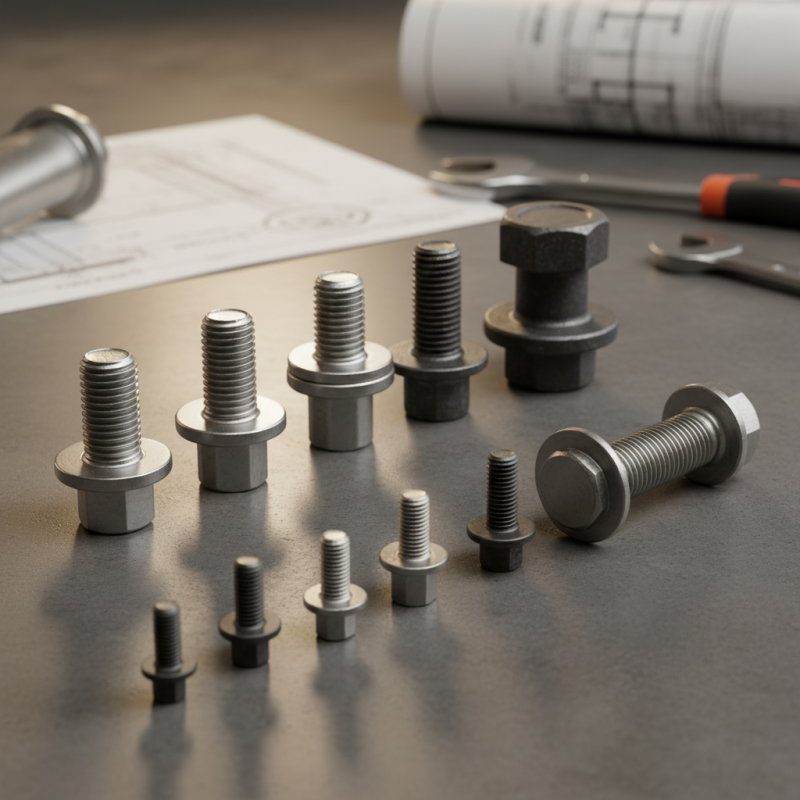
Choosing the right Flange Bolt is critical for any construction or mechanical project. Flange bolts are designed to ensure a secure connection between flanged components. Their unique design allows them to distribute loads evenly, reducing the risk of failure.
When selecting a flange bolt, consider the material and size. Different materials offer various strengths and resistances. For example, stainless steel provides corrosion resistance, while carbon steel is robust for heavy loads. The size must align with the flange specifications to ensure a proper fit.
It’s also important to think about the environment. High temperatures or exposure to chemicals may influence your choice. Reflect on common mistakes, such as overlooking compatibility with existing materials. Don't settle for a quick choice; take your time. A well-informed selection can prevent costly repairs and enhance the integrity of your project.
Understanding Flange Bolts: Types and Applications
When selecting flange bolts, understanding their types and applications is crucial. Flange bolts feature a built-in washer, which helps distribute loads evenly. This design prevents the bolt from loosening over time. Common types include hex flange bolts and serrated flange bolts. They serve various applications, from automotive to construction fields.
Tips: Consider the environment. Corrosive elements can degrade certain materials. Stainless steel bolts are often favored for humid conditions. However, not all stainless steel grades are the same. Researching material specifications is essential when durability matters.
Flange bolts can sometimes cause issues if they are not installed correctly. Improper torque can lead to joint failures. Always double-check the recommended torque specifications for your chosen bolt type. Evaluate the connection they serve; this impacts performance and longevity.
Key Factors in Selecting Flange Bolts for Your Project
When selecting flange bolts for your project, focus on critical factors. One of the primary considerations is material. Common materials include stainless steel and carbon steel. According to the American Society for Testing and Materials (ASTM), the choice of material influences bolt strength and corrosion resistance. For high-stress applications, high-strength bolts are advisable. They typically undergo rigorous testing, ensuring they can handle demanding conditions.
Another key factor is the bolt size and dimensions. Tension and compressive strength are vital metrics. A report from the Construction Research Institute indicates that improper sizing can lead to premature failure. It is crucial to measure accurately and adhere to specifications. Standard sizes might not fit all projects. Custom solutions can be necessary, but they may extend project timelines.
Lastly, consider the surface treatment of the bolts. Coatings like zinc plating enhance durability and resistance to environmental factors. However, not all coatings are suitable for every environment. Carefully evaluate the operating conditions to avoid unexpected failures. A study by the Journal of Materials Science emphasizes that a suitable coating can significantly extend service life. Flange bolt selection requires a thoughtful approach to ensure reliability and safety in your assembly.
Material Considerations: Choosing the Right Flange Bolt Material
Choosing the right flange bolt material is crucial for ensuring the integrity of your assembly. Different materials offer varying levels of strength, corrosion resistance, and durability. Steel and stainless steel are popular choices. Steel provides excellent tensile strength. However, it may rust if not properly coated. Stainless steel, on the other hand, resists corrosion but can be more expensive.
Another option is aluminum, which is lightweight yet strong. It is often used in applications where weight is a concern. However, aluminum may not be ideal for high-temperature environments. Consider how the bolt will interact with other materials in your assembly. Compatibility is key to long-term performance.
It's essential to assess the specific conditions your bolt will face. Temperature extremes, exposure to chemicals, and physical loads all influence material selection. Sometimes, an exotic material may seem appealing but might not justify its cost. Evaluating real-world applications can help identify the best fit. Always consider the trade-offs between cost, performance, and longevity.
2026 How to Choose the Right Flange Bolt for Your Needs? - Material Considerations: Choosing the Right Flange Bolt Material
| Material | Corrosion Resistance | Strength | Temperature Tolerance | Cost |
| Carbon Steel | Low | High | Moderate | Low |
| Stainless Steel | High | Moderate | High | Moderate |
| Alloy Steel | Moderate | Very High | High | High |
| Titanium | Very High | High | Very High | Very High |
| Plastic (PTFE) | Excellent | Low | Low | Low |
Sizing and Fit: How to Measure Flange Bolts Properly
When selecting flange bolts, accurate measurement is crucial. A poorly sized bolt can lead to mechanical failures and safety hazards. Start by measuring the diameter, length, and thread pitch of the bolt accurately. Use calipers for diameter measurement. For length, measure from under the head to the end of the thread. Thread pitch can be determined by counting the number of threads within a specific length.
Tips: Always consider the bolt grade. Different applications require different strength levels. A higher bolt grade usually means better tensile strength. Refer to industry standards like ASTM and ASME for guidance on recommended grades.
The fit of the flange bolt affects the overall integrity of the installation. A loose fit may result in vibrations and loosening over time. A tight fit can lead to stress fractures. It’s essential to consult reports showing that a 15% increase in bolt tension can significantly enhance joint integrity, according to industry studies. Always double-check your measurements before making a purchase. Take the time to investigate different flange configurations and their compatibility with your specific needs. This diligence can save you from costly mistakes.
Common Mistakes to Avoid When Choosing Flange Bolts
When selecting flange bolts, common mistakes can lead to serious issues. One major error is failing to match the bolt material with the application environment. For instance, using carbon steel bolts in corrosive environments can lead to rapid deterioration and failure. According to a report from the American Society of Mechanical Engineers, over 50% of bolt failures are due to improper material choice.
Another frequent pitfall is neglecting torque specifications. Many users underestimate the importance of correctly torquing bolts, which can result in leaks or even catastrophic failures. Research indicates that incorrect torque settings account for nearly 30% of sealing failures in flanged joints. Ignoring the manufacturer's guidelines can be detrimental, often leaving users perplexed when issues arise.
Lastly, not considering load and pressure ratings is a critical mistake. Choosing bolts without regard for the specific requirements of the application can lead to failure under operational stresses. In industrial settings, this might mean the difference between a safe operation and a costly mishap. Many users overlook these factors, leading to preventable errors. Understanding these aspects is essential for the longevity and safety of any joint assembly.
2026 Flange Bolt Selection: Common Mistakes to Avoid