Choosing a Verctical Lift Conveyor is not simply a matter of comparing prices or platform sizes. The right system must match your building, products, workflow, and future capacity. A carton lift for a two-level warehouse faces different demands from a pallet lift beside a production line. Load weight, vertical travel, cycle speed, platform dimensions, and available floor space all deserve careful measurement.
Dr. David J. Piasecki, a respected warehouse operations specialist, often emphasizes a practical principle: “Equipment should support the process, not force the process to change.” That idea matters here. A Verctical Lift Conveyor may look impressive during a demonstration, yet fail when cartons arrive unevenly, pallets shift, or operators need quick access. Ask the supplier for tested cycle times, safety details, maintenance access, and clear answers about controls. Photos are useful. Site data is better.
Look closely at the details. Can technicians reach the drive assembly without dismantling half the machine? Does the platform remain stable when a load is positioned off-center? Are guarding, interlocks, emergency stops, and sensor layouts suitable for your facility? These questions reveal more than a polished brochure. Cost should include installation, training, spare parts, energy use, and downtime risks. The first specification is rarely perfect. It may change after observing a real shift. That is not failure; it is useful learning. A reliable Verctical Lift Conveyor selection comes from measured requirements, supplier experience, and honest testing before purchase.
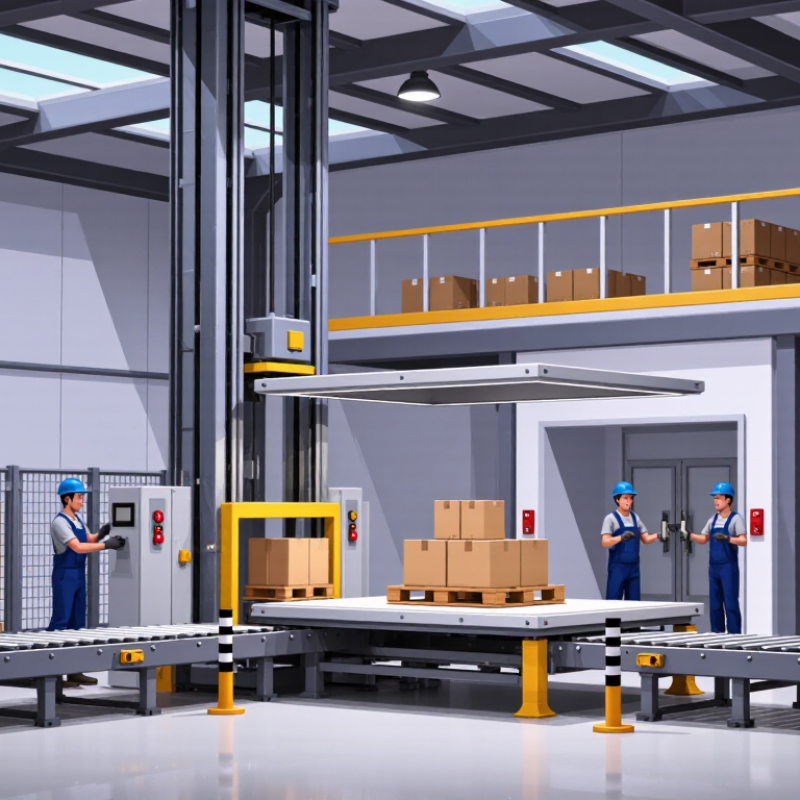
Start with the product, not the machine. Record each load’s length, width, height, weight, and packaging condition. Include the heaviest realistic case. Cartons may shift when partly filled. That detail matters. Next, calculate required throughput in units per hour, then measure the vertical distance between levels.
Check the operating environment carefully. Note temperature, dust, moisture, available floor space, and access for maintenance. Specify loading and unloading sides, conveyor speed, duty cycle, guarding, emergency stops, and control-system signals. Ask the Chinese manufacturer for load testing, cycle testing, drawings, electrical details, and maintenance instructions. Factory acceptance testing should reproduce your real load pattern, not an ideal empty cycle.
Safety requirements must match the destination market. Review applicable standards, such as ISO 12100 and conveyor safety requirements in the installation region. A compliant-looking document is not enough. Verify component ratings and test records. A technically correct lift can still be unsuitable if operators cannot clear a jam safely. I would also allow spare capacity, but not blindly. Extra capacity raises cost, height, and energy use. The better choice balances present demand with a defensible growth assumption.

China vertical lift conveyors generally fall into three practical groups: reciprocating, continuous, and spiral designs. A reciprocating vertical conveyor moves one platform between fixed levels, making it suitable for pallets, cartons, and irregular loads. It usually offers simpler maintenance and lower purchase cost. A continuous conveyor carries products through multiple levels with less waiting, but it needs controlled product spacing and consistent package dimensions. Spiral configurations save floor space and support steady flow, although cleaning and access can be less convenient. Test this detail carefully.
Configuration should follow the real application, not only the quoted lifting height. Compare load capacity, platform size, lifting speed, cycle time, entry direction, guarding, and emergency access. For example, a 1,000-kilogram pallet system needs stronger guides and a different drive arrangement than a carton lift handling 30 kilograms. MHI’s 2024 Annual Industry Report identifies robotics and automation as major supply-chain investment priorities, but automation value still depends on reliable upstream feeding. The wrong infeed can create jams.
The design should also reference recognized safety requirements, including ASME B20.1 or applicable EN standards. Grand View Research’s 2024 conveyor systems analysis reports continued market growth, driven by e-commerce and warehouse modernization. However, market growth does not guarantee suitability. Request duty-cycle data, factory test records, noise measurements, and maintenance intervals. A site survey is essential. Ceiling clearance, slab strength, temperature, dust, and operator traffic can change the preferred configuration.
How to Choose a China Vertical Lift Conveyor?
When evaluating a China vertical lift conveyor, start with real operating data. Record product weight, dimensions, hourly volume, lift height, and duty cycle. A system rated for peak capacity may still struggle during constant loading. Leave practical margin for seasonal demand and uneven product flow. Measure twice.
In my experience, safety details reveal engineering quality. Look for enclosed lifting zones, guarded access points, emergency stops, and reliable door interlocks. Load sensors should detect abnormal weight or positioning. The supplier should provide risk assessment documents, operating instructions, and maintenance procedures. Confirm that the design follows applicable local safety requirements and can be inspected by qualified personnel. Do not accept vague assurances.
Customization should fit the whole material flow, not just the machine footprint. Discuss entry and exit heights, conveyor width, pallet or carton surfaces, control signals, and available floor space. Stainless or corrosion-resistant components may help in humid environments. Ask for drawings, load calculations, test records, and a factory acceptance plan. A trial with your actual products is valuable. I once saw a compact layout look efficient, but its narrow transfer area caused repeated alignment problems. The original specification was incomplete. That lesson still matters. Choose a supplier willing to revise details, document changes, and support commissioning after delivery.
When assessing Chinese vertical lift conveyor manufacturers, begin with traceable evidence, not attractive photographs. Request the business license, factory address, organization chart, and recent production records. A capable supplier should explain frame materials, platform capacity, lifting speed, guide systems, and emergency stopping methods clearly. Ask for drawings with dimensions. Details matter.
Review quality standards against your destination market. Relevant references may include ISO 9001 for quality management, applicable GB/T standards, and EN standards for European projects. CE marking may be required, but it is not automatically proof of excellent manufacturing. Request the declaration of conformity, risk assessment, electrical schematics, and test reports. Check whether documents identify the exact model, not a similar machine.
Certification documents deserve careful questioning. Confirm the issuing body, certificate scope, validity, and matching factory location. An impressive file can still hide weak inspection practices. Visit the facility when possible, or hire an independent inspector to verify welds, guards, sensors, wiring, and load testing. Watch the conveyor run repeatedly with a realistic load. Listen for uneven movement. Small noises can become expensive failures. Factory acceptance testing should record lifting cycles, stopping distance, overload protection, and control response. I have found that suppliers sometimes explain requirements differently from their written documents. That gap needs correction before payment. Keep approved drawings, material records, inspection results, manuals, and spare-parts lists in one controlled file. Reliability is built through evidence, not promises.
Price should be judged against the complete project cost, not only the machine quote. Ask whether the price includes controls, safety guards, commissioning, packaging, and spare parts. A low quotation may exclude important site work. Compare motor power, platform size, lifting height, load capacity, and cycle speed. Request a clear cost breakdown. In my experience, unclear specifications create expensive changes later. I still find this easy to underestimate.
Tips: Ask for a written delivery schedule with production, inspection, shipping, and customs stages. Confirm the shipping term and packaging standard. Photographing the installation area before ordering can prevent awkward surprises.
Installation support deserves equal attention. Check whether remote guidance, drawings, wiring diagrams, and technician visits are included. Confirm the required floor strength, ceiling clearance, power supply, and anchor points. A supplier should explain testing procedures and provide operating instructions. Ask how damaged components will be replaced and how quickly technical questions receive answers. A practical after-sales plan should include warranty terms, spare-parts availability, troubleshooting steps, and service contacts. Do not accept vague promises such as “lifetime support.” Define response times in writing. Delivery can be delayed by port congestion or specification changes, so keep some schedule flexibility. That is inconvenient, but realistic.
| Cookie | Duration | Description |
|---|---|---|
| cookielawinfo-checkbox-analytics | 11 months | This cookie is set by GDPR Cookie Consent plugin. The cookie is used to store the user consent for the cookies in the category "Analytics". |
| cookielawinfo-checkbox-functional | 11 months | The cookie is set by GDPR cookie consent to record the user consent for the cookies in the category "Functional". |
| cookielawinfo-checkbox-necessary | 11 months | This cookie is set by GDPR Cookie Consent plugin. The cookies is used to store the user consent for the cookies in the category "Necessary". |
| cookielawinfo-checkbox-others | 11 months | This cookie is set by GDPR Cookie Consent plugin. The cookie is used to store the user consent for the cookies in the category "Other. |
| cookielawinfo-checkbox-performance | 11 months | This cookie is set by GDPR Cookie Consent plugin. The cookie is used to store the user consent for the cookies in the category "Performance". |
| viewed_cookie_policy | 11 months | The cookie is set by the GDPR Cookie Consent plugin and is used to store whether or not user has consented to the use of cookies. It does not store any personal data. |