How to Choose Quick Connect Couplers for Global Sourcing?
Choosing Quick Connect Couplers for global sourcing is not simply a price comparison. It is a risk-control decision involving pressure, media, temperature, contamination, maintenance, and regional availability. Grand View Research reported that the global hydraulic equipment market was valued at approximately USD 44 billion in 2023, with continued growth expected through 2030. This expansion increases supplier choice, but it also increases specification confusion.
Performance comes first.
A practical sourcing review should compare ISO 7241 interchangeability, ISO 16028 flat-face designs, working pressure, burst pressure, flow capacity, sealing materials, and connection cycles. MarketsandMarkets has identified rising demand for quick disconnect systems across construction, agriculture, manufacturing, and transportation applications. These environments expose couplers to mud, vibration, oil, and sudden pressure changes. A stainless-steel body may suit corrosive washdown areas, while hardened carbon steel may better serve heavy hydraulic equipment.
Fluid-power consultant Steve Skinner offers a useful warning: “A coupling is only reliable when the entire connection system is designed correctly.” The statement sounds obvious. It is still overlooked.
Ask suppliers for test reports, material certificates, dimensional drawings, and batch traceability. Check whether replacement seals are locally stocked. Confirm thread standards before ordering samples. BSP, NPT, and metric threads can look deceptively similar. They are not interchangeable.
Do not trust catalog pressure alone.
Field experience often reveals what brochures omit, including difficult sleeve operation, trapped pressure, or leakage after repeated connection. A small pilot order is wiser than a large commitment. Even then, the process is imperfect. Climate, operator habits, and installation quality may change the result. Global sourcing works best when technical evidence, local service, and honest uncertainty are evaluated together.
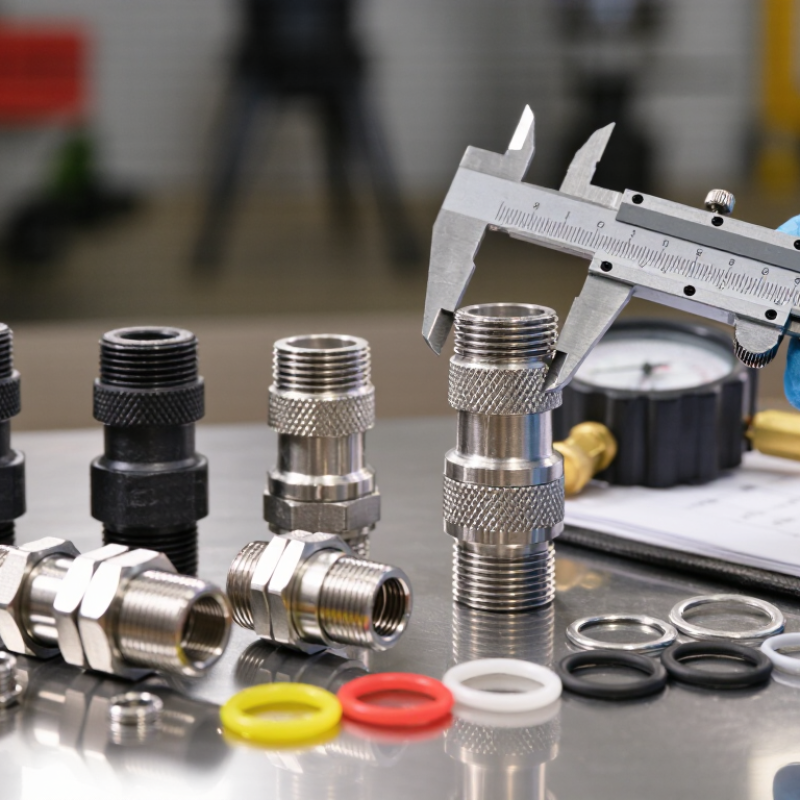
Define Quick Connect Couplers and Their Main Applications
Quick connect couplers are mechanical fittings that join fluid or gas lines without threaded assembly. They use a plug and socket mechanism, often with internal valves that close during disconnection. This design reduces leakage, maintenance time, and operator exposure to pressurized media. In practical sourcing, “quick” does not mean universal. Fit is not enough.
These couplers serve hydraulic equipment, pneumatic tools, coolant systems, agricultural machinery, medical support equipment, and process lines. A technician can change a hose near a noisy machine in seconds. Some models support high pressure, while others suit low-pressure air or clean water. Application matters more than appearance. A polished surface proves very little.
For global sourcing, compare connection profiles, nominal flow, working pressure, temperature range, seal material, and corrosion resistance. The transferred medium must match every wetted component. For example, oil service may require different seals from compressed air service. I have seen sourcing teams approve a coupler after checking only diameter and thread type. That mistake caused restricted flow and repeated maintenance. Request drawings, material certificates, test data, and samples before approving volume orders. Test the actual hose, pressure, and operating temperature together. Standards can differ between suppliers and markets, so written compatibility records are valuable. Human assumptions still fail.
Match Coupler Materials with Pressure, Temperature, and Fluid Needs
Choosing quick connect couplers for global sourcing starts with the working fluid, not the catalog price. Brass suits clean air, water, and moderate temperatures. Stainless steel is safer for corrosive fluids, salt exposure, and repeated cleaning. Engineering plastics can reduce weight, but some soften under heat or absorb chemicals. The U.S. Department of Energy reports that compressed air can consume 10% or more of industrial electricity in some facilities. Small leakage matters.
Pressure ratings need careful interpretation. A coupler rated at 1,000 psi may lose capacity at elevated temperatures. Check working pressure, burst pressure, pulse cycles, and connection size separately. ISO 4414 emphasizes risk control in pneumatic systems, including hose failure and unexpected energy release. That standard is useful, but it does not replace application testing. I still recheck the supplier’s derating chart.
Fluid compatibility is more than “metal versus plastic.” Seal compounds must resist swelling, hardening, and permeation. Oils, glycol mixtures, solvents, and oxygen-rich service require different evaluations. The U.S. National Institute of Standards and Technology highlights the importance of validated measurement conditions when comparing industrial performance. Apply that discipline to coupler trials. Test with the actual fluid, temperature, pressure, and cleaning method. Do not trust a universal chart too quickly. It can be incomplete. Global sourcing also requires dimensional checks, because similar-looking profiles may not interconnect safely. A sample fitting, cycle test, and documented material certificate often reveal problems before shipment.
Select Connection Types, Sizes, Sealing Methods, and Flow Rates
How to Choose Quick Connect Couplers for Global Sourcing?
Choosing quick connect couplers starts with the connection type. Threaded couplers suit fixed equipment and high-pressure lines, while push-to-connect designs speed up repeated maintenance. Cam-lock connections work well for larger hoses and temporary transfer systems. Flat-face couplers help reduce fluid loss and contamination during disconnection. I have seen projects fail because the hose fit correctly, but the coupler profile did not match.
Size requires more than checking the pipe diameter. Compare nominal size, actual bore, thread form, and metric or imperial measurements. A one-inch label may hide a smaller internal passage, causing unnecessary pressure loss. Confirm the mating halves, hose tail dimensions, and working pressure from technical drawings. Request sample pieces before approving a large international order. It costs less than correcting a container of mismatched parts.
Sealing methods should match the medium, temperature, and cleaning process. Elastomer seals offer flexibility, while PTFE-based seals handle many demanding chemical conditions. Compatibility must be verified, not guessed. Flow rate also depends on bore size, valve design, hose length, and pressure drop. Ask suppliers for tested flow data, not attractive estimates. A useful review includes material certificates, batch traceability, inspection records, and leak-test results. My own early selection relied too heavily on catalog flow rates; real installation data later showed a noticeable difference.
Compare Suppliers, Total Costs, Testing Requirements, and Global Logistics
Choosing quick connect couplers for global sourcing requires more than comparing unit prices. A supplier should provide material data, dimensional drawings, pressure ratings, and traceable quality records. Ask how they control sealing surfaces, batch variation, and corrective actions. Request production samples before approving a large order. Responsiveness matters. A polished sales response cannot replace evidence from the factory.
Build a landed-cost sheet, not a purchase-price comparison. Include tooling, packaging, inspection, freight, duties, insurance, warehousing, and replacement costs. Different connection sizes may change carton density and shipping expense. A low quote can still lose money after leakage, delays, or rejected batches. This is often missed. Ask suppliers to quote the same quantities and delivery terms. Use clear Incoterms and confirm who handles export documents, customs data, and damage claims.
Testing should match the real operating environment. Check pressure, vacuum, leak rate, flow restriction, temperature, corrosion exposure, and connection cycles. For safety-critical use, define acceptance limits before sampling begins. Require test reports with methods, equipment identification, dates, and calibrated instruments. Run independent verification when supplier data seems incomplete. Global logistics also need attention to lead times, moisture protection, spare quantities, and local service capacity. I would not approve a supplier from one successful sample alone. Samples can mislead. Review repeat batches and inspect random cartons before shipment.