How to Choose the Best Battery System in Poultry Farming
Choosing the right Battery System In Poultry farming affects bird welfare, labor, hygiene, production, and long-term costs. A system may look efficient in a showroom, yet perform differently under heat, dust, and daily cleaning. Experienced farm managers examine aisle width, ventilation, lighting, manure removal, drinker access, and egg collection before comparing prices. They also assess flock behavior, injury rates, mortality records, and worker safety. Small details matter. A blocked drinker can reduce water intake across an entire row. Poor airflow can turn a manageable summer into a costly health challenge. The best choice depends on farm size, climate, staffing, flock goals, and applicable animal-welfare requirements. There is no universal winner.
This article introduces a practical framework for evaluating battery systems with measurable evidence. It considers cage design, automation, maintenance access, spare-part availability, energy use, and expected service life. Buyers should request performance data, installation references, warranty terms, and transparent operating costs from established suppliers. Independent veterinary advice and current standards should guide decisions, especially where housing rules differ by region. A system that reduces labor may still create hidden expenses through repairs or complicated sanitation. That possibility deserves attention. Farm trials, routine inspections, and accurate records provide stronger evidence than sales claims alone. Some recommendations may need revision after real-world testing; that is not failure, but responsible decision-making. The goal is a safe, practical, and financially sound housing choice that supports healthy birds and consistent farm performance.
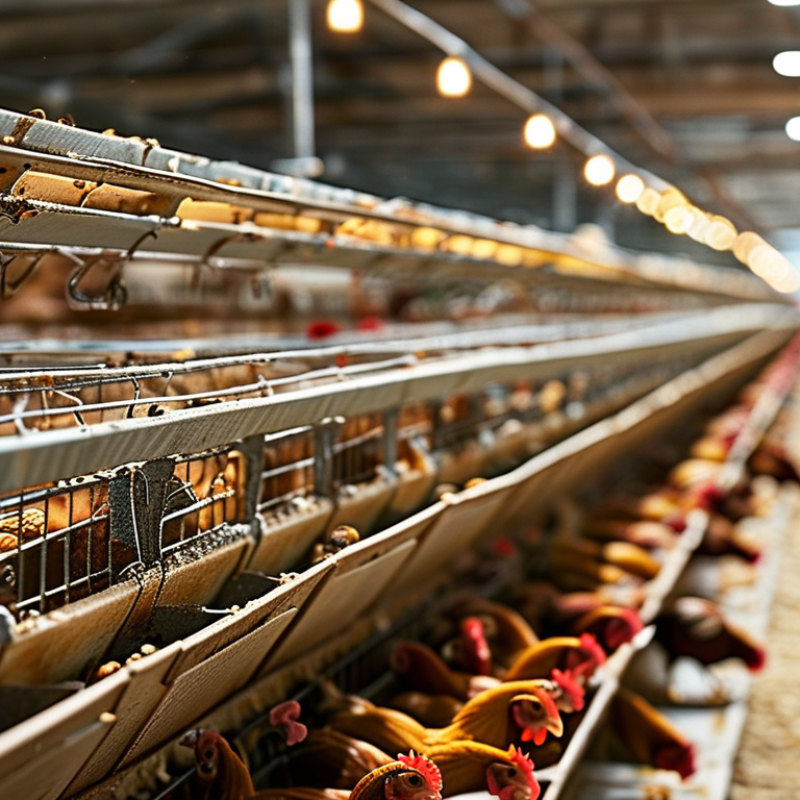
Define Housing Needs: 750 cm² per Hen Under EU Enriched-Cage Rules
How to Choose the Best Battery System in Poultry Farming
Define Housing Needs: 750 cm² per Hen Under EU Enriched-Cage Rules
Choosing a battery system starts with usable floor area, not advertised capacity. Under Council Directive 1999/74/EC, each hen in an EU enriched cage must receive at least 750 cm² of total space. At least 600 cm² must be usable. The framework also requires a nest, litter area, and 15 cm of perch space per hen. Measure internal dimensions after all fittings are installed. A cage can look spacious on paper.
EFSA’s 2023 scientific opinion on laying-hen welfare connects restricted movement, poor litter access, and unsuitable perches with welfare risks. Use these findings when reviewing the layout. Do not check compliance alone. Provide clear routes to nests and litter areas. Remove sharp edges and blocked passages. Eurostat’s agricultural statistics record approximately 6.8 million tonnes of eggs produced in the EU during 2022. Small design errors can affect very large flocks. Calculate stocking density by usable area and actual bird numbers. Then test ventilation, manure removal, inspection access, and emergency handling at full capacity. Real houses are dusty and noisy.
I have seen elegant plans become awkward during daily collection. That deserves another review. A practical design may need fewer hens per module, even when the legal limit appears financially attractive.
Compare Cage Designs Using 9 Hens per m² and Flock-Size Data
Choosing a battery system starts with usable floor area, not catalogue capacity. Under European Union Directive 1999/74/EC, enriched cages may house up to nine hens per square metre of usable area. This is a legal ceiling, not automatically a welfare target. For a flock of 3,000 hens, the calculation requires at least 333 square metres of usable space. Walkways, service zones, and equipment footprints must be excluded from that figure.
Flock size changes the practical comparison. The EFSA Journal’s 2023 scientific opinion on laying-hen welfare identifies group size, stocking density, and inspection quality as connected management factors. Larger groups can improve labour efficiency, but they may hide injured birds and complicate behavioural observation. A compartment holding 120 hens also behaves differently from one holding 30 hens, even when both meet the same density calculation. Smaller groups may support closer inspection, yet they can increase equipment numbers and cleaning points.
Use flock records beside cage dimensions. Record mortality, egg damage, dirty eggs, feed use, and time needed for daily checks. FAO poultry production data shows how quickly commercial flock numbers can scale, but national averages do not reveal individual housing conditions. That limitation matters. I would not select a system from density alone; a spreadsheet may look perfect while a worker struggles to reach the rear tier. Pilot testing one section can expose blind spots before the full installation.
Check Feeding and Watering Capacity: One Nipple per 10 Hens
How to Choose the Best Battery System in Poultry Farming
Choosing a battery system starts with checking daily feeding and watering capacity. Water access deserves careful attention because hens drink frequently, especially during hot weather. A practical benchmark is one nipple drinker for every 10 hens. For a flock of 1,000 hens, install at least 100 nipples, then review pressure, line length, and peak demand. This ratio is only a starting point. House design can change the result.
During a hot afternoon, observe how birds use the drinker lines. If hens crowd around certain sections, water distribution may be uneven. Check nipple height as well. It should suit the birds’ shoulder level and allow easy drinking without excessive splashing. Young pullets may need lower settings during the first days. Water should look clean, and leaks should be repaired quickly. Small details matter.
Feeding capacity must match the flock size and growth stage. Each hen needs enough feeder access to eat without pushing or long waiting periods. Inspect every feeder for blocked outlets, uneven feed levels, and spilled feed beneath the system. I once treated a low water-use reading as good news, but it came from a partially blocked line. That mistake showed why records need physical checks. Record water consumption, feed use, mortality, and bird behavior together. Ask an independent poultry technician to review the layout before installation.
How to Choose the Best Battery System in Poultry Farming: Feeding and Watering Capacity Guide | Battery System Size | Recommended Flock Size | Minimum Nipples
(1 per 10 Hens) | Recommended Nipples
(Including 10% Spare Capacity) | Estimated Water Flow
at 70 mL/min per Nipple | Typical Daily Water Demand
at 250 mL per Hen | Minimum Linear Feeding Access
at 10 cm per Hen | Suitable Application |
| Capacity Planning by Flock Size |
| Small Battery System | 120 hens | 12 nipples | 14 nipples | 0.84 L/min | 30 L/day | 12 m of linear access | Small flocks, pilot houses, or limited-scale egg production |
| Medium Battery System | 240 hens | 24 nipples | 27 nipples | 1.68 L/min | 60 L/day | 24 m of linear access | Family farms and compact commercial houses |
| Large Battery System | 480 hens | 48 nipples | 53 nipples | 3.36 L/min | 120 L/day | 48 m of linear access | Commercial houses requiring higher daily throughput |
| Extra-Large Battery System | 960 hens | 96 nipples | 106 nipples | 6.72 L/min | 240 L/day | 96 m of linear access | Large-scale production with automated feed and water management |
| Key Selection Checks |
| Watering Capacity | Use at least one nipple for every 10 hens | Install additional nipples where possible to reduce competition and provide operational reserve | Check pressure, filtration, drinker height, leakage control, and water availability at the end of every line |
| Feeding Capacity | Provide approximately 10 cm of linear feeding access per hen | Calculate total trough access for both sides when birds can feed from both sides | The feeder should provide an even feed distribution and allow all birds to access feed without excessive crowding |
| Daily Water Reserve | Plan for at least the calculated daily demand | Add reserve capacity for hot weather, cleaning, and short-term supply interruptions | A storage tank, pressure regulator, and reliable backup supply can improve system continuity |
| System Expansion | Select a system that can support future flock growth | Allow space for additional cage rows, nipples, feed lines, and service access | Confirm that the building layout, ventilation, manure handling, and electrical capacity can support expansion |
| Planning notes: Water demand is estimated at 250 mL per hen per day and may increase with temperature, feed composition, bird age, and health status. The water-flow estimate uses 70 mL/min per nipple as a planning value; actual flow must be verified against the installed nipple specifications and operating pressure. The 10 cm feeding-access value is a practical planning reference, while local animal-welfare and housing regulations should always take priority. |
Assess Welfare and Air Quality Against the 20 ppm Ammonia Benchmark
Choosing a battery system for poultry farming requires more than comparing capacity and price. Bird welfare and air quality must remain central. Ammonia should stay below the 20 ppm benchmark, measured at bird level, not near the ceiling. Portable meters can reveal sharp increases during humid nights or after manure removal.
In practice, battery layout affects ventilation. A poorly arranged system may restrict airflow beneath cages and trap damp litter. Watch bird behavior closely. Watery eyes, coughing, reduced activity, and avoidance of certain areas may signal discomfort. Record ammonia readings at different times, including early morning. One reading is not enough. I once underestimated air quality after checking only during daylight. That was a useful mistake.
Tips: Choose equipment that supports clear access for cleaning, inspection, and manure management. Install calibrated ammonia monitors at representative locations. Check sensor accuracy regularly. Keep ventilation stable, but avoid strong drafts at bird height. Review readings alongside humidity, temperature, litter condition, and bird behavior. Ask an independent poultry specialist to assess the system before major investment. A cheaper battery design may create higher labor and ventilation costs later. Welfare performance should be verified over several production cycles, not judged from installation day alone.
Calculate System ROI from 110 g Daily Feed Intake per Laying Hen
Choosing a battery system starts with production scale, not battery capacity. A laying hen eating 110 grams daily consumes 40.15 kilograms annually. For 10,000 hens, that equals 401.5 tonnes of feed. At an assumed price of $0.35 per kilogram, annual feed exposure reaches about $140,525. The 110-gram figure is only a planning baseline, not a universal standard. Feed intake changes with temperature, genetics, body weight, and egg output. FAO poultry production guidance supports evaluating intake beside productivity and environmental conditions.
Battery ROI should connect energy savings with this operating scale. Assume the farm shifts 500 kilowatt-hours daily for 300 days. At $0.14 per kilowatt-hour, annual energy savings reach $21,000. Add $8,000 in avoided demand charges, then subtract $2,700 for maintenance. A $90,000 system produces an estimated annual benefit of $26,300, giving a simple payback near 3.4 years. NREL’s 2024 Annual Technology Baseline identifies usable capacity, round-trip efficiency, degradation, and replacement cost as essential storage variables. Ignoring them makes the spreadsheet look better than reality.
The weak point is outage protection. Ventilation, cooling, lighting, and water pumps may protect more value than feed savings. Record actual load profiles for at least four weeks. Measure outage duration and lost egg output. Do not assign avoided-loss value without farm records. USDA feed and poultry statistics also show how volatile production costs can become, so test low-price and high-price scenarios. A smaller battery may deliver better returns when peak charges are modest. Safety inspections, ventilation clearance, and compliant electrical installation remain non-negotiable.
How to Choose the Best Battery System in Poultry Farming
ROI model based on 110 g daily feed intake per laying hen
401.5 t Estimated annual feed use for 10,000 hens
438 MWh Estimated annual electricity demand
200 kWh Best modeled balance of savings and investment
The model assumes 10,000 laying hens, 110 g of feed per hen per day, average electricity use of 0.12 kWh per hen per day, one battery cycle per day, 90% round-trip efficiency, and five-year ownership. Annual savings represent estimated peak-demand reduction and time-of-use energy shifting. Actual ROI depends on local electricity tariffs, solar generation, installation cost, financing, and battery degradation.