Choosing the right Gas Cylinder Transportation Frame requires more than comparing prices or external appearance. The frame must match the cylinders, vehicle, handling equipment, and working environment. A narrow frame may fit through a doorway but become unstable during turning. A heavy frame may improve durability but reduce payload efficiency. Small details matter.
Start by confirming cylinder diameter, height, valve protection, total weight, and center of gravity. Check whether the frame supports upright storage without pressure on valves or regulators. Strong retaining chains, padded contact points, and secure locking bars can prevent movement on uneven roads. Forklift pockets should accept the actual fork dimensions, not only the advertised capacity. Inspect welds, corner joints, lifting points, and surface coatings for visible weaknesses or corrosion.
Safety comes first.
A reliable selection also depends on load ratings, maintenance access, and compatibility with the transport vehicle. Ask the frame manufacturer for drawings, test information, material specifications, and inspection guidance. Independent review may be appropriate for unusual loads or demanding environments. Local transport rules and workplace requirements should also be verified with qualified professionals. They can differ by cylinder type and operating location.
Do not assume the largest frame is the safest choice. It may leave cylinders poorly restrained. Do not trust painted steel alone. Coating quality can hide design weaknesses, and even a well-built frame needs regular inspection. A practical review should include loading, unloading, turning, parking, and emergency access. No checklist catches every mistake. Reconsider the design when real handling conditions reveal problems.
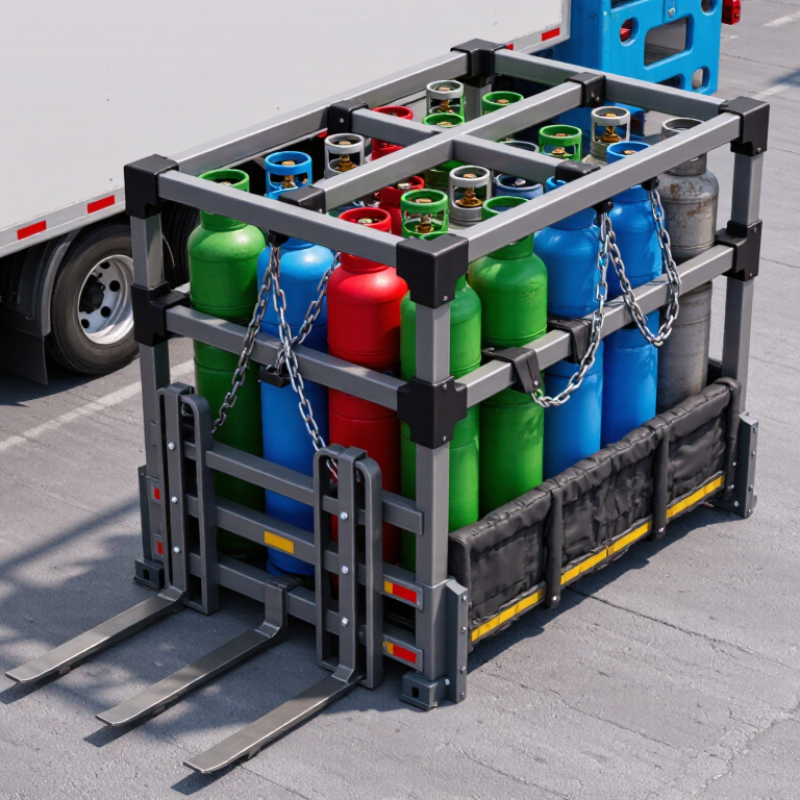
Choosing a gas cylinder transportation frame starts with the cylinders themselves. Measure their diameter, height, valve position, and total loaded weight. A frame must support these details without forcing the cylinders into tight spaces. Different gases may require separate handling procedures, so check the supplier’s safety data and local transport requirements.
A reliable frame should use strong restraints at more than one level. Chains, straps, or locking bars must prevent rolling, sliding, and upward movement. The base needs a non-slip surface and enough clearance for inspection. Rounded edges help protect cylinder walls. Good ventilation is essential, especially when a vehicle or storage area has limited airflow. Keep valves protected from impact. They are small, but they are not forgiving.
Frame compatibility matters too. Check its attachment points against the vehicle, lifting equipment, and loading route. A frame can look solid yet shift during sudden braking. That mistake is easy to underestimate. Inspect welds, fasteners, straps, and corrosion before every trip. Keep inspection records with dates and corrective actions. Requirements may differ by region, cylinder material, gas classification, and transport method, so confirm them with a qualified safety professional. A practical trial with an empty frame can reveal awkward access or poor balance, although it cannot replace a full safety assessment.

Choosing the right gas cylinder transportation frame starts with cylinder size and weight. A 50-liter water-capacity cylinder charged to 200 bar may hold roughly 10,000 liters of free gas. Its filled mass can exceed 70 kilograms, depending on gas and construction. The 2023 International Energy Agency Global Hydrogen Review notes that hydrogen storage commonly requires high-pressure systems, making load control especially important. Do not estimate by appearance.
Measure cylinder diameter, overall height, valve clearance, and centre of gravity. Record the tare weight and the maximum filled weight from the cylinder marking. Then compare these figures with the frame’s rated capacity. A frame rated for 300 kilograms may still be unsuitable if the load sits too high or shifts during movement. Small details matter. I have seen frames fit the body but obstruct the valve guard.
Compatibility also includes restraint points, cradle geometry, and material resistance. ISO 11114-1 provides guidance on material compatibility between gases and cylinder materials, while ISO 11625 addresses cylinder handling and transport considerations. Use padded contact surfaces for painted or composite cylinders, but avoid soft restraints that stretch under impact. Check whether the frame accepts the cylinder’s valve protection cap and allows inspection labels to remain visible.
A perfect fit is uncommon. Recheck measurements after loading. If cylinders mix in diameter, separate them with adjustable supports, not improvised timber. The weakest restraint usually controls the risk.
Choosing the right gas cylinder transportation frame starts with material selection. Powder-coated carbon steel suits routine indoor use and moderate loads. Outdoor storage demands stronger corrosion protection. Stainless steel resists moisture better, while aluminum reduces weight but may deform under impact. Inspect welds, joints, and caster mounts carefully. Small cracks matter.
Safety features must support real handling conditions. CGA P-1 recommends keeping cylinders upright, secured, and protected from valve damage. Use two independent restraints, such as chains or heavy-duty straps. Add a valve guard, rounded edges, and lockable wheels. Forklift pockets can help, but they also create new pinch points. HSE’s Work-related Fatal Injuries in Great Britain, 2023/24, recorded 135 worker deaths. The figure is not cylinder-specific, but it reinforces the value of practical safeguards. Do not trust appearance alone.
Stability depends on the center of gravity, base width, and wheel design. Select a frame with a rated capacity exceeding the fully loaded cylinder weight. Test it on ramps, uneven floors, and sharp turns. Brakes should hold the frame without sliding. A frame can feel stable when empty, then become awkward when loaded. That is an easy mistake. Check the restraint position again after loading. ISO 11625 and OSHA 29 CFR 1910.101 provide useful handling references, yet site conditions still require judgment. Specifications help, but they cannot replace inspection.
A suitable frame starts with cylinder geometry, not appearance. Measure diameter, height, valve clearance, and total loaded weight. The mounting system should hold each cylinder upright during braking, turning, and uneven movement. Select adjustable restraints with padded contact points. Metal-to-metal contact can damage protective surfaces and create unwanted movement.
Handling design matters just as much. Choose frames with balanced weight distribution, large wheels, secure handles, and a turning radius suited to the workplace.
The HSE reported 543,000 workers affected by work-related musculoskeletal disorders in Great Britain during 2023/24, causing 7.8 million lost working days.
Poorly positioned cylinders can increase pushing and lifting strain. Keep the center of gravity low. It helps.
A practical inspection should check restraint tension, wheel condition, frame welds, and access around valves. OSHA 29 CFR 1910.101 requires compressed gas equipment to follow recognized safe practices, including CGA guidance. That makes documentation important.
Record load limits, inspection dates, and training requirements. I would not rely on a frame that works only on smooth floors. Real routes include thresholds, ramps, and tight corners. Test the loaded frame there. Recheck after repeated use, because the best configuration may still need adjustment.
How to Choose the Right Gas Cylinder Transportation Frame?
Comparing Compliance, Maintenance, and Total Cost of Ownership
A compliant frame should secure cylinders during loading, movement, and storage. Check rated capacity, restraint design, corrosion protection, wheel brakes, and inspection access. Requirements vary by cylinder type and transport route. Review applicable ISO standards, local transport rules, and carrier procedures before purchasing. PHMSA’s 2023 hazardous materials data tables track loading, unloading, handling, and package failures as separate incident factors. That distinction matters. A frame can pass a basic check yet remain difficult to inspect.
Maintenance affects the real purchase price. Look for replaceable straps, visible welds, drain holes, and standard fasteners. Record inspections, repairs, impacts, and rejected components. The U.S. Bureau of Labor Statistics reported 2.6 million nonfatal workplace injuries in private industry during 2023. Handling equipment cannot prevent every injury, but poor ergonomics can increase exposure. A five-year ownership model should include purchase cost, inspections, spare parts, cleaning, downtime, training, and disposal. This approach is not perfect. Spreadsheet savings can hide a failed wheel or a delayed delivery.
Tips: Ask suppliers for load-test evidence, inspection instructions, and replacement-part pricing. Photograph the frame after receiving it. Compare corrosion after six months, not only on delivery day. PHMSA records and internal inspection logs should support the decision. A cheaper frame may still be the expensive choice.
| Frame Type | Typical Construction | Typical Cylinder Capacity | Compliance Considerations | Load Restraint and Handling | Maintenance Profile | Expected Service Life | Indicative Purchase Cost | Estimated 5-Year Maintenance Cost | Estimated 5-Year Total Cost of Ownership | Best-Fit Use Case | Overall Assessment |
|---|---|---|---|---|---|---|---|---|---|---|---|
| Fixed Carbon-Steel Frame | Welded carbon-steel base with painted or powder-coated finish | 6–16 standard cylinders, depending on frame dimensions and cylinder diameter | Can be suitable when designed for the applicable transport, lifting, and cylinder-restraint requirements. Welding quality, load rating, tie-down points, and corrosion protection should be documented. | Usually includes steel pockets, chains, straps, or clamp bars. Forklift pockets and lifting lugs should be rated and clearly marked. | Regular inspection for corrosion, damaged welds, bent members, loose restraints, and coating failure. Damaged restraint hardware should be replaced promptly. | 8–15 years in normal industrial service; shorter in coastal, chemical, or high-humidity environments without refurbishment | US$900–1,800 | US$600–1,200 | US$1,500–3,000 | General industrial distribution, warehouse handling, and routine regional transport | Strong value |
| Hot-Dip Galvanized Steel Frame | Welded carbon-steel frame with zinc coating applied after fabrication | 6–16 standard cylinders | Provides improved corrosion resistance, but galvanizing does not replace requirements for structural design, securement, lifting-point verification, or periodic inspection. | Good compatibility with forklift pockets, lifting lugs, chains, and straps. Contact points should prevent cylinders from rubbing against sharp or abrasive surfaces. | Lower coating-maintenance burden than painted steel. Inspect cut edges, weld areas, impact damage, zinc loss, and fasteners for corrosion. | 10–20 years, depending on coating thickness, exposure, abrasion, and chemical environment | US$1,200–2,400 | US$450–900 | US$1,650–3,300 | Outdoor yards, humid areas, frequent loading cycles, and mixed-weather transport | Best balance for outdoor use |
| Stainless-Steel Frame | Fabricated stainless-steel structure with corrosion-resistant hardware | 6–12 standard cylinders | May be appropriate for corrosive or hygiene-sensitive environments, subject to the same structural, lifting, and cylinder-restraint requirements as other frames. Material selection should consider chemical compatibility. | Typically uses integrated pockets, straps, chains, or clamp systems. Galvanic corrosion should be considered where dissimilar metals contact each other. | Low coating maintenance, but welds, crevices, fasteners, and areas exposed to chlorides require inspection and cleaning. Surface contamination can still cause corrosion. | 15–25 years in suitable environments with proper cleaning and inspection | US$2,500–5,000 | US$400–1,000 | US$2,900–6,000 | Chemical processing, coastal facilities, clean environments, and applications where corrosion control is critical | Highest corrosion resistance |
| Aluminum Frame | Bolted or welded aluminum structure with corrosion-resistant fittings | 4–12 standard cylinders | Must be assessed for structural capacity, fatigue, impact resistance, lifting loads, and compatibility with the intended transport method. Aluminum can require larger sections to achieve equivalent stiffness to steel. | Lower tare weight improves manual positioning and vehicle payload efficiency. Cylinder restraints and lifting points must be designed to avoid local deformation. | Inspect for dents, cracks, fretting, loose fasteners, galvanic corrosion, and fatigue around joints. Repairs may require qualified aluminum fabrication. | 10–20 years when protected from severe impact and incompatible metal contact | US$1,800–3,800 | US$700–1,500 | US$2,500–5,300 | Payload-sensitive transport, frequent repositioning, and facilities requiring lighter handling equipment | Best for low tare weight |
| Modular Adjustable Steel Frame | Bolted or mechanically adjustable steel frame with interchangeable supports | 4–20 cylinders, subject to the approved configuration and rated load | Every configuration should retain the required load rating, center-of-gravity limits, restraint arrangement, and lifting instructions. Changeable components should be traceable and secured against incorrect assembly. | Flexible pockets, rails, straps, and dividers accommodate different cylinder sizes. More adjustment points require disciplined pre-use checks. | Inspect bolts, locking pins, adjustment slots, welds, restraints, and frame alignment. Maintain an inspection record for configuration changes and repairs. | 8–15 years, depending on adjustment frequency, impact exposure, and corrosion protection | US$1,600–3,500 | US$800–1,700 | US$2,400–5,200 | Mixed cylinder fleets, multiple depot configurations, and operations needing capacity flexibility | Most flexible option |
| Cost basis and selection notes: Indicative costs are generic market ranges in US dollars for the frame only and exclude cylinders, vehicle modifications, freight, taxes, certification testing, and local regulatory approval. Five-year total cost of ownership is calculated as purchase cost plus routine inspection, cleaning, corrosion control, restraint replacement, and minor repairs; it excludes major accident damage and downtime. Actual compliance requirements vary by jurisdiction, cylinder type, gas classification, transport mode, and lifting method. Always verify the applicable dangerous-goods transport rules, workplace-safety requirements, lifting standards, and manufacturer instructions before placing a frame into service. | |||||||||||
| Cookie | Duration | Description |
|---|---|---|
| cookielawinfo-checkbox-analytics | 11 months | This cookie is set by GDPR Cookie Consent plugin. The cookie is used to store the user consent for the cookies in the category "Analytics". |
| cookielawinfo-checkbox-functional | 11 months | The cookie is set by GDPR cookie consent to record the user consent for the cookies in the category "Functional". |
| cookielawinfo-checkbox-necessary | 11 months | This cookie is set by GDPR Cookie Consent plugin. The cookies is used to store the user consent for the cookies in the category "Necessary". |
| cookielawinfo-checkbox-others | 11 months | This cookie is set by GDPR Cookie Consent plugin. The cookie is used to store the user consent for the cookies in the category "Other. |
| cookielawinfo-checkbox-performance | 11 months | This cookie is set by GDPR Cookie Consent plugin. The cookie is used to store the user consent for the cookies in the category "Performance". |
| viewed_cookie_policy | 11 months | The cookie is set by the GDPR Cookie Consent plugin and is used to store whether or not user has consented to the use of cookies. It does not store any personal data. |