How to Choose the Right Hydraulic Rubber Hose?

How to Choose the Right Hydraulic Rubber Hose?

Choosing the right Hydraulic Rubber Hose is a safety decision, not merely a purchasing task. A hose may look suitable on a clean warehouse shelf, yet fail beside a hot pump or vibrating valve. The correct choice must match pressure, temperature, fluid compatibility, bend radius, abrasion exposure, and installation space.

Industry research supports this careful approach. MarketsandMarkets’ Hydraulic Hose Market report identifies construction, agriculture, mining, and industrial machinery as major demand sectors. These applications expose hoses to different pressures, temperatures, and mechanical stresses. The Freedonia Group also highlights replacement demand as an important market driver, because aging hoses remain common in working equipment. Market growth sounds positive. It also means more inexperienced selections may reach the field.

Fluid-power educator Paul J. Michael has offered a useful principle: “The hose must be selected for the application, not simply for the pressure.” That sentence deserves attention. A hose rated for 3,000 psi can still fail when its bend radius is ignored. A bright outer cover can hide internal deterioration. Standards such as SAE J517 and ISO 18752 provide valuable performance guidance, but they cannot replace an honest site inspection.

This guide explains how to compare hose construction, pressure ratings, temperature limits, fittings, and routing conditions. It also considers impulse pressure, fluid type, coupling compatibility, and maintenance records. Small details matter. A clamp edge, a twisted fitting, or two extra centimeters of bend can change service life. No selection method is perfect. However, documenting the real operating environment usually prevents the most expensive mistakes.
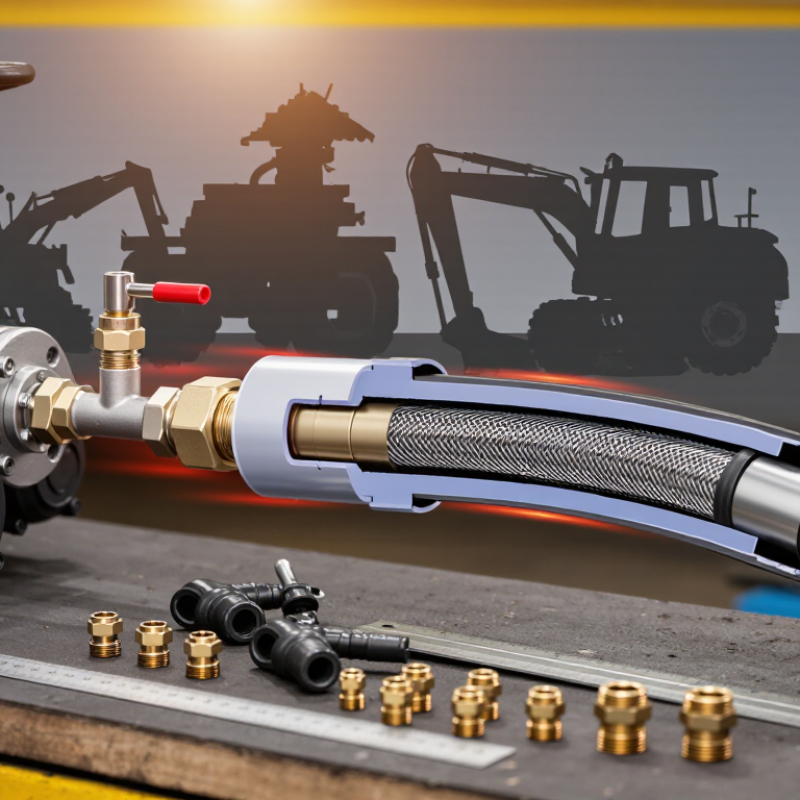
How to Choose the Right Hydraulic Rubber Hose?

Classify Hose Types by SAE J517 and ISO 18752 Pressure Standards

Choosing the right hydraulic rubber hose starts with its pressure standard. SAE J517 classifies hoses by construction, reinforcement, and application. Common designations include 100R1, 100R2, and compact hose categories. Their working pressures can change with hose size, temperature, and assembly method. Never select a hose by its code alone.

ISO 18752 uses a more performance-focused system. It defines pressure classes, such as 5, 10, 16, 20, 25, 35, and 42 MPa. It also evaluates impulse performance, dimensional limits, and hose construction. This approach helps engineers compare hoses under constant-pressure conditions. A higher pressure class does not automatically suit every machine.

Check the actual operating pressure, including hydraulic spikes. Then verify fluid compatibility, temperature range, minimum bend radius, and coupling requirements. The hose should exceed normal working pressure without approaching its burst rating. During field inspections, I also check abrasion near clamps and sharp frame edges. Small damage often appears before a pressure failure. I still recheck the standard and size together, because a neat pressure chart can mislead. The wrong fitting can ruin a correctly rated hose. Shorter routing may reduce movement, but excessive bending can shorten service life. Select the standard for the system, not for convenience.


Match Working Pressure, 4:1 Burst Ratio, and Temperature Ratings

How to Choose the Right Hydraulic Rubber Hose?

Choose a hydraulic rubber hose by matching its working pressure to the system’s real operating conditions. The rating must cover normal pressure, pressure spikes, and repeated cycling. Do not select a hose based on average pressure alone. Hydraulic circuits can surge during startup, braking, or sudden valve closure. Keep margin for those events.

Burst pressure should be at least four times the working pressure. This is the 4:1 burst ratio. For example, a hose rated for 3,000 psi working pressure should withstand at least 12,000 psi before bursting under controlled testing. That ratio is a safety reference, not permission to operate near burst pressure. Field inspections often reveal damaged fittings before the hose itself fails. The connection matters too.

Temperature ratings deserve equal attention. Check the hose rating against both the hydraulic fluid and the surrounding air. A hose may tolerate hot oil but fail early beside an engine manifold. Cold starts can also make rubber stiff and less flexible. Verify the fluid compatibility, bend radius, and fitting security. I sometimes see pressure chosen correctly, while temperature is treated as an afterthought. That mistake is easy to make. It can shorten service life quietly. Recheck the selection against actual operating records, especially when pressure and heat rise together.

How to Choose the Right Hydraulic Rubber Hose? - Match Working Pressure, 4:1 Burst Ratio, and Temperature Ratings

Use the hose category, working pressure, burst requirement, temperature range, and application conditions together when selecting a hydraulic hose.

Hose Type Typical Construction Typical Maximum Working Pressure Minimum Burst Pressure at 4:1 Ratio Typical Temperature Range Recommended Applications Key Selection Considerations
Low-Pressure Textile-Reinforced Hose Oil-resistant synthetic rubber tube with textile braid or spiral reinforcement Up to 1,000 psi
(6.9 MPa)
At least 4,000 psi
(27.6 MPa)
−40°C to +100°C
(−40°F to +212°F)
Return lines, drain lines, suction and low-pressure fluid transfer Do not use for high-pressure pump outlets or severe impulse service unless the specific hose is rated for it.
SAE 100R1 / EN 853 1SN One high-tensile steel-wire braid with an oil-resistant rubber tube and cover Approximately 2,500–3,000 psi
(17.2–20.7 MPa)
At least 10,000–12,000 psi
(69.0–82.7 MPa)
−40°C to +100°C
(−40°F to +212°F)
General hydraulic circuits, mobile equipment, moderate-pressure lines Confirm the pressure rating for the exact inside diameter and fluid type before installation.
SAE 100R2 / EN 853 2SN Two high-tensile steel-wire braids Approximately 4,000 psi
(27.6 MPa)
At least 16,000 psi
(110.3 MPa)
−40°C to +100°C
(−40°F to +212°F)
High-pressure hydraulic lines, construction machinery, lifting equipment Choose this construction when pressure and mechanical protection exceed the capability of a single-wire braid.
SAE 100R12 Four spiral layers of heavy steel wire with an oil-resistant rubber tube and cover Approximately 4,000 psi
(27.6 MPa)
At least 16,000 psi
(110.3 MPa)
−40°C to +121°C
(−40°F to +250°F)
High-pressure, high-impulse circuits with frequent pressure fluctuations Use when repeated impulse loads are expected; verify bend radius and installation requirements.
SAE 100R13 Multiple spiral layers of high-tensile steel wire Approximately 5,000 psi
(34.5 MPa)
At least 20,000 psi
(137.9 MPa)
−40°C to +121°C
(−40°F to +250°F)
Very high-pressure and high-impulse circuits in demanding mobile and industrial systems Use only with compatible fittings and professional assembly procedures.
SAE 100R15 / EN 856 4SH Four or more spiral layers of high-tensile steel wire for severe-duty service Approximately 6,000 psi
(41.4 MPa)
At least 24,000 psi
(165.5 MPa)
−40°C to +100°C
(−40°F to +212°F)
Ultra-high-pressure hydraulic systems, heavy-duty mining and construction equipment Prioritize certified assemblies, correct crimp specifications, and adequate clearance from abrasion and heat sources.
SAE 100R7 Thermoplastic Hose Thermoplastic tube with synthetic-fiber reinforcement and a thermoplastic cover Up to approximately 3,000 psi
(20.7 MPa)
At least 12,000 psi
(82.7 MPa)
−40°C to +93°C
(−40°F to +200°F)
Compact routing, control systems, pilot lines, and applications requiring low permeability Check electrical conductivity requirements; some thermoplastic hoses are non-conductive.
SAE 100R8 Thermoplastic Hose Thermoplastic tube with two layers of synthetic-fiber reinforcement Up to approximately 4,000 psi
(27.6 MPa)
At least 16,000 psi
(110.3 MPa)
−40°C to +93°C
(−40°F to +200°F)
High-pressure control lines, compact hydraulic equipment, and applications requiring light weight Confirm compatibility with petroleum-based fluids, water-based fluids, temperature, and electrical requirements.

Important: The values shown are representative selection ranges, not universal ratings. Actual working pressure, burst pressure, temperature rating, bend radius, fluid compatibility, and electrical properties depend on the exact hose size, construction, fluid, fittings, and applicable standard. Always select a hose whose working pressure is equal to or higher than the system's maximum pressure, and maintain a minimum burst-to-working-pressure ratio of 4:1 unless a stricter requirement applies.

Check Fluid Compatibility Using Tube, Reinforcement, and Cover Materials

How to Choose the Right Hydraulic Rubber Hose?

Fluid compatibility starts with the tube, not the hose’s outside appearance. ISO 11158 classifies mineral-oil fluids into groups such as HH, HL, HM, HV, and HG. Each group can react differently with rubber compounds, additives, and seal materials. Petroleum-based oil commonly suits nitrile tubes, while phosphate-ester fluids may require a specialized tube compound. Water-glycol fluids need separate verification. Do not rely on color alone. It is an unreliable shortcut.

The reinforcement must handle pressure, impulse cycles, and movement. SAE J517 tables specify maximum working pressures by hose construction and size. ISO 18752 also defines pressure classes reaching 100 MPa and evaluates impulse performance. A hose may pass a pressure check yet fail from repeated bending. I have seen this mistake during field inspections. The cover faces another chemical environment. Abrasion, ozone, heat, oil mist, and cleaning fluids can attack it even when the inner tube remains stable. Check the manufacturer’s compatibility chart against actual concentration, temperature, and exposure time. “Compatible” is not always permanent. A useful inspection records the fluid name, ISO classification, operating temperature, peak pressure, bend radius, and cleaning method. My own checklists once missed detergent exposure near a washdown area. That detail mattered. Recheck uncertain combinations with a documented immersion or application test before installation.

How to Choose the Right Hydraulic Rubber Hose?

Check fluid compatibility using tube, reinforcement, and cover materials.

The chart shows typical screening ratings for common hydraulic tube materials: 3 = generally suitable, 2 = conditionally suitable, 1 = limited suitability, and 0 = generally unsuitable. NBR is widely used with petroleum-based hydraulic oils, EPDM is preferred for water-based fluids and phosphate esters, and FKM offers strong resistance to many petroleum fluids and elevated temperatures. Always verify the exact fluid concentration, temperature, pressure, and hose construction before selection.

Reinforcement
Steel wire reinforcement is commonly selected for high-pressure hydraulic service. Textile reinforcement is used where lower pressure, flexibility, or lighter weight is required.
Cover
Choose a cover designed for the external environment, including abrasion, ozone, weathering, heat, and exposure to hydraulic fluid or chemicals.

Size Hose for 4–6 m/s Pressure Lines and the Required Bend Radius

How to Choose the Right Hydraulic Rubber Hose?

Size Hose for 4–6 m/s Pressure Lines and the Required Bend Radius

For pressure lines, target fluid velocity around 4–6 m/s. This range is widely used in hydraulic design guidance because excessive velocity increases pressure loss, heat, noise, and turbulence. ISO 4413:2010 stresses controlling these factors during system design. A useful sizing formula is d = √(21.22Q/v), where d is the hose inside diameter in millimetres, Q is flow in litres per minute, and v is velocity in metres per second. For 40 L/min at 5 m/s, the result is approximately 13 mm. Choose the next suitable nominal bore, not the exact calculated value.

Bend radius needs equal attention. SAE J517 specifies minimum bend radii according to hose construction and size. Never treat the radius as a flexible suggestion. A hose bent too tightly may flatten internally, restrict flow, and fatigue near the fittings. Leave room for movement, vibration, and thermal expansion. In real installations, a perfectly calculated hose can still fail because the clamp position is wrong. That is worth questioning.

Tips: Measure the installed route, not just the machine drawing. Keep bends gradual and use angled fittings where necessary. Check the manufacturer’s minimum radius under both static and dynamic conditions. Recheck the selection after pressure, temperature, and flow changes. Mistakes often begin with a hose that “almost fits.”

Verify Fittings, Assembly Tests, Routing, and Replacement Requirements

How to Choose the Right Hydraulic Rubber Hose?

A hydraulic rubber hose should match the system, not just the measured diameter. Verify the working pressure, temperature range, fluid type, and movement pattern before ordering. Fittings require equal attention. Check thread standards, sealing surfaces, bend restrictions, and connection angles. A small mismatch can cause leakage, vibration, or sudden hose damage. I have seen assemblies pass a basic inspection yet fail after repeated flexing. That experience changed my view: compatibility must be checked as a complete assembly.

Tips: Record each hose length, fitting orientation, and installation date. After assembly, inspect crimp dimensions and perform a controlled pressure test. Keep people away from the test area. Watch for swelling, seepage, fitting movement, and unusual noise. Do not rely on appearance alone. A clean surface can hide internal weakness.

Routing often determines service life. Avoid tight bends near fittings, sharp edges, hot surfaces, and points where the hose may twist. Use suitable clamps, but do not compress the hose. Leave enough movement for machine operation. Replacement requirements should be written clearly, including pressure rating, hose size, fitting type, and minimum bend radius. Replace a hose after serious abrasion, exposed reinforcement, leakage, or visible cracking. Replacement intervals may also depend on duty cycles and storage conditions. This part is often overlooked. It should not be. A maintenance record is useful, but it is never perfect; field conditions still demand careful judgment.

Article Source: