How to Choose the Right Heat Gun for Your Needs?
Choosing a Heat Gun is less about buying the hottest tool and more about matching its controls to the work. Stripping old paint, shaping plastic, loosening adhesive, and shrinking tubing all require different levels of heat and airflow. A tool with adjustable temperature and fan settings can offer useful control, but extra power alone does not guarantee better results. Small jobs may call for a lighter model, while repeated workshop tasks can justify a sturdier design. Fit matters.
This guide explains the features worth comparing, including temperature range, airflow adjustment, nozzle options, cord length, and handling comfort. It also covers practical safety details, such as keeping the tool moving, using a stable heat-resistant surface, and allowing the nozzle to cool before storage. These steps are easy to overlook when a job seems quick. They matter. Product specifications can help narrow the choices, yet a listed temperature may not tell you how evenly a particular model delivers heat. Check the manufacturer’s instructions and consider the materials you actually plan to use. One choice will not suit every project, and even experienced users can misjudge how quickly a surface heats. With realistic expectations and careful comparisons, you can select a Heat Gun that feels manageable, performs reliably, and fits your everyday needs.
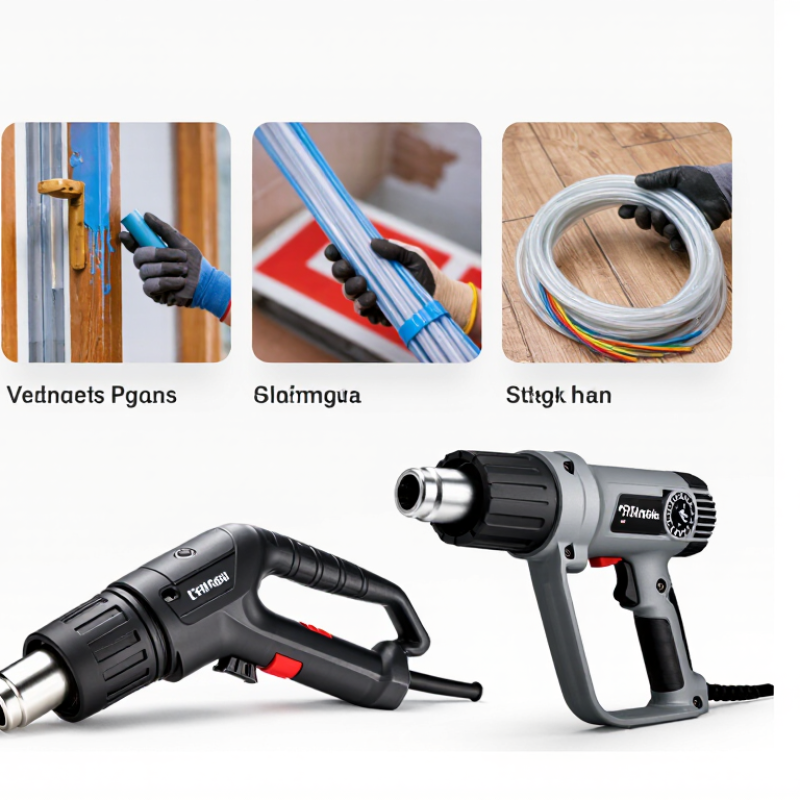
Heat Gun Types and Their Operating Principles
Most heat guns use a fan to draw air across a heating element, then direct the warmed airflow through a nozzle. The basic principle is simple. The useful differences lie in how the air is heated and how temperature is controlled.
Many electric models use a metal resistance coil. Electric current heats the coil, and the fan carries that heat toward the work surface. Adjustable models let users change temperature or airflow; digital controls can make settings easier to repeat. Some use ceramic PTC elements, whose electrical resistance rises as they warm. This can help regulate heat, but it does not guarantee an exact outlet temperature.
Gas-powered models burn fuel to heat incoming air, so they can work without a mains connection, though they need careful ventilation and handling.
A single-setting gun may suit occasional tasks where fine control is unnecessary. For paint softening or heat-sensitive materials, a variable setting offers more room to adjust. Airflow matters too: a narrow nozzle concentrates heat, while a wider stream spreads it. Small details count. A surface can scorch before it looks damaged, so test a hidden spot or scrap piece and keep the gun moving.
I still find temperature labels a little misleading; distance, material, and airflow all change the result.
Key Specifications: Temperature, Airflow, and Power
Temperature range determines which materials a heat gun can handle, but the highest number is not always the most useful. Look for adjustable settings and a clear display. Lower heat suits tasks such as loosening adhesive; higher heat may be needed for thicker coatings. Exact needs vary by material, distance, and working speed. Test a small, hidden area first.
Airflow matters just as much. A strong stream transfers heat quickly, but it can also shift lightweight parts or concentrate heat unevenly. Choose a model with more than one airflow setting for delicate work. Check how airflow is measured, such as litres per minute, and compare models using the same units. Keep the nozzle moving. A stationary stream can scorch a surface before it looks damaged.
Power, listed in watts, indicates how much electrical energy the tool uses; it does not guarantee better control or a higher working temperature. A higher-wattage unit may heat up faster, but it can also feel heavier and draw more current. Match the tool’s power requirements to your outlet and intended workload. Some specification sheets leave out details about heat-up time, which is frustrating. If possible, handle the tool and check its balance before choosing.
How to Choose the Right Heat Gun for Your Needs? – Key Specifications: Temperature, Airflow, and Power
The figures below are general working ranges, not fixed requirements. Actual settings vary by material, task, nozzle, and heat-gun model; follow the material and tool manufacturers’ instructions.
| Typical Task | Suggested Working Temperature | Typical Airflow | Typical Power | What to Look For |
| Crafts and delicate heat-shrink tubing | About 100–300°C (212–572°F) | About 150–300 L/min | About 1,000–1,500 W | Choose adjustable temperature and airflow for better control around small or heat-sensitive items. |
| Removing paint or softening adhesives | About 350–600°C (662–1,112°F) | About 250–500 L/min | About 1,500–2,000 W | A higher maximum temperature and moderate-to-high airflow can help with larger work areas. Use care around combustible materials and surfaces that can be damaged by heat. |
| Plastic forming and repair | About 200–500°C (392–932°F), depending on the plastic | About 200–400 L/min | About 1,500–2,000 W | Look for variable controls and compatible nozzles. Check the plastic’s recommended temperature to avoid scorching or producing harmful fumes. |
| General workshop use | A broad adjustable range, often about 50–600°C | About 150–500 L/min, preferably adjustable | About 1,500–2,000 W | Multiple settings, a stable stand, and overheat protection make a versatile tool easier to control for different jobs. |
Quick selection tip: Temperature determines how hot the air can get, airflow describes how much air the tool moves, and wattage indicates electrical power draw—not temperature accuracy. For precise work, prioritize adjustable temperature and airflow over maximum wattage alone.
Match Heat Gun Features to Your Intended Tasks
Choose a heat gun by material, work area, and required control. Shrink tubing needs steady heat and a reflector nozzle. Lifting a small adhesive label calls for lower heat and a narrow nozzle. For broad paint removal, variable temperature and airflow help prevent scorching. A useful range is better than maximum power alone. A wider nozzle is not always better; it can warm nearby surfaces.
For stripping old paint, check the surface’s age before applying heat. HUD’s 2011 American Healthy Homes Survey estimated that 37 million U.S. homes contained lead-based paint. That figure makes dust control and material testing important, especially in older buildings. Choose a model with stable temperature settings, a comfortable grip, and a stand for safe cooling. If the task involves delicate plastics, start low and test an inconspicuous spot. Heat can travel farther than expected.
Tips: Match airflow to the job, not just temperature. Keep the nozzle moving, and pause if the material darkens, bubbles, or smells unusual. A short test saves rework.
How to Choose the Right Heat Gun for Your Needs?
Match the heat gun’s temperature control to the task. These are approximate working-air temperature ranges; material, distance, and airflow affect the heat delivered.
Use the lowest effective setting, keep the gun moving, and follow the tool and material manufacturer’s instructions. Some materials can release harmful fumes when heated.
Compare Portability, Durability, and Cost
A heat gun that feels light in a shop may feel tiring after twenty minutes overhead. Check its weight, balance, grip, and cord length before comparing features. That matters. A longer cord can save repeated unplugging, while a compact body fits better in a crowded toolbox. But portability has limits: the lightest model may feel less stable when you guide a nozzle close to a work surface.
Durability depends on more than a tough-looking outer shell. Look for a sturdy stand, secure cord strain relief, and controls that are easy to adjust with a gloved hand. Metal components around the nozzle can tolerate heat better than many plastics, though the full design matters. Check whether filters or other serviceable parts are accessible. A replaceable part may extend useful life, but only if it is easy to find. There is no neat winner here.
Price should include the accessories you will actually use, such as a scraper or shaped nozzle. A modestly priced tool with two useful heat settings may suit occasional paint or craft work; frequent jobs may justify a stronger build and finer temperature control. Compare warranty terms and replacement-part availability, not just the shelf price. Cheap tools can cost more if they fail early. Costs add up. Consider where the gun will be stored, too: a case protects it, but takes up space.