A Titanium Bar can look simple on a product page: a grade, a diameter, and a price. Yet the right choice depends on what the part must do, how it will be machined, and the conditions it will face. A bar for a lightweight fixture may not suit a component exposed to heat, saltwater, or repeated loads. Small details matter.
This guide presents seven practical tips for evaluating a Titanium Bar before you buy. It covers grade selection, dimensions and tolerances, material certificates, surface condition, supplier capability, machining needs, and total cost. Check the stated alloy against the drawing and intended service; do not rely on a product label alone. Ask for traceable documentation, and inspect ends and surfaces for dents, cracks, or deep scoring. Simple steps. Often skipped.
The best option is not always the most expensive or the one with the most impressive specifications. A certificate can support a decision, but it cannot replace clear requirements or careful incoming inspection. Even experienced buyers can focus too much on price or nominal size. A small mismatch may create scrap, extra machining, or delays. Use these tips as a starting checklist, then confirm critical requirements with a qualified materials professional and the supplier. Good purchasing is rarely dramatic. It is specific, documented, and checked before the bar reaches production.
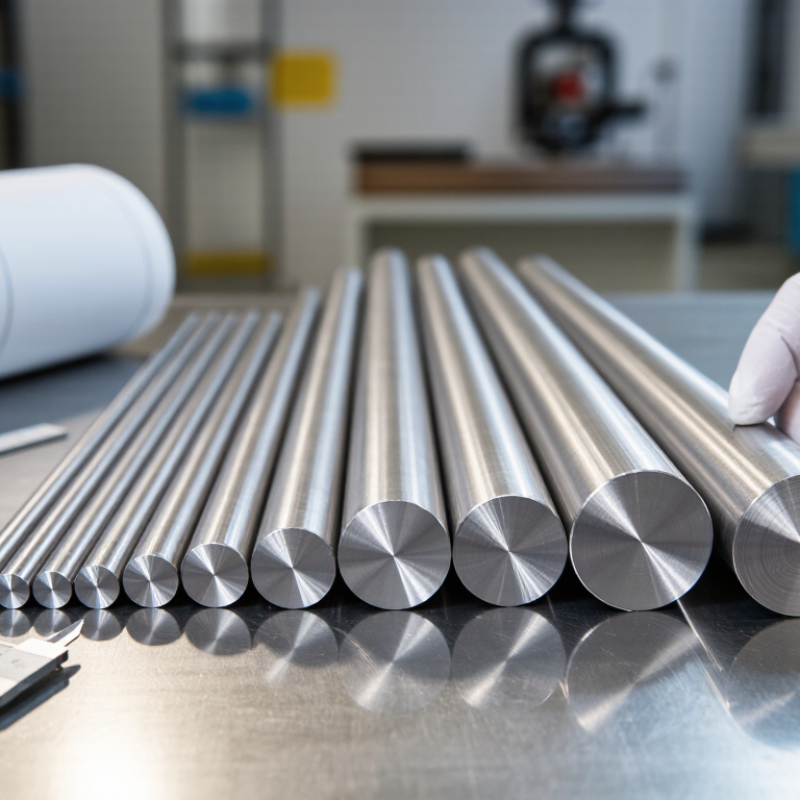
7 Tips for Buying the Right Titanium Bar
Understand Titanium Bar Grades and Material Properties
Titanium bars are not interchangeable. Grade 2 is commercially pure titanium, valued for corrosion resistance and formability. Grade 5, often called Ti-6Al-4V, offers higher strength but behaves differently during machining and forming. Check the exact grade, not just the word “titanium.”
Match the bar to its working conditions. Will it face saltwater, heat, repeated loading, or close-tolerance machining? A lightweight bar may still be the wrong choice if its strength or fabrication properties do not fit the part. Grade 2 can suit corrosion-focused applications; Grade 5 is common where strength-to-weight matters. These are starting points, not universal rules.
Read the material certificate and confirm the specification, dimensions, and condition. Ask for traceability and review the stated mechanical properties, such as tensile strength, against your design requirements. Small details matter. A clean, bright surface tells you little about the alloy inside. It is easy to focus on strength and overlook how the bar will be cut or joined. I would also check whether the supplier’s documentation matches the actual lot; this step can feel fussy, but skipping it is a poor shortcut. Properties can vary by grade and processing condition, so verify them before ordering.
Compare specified minimum tensile strength to help shortlist a grade for your application.
Values shown are typical ASTM B348 minimum tensile-strength requirements for wrought bar products, in MPa. Actual requirements depend on product form, specification, and condition. Compare corrosion resistance, formability, weldability, and service conditions before selecting a grade.
Match the titanium grade to the loads, environment, and fabrication steps the bar will face. For lightly loaded parts exposed to corrosive conditions, commercially pure Grade 2 is often a practical choice. It is also easier to form than many stronger titanium alloys. Grade 5 Ti-6Al-4V suits parts where strength and weight matter more. That strength has trade-offs: machining can require slower cutting speeds and careful heat control.
Check the figures.
ASTM International’s B348/B348M specification sets a minimum tensile strength of 345 MPa for Grade 2. For Grade 5, the minimum is 895 MPa; applicable requirements vary with product dimensions and condition. These values help screen options, but they do not prove a bar suits a particular design. Ask for the mill test certificate, confirm the exact grade and condition, and check that the supplied dimensions meet the specification.
For a welded assembly, review fabrication requirements before ordering; the right alloy on paper may still be wrong for the shop process. I would not choose by strength alone. A small prototype can reveal forming or machining problems that a datasheet will not.
Before ordering titanium bar, write down the required diameter, length, and straightness. A nominal size alone is not enough. A 25 mm bar may not fit a close sleeve if its actual diameter sits near the upper limit. Check the drawing and confirm whether dimensions are metric or imperial. Small differences matter. Ask the supplier to state tolerances clearly, including how and where each measurement is taken. For cut lengths, clarify whether the stated length includes saw-cut allowance or end cleanup.
Surface finish affects handling, machining, and inspection. A turned bar may show fine circular tool marks, while a ground surface is usually smoother and more consistent. Specify the finish you need rather than relying on words like “smooth.” If the bar will slide into a close-fitting assembly, ask for a measurable roughness value and confirm the inspection method. Check for dents, scratches, discoloration, or scale that could affect your process.
It is tempting to request the tightest tolerances everywhere, but that can add cost without improving the finished part. I would review the actual mating components before tightening a specification; this step is easy to overlook. Requesting inspection records for key dimensions can also help catch mismatches before the bar reaches your workshop.
A titanium bar’s certificate should match the physical material, not merely describe a similar grade. Check the specification, grade, heat number, dimensions, and test results against your purchase order. ASTM B348 sets requirements for titanium and titanium-alloy bars and billets, including chemical composition and mechanical properties. Ask for the original mill test report, then compare its heat number with the bar’s tag and packing list. Small mismatch? Pause before accepting it.
Testing details matter. Review tensile strength, yield strength, elongation, and chemistry results, and confirm the report identifies the test method and sample. For critical parts, ask whether independent testing or inspection is available. The USGS Mineral Commodity Summaries 2025 estimates 2024 global titanium mineral-concentrate production at about 9.5 million metric tons. That figure describes raw mineral feedstock, not bar output, but it highlights a long supply chain where traceability can become fragmented. Paper can look tidy. It may still leave a gap between the melt and your shipment.
Request traceability from the mill heat through cutting, processing, and delivery. If a supplier cannot link a bar to its heat record, treat that as an unresolved quality risk. Keep certificates, inspection records, and receiving photos together. Also check whether any processing changed the material condition; a certificate alone may not explain the bar’s full history. One practical question is easy to miss: do the records identify the exact lot you received?
| Tip | What to Verify | Useful Evidence | Practical Buying Check |
|---|---|---|---|
| 1. Match the grade to the application | Confirm the exact grade and product form. Commercially pure Grade 2 and Ti-6Al-4V Grade 5 are common, but their properties and typical uses differ. | Purchase specification and material test certificate identifying the grade. | Check that the grade, bar form, dimensions, and applicable standard all match the design or engineering requirements. |
| 2. Confirm the governing specification | For titanium and titanium-alloy bars and billets, ASTM B348/B348M is one commonly used product specification. The required standard depends on the application and contract. | Certificate or inspection documents stating the specification and revision or edition when required. | Do not assume a material meets a standard just because the grade is listed; verify the standard and any additional order requirements. |
| 3. Review certification documents | Check that the certificate identifies the material, grade, product form, heat or lot, and applicable test results. Quality-management certification is not a substitute for product test documentation. | Material test report or certificate of conformance, as required by the purchase order. | Resolve missing, inconsistent, or unclear fields before accepting the shipment. |
| 4. Check chemistry and mechanical testing | Compare reported chemical composition and mechanical test results with the limits in the specified grade and product standard. | Heat or lot-specific chemical analysis and tensile results; hardness or other tests when specified. | Use the applicable standard and order requirements for acceptance; avoid relying on generic values that may not apply to the product condition or size. |
| 5. Preserve heat-level traceability | Ensure each bar or bundle can be linked to its heat or lot and corresponding material documentation throughout receiving and processing. | Heat number on the bar, tag, or bundle, plus matching records and certificate references. | Check that markings remain legible and are not separated from the material during cutting or repacking. |
| 6. Verify dimensions and condition | Confirm diameter or cross-section, length, tolerances, straightness, and surface condition against the order and applicable requirements. | Dimensional inspection records and receiving inspection results, where required. | Agree on measurement methods and tolerances before purchase, especially for close-tolerance or finished bars. |
| 7. Specify additional testing and independent checks | Determine whether added inspection, non-destructive testing, or third-party verification is necessary for the application. These are not universal requirements for every titanium bar order. | Purchase-order inspection plan, test reports, and independent inspection records when contracted. | State the test method, scope, acceptance criteria, and reporting requirements in the order before production or shipment. |
Compare suppliers on more than the quoted price. Ask for the titanium grade, bar diameter, length tolerance, and material test documentation. A low quote may exclude cutting, inspection, or protective packaging. Check whether the supplier can explain how each specification matches your application. Clear answers matter.
Request itemized pricing from at least two suppliers. Compare the same grade, dimensions, quantity, and finishing requirements. Include shipping, cutting fees, and any minimum order charges. A bar that costs less per kilogram may still cost more after processing. I’ve found that small details can shift the comparison; it is easy to overlook one.
Confirm delivery dates, shipping method, and how delays are handled before placing an order. Ask whether the bars are in stock or made to order, and request a realistic dispatch window. For a long bar, check how it will be packed and transported to prevent bending or surface damage. Get the terms in writing. Keep a little schedule buffer.
| Cookie | Duration | Description |
|---|---|---|
| cookielawinfo-checkbox-analytics | 11 months | This cookie is set by GDPR Cookie Consent plugin. The cookie is used to store the user consent for the cookies in the category "Analytics". |
| cookielawinfo-checkbox-functional | 11 months | The cookie is set by GDPR cookie consent to record the user consent for the cookies in the category "Functional". |
| cookielawinfo-checkbox-necessary | 11 months | This cookie is set by GDPR Cookie Consent plugin. The cookies is used to store the user consent for the cookies in the category "Necessary". |
| cookielawinfo-checkbox-others | 11 months | This cookie is set by GDPR Cookie Consent plugin. The cookie is used to store the user consent for the cookies in the category "Other. |
| cookielawinfo-checkbox-performance | 11 months | This cookie is set by GDPR Cookie Consent plugin. The cookie is used to store the user consent for the cookies in the category "Performance". |
| viewed_cookie_policy | 11 months | The cookie is set by the GDPR Cookie Consent plugin and is used to store whether or not user has consented to the use of cookies. It does not store any personal data. |