China has become a major sourcing base for printed circuit board assembly, supporting products from smart sensors to industrial control systems. Its manufacturers range from high-volume factories to specialized providers serving medical, automotive, and aerospace markets.
Choosing a reliable partner requires more than comparing unit prices. Factory experience, engineering support, component traceability, and quality controls deserve close attention. Practical evaluations often include DFM feedback, solder paste inspection, automated optical inspection, X-ray testing, and functional testing. Certifications such as ISO 9001, IATF 16949, or ISO 13485 may also matter, depending on the product’s application.
The strongest manufacturers explain their processes clearly. They can discuss prototype handling, material substitutions, lead-time risks, and corrective actions without hiding behind marketing language. A factory tour, sample review, or small pilot order can reveal details that brochures miss. Look closely at labeling, moisture protection, line cleanliness, and how operators manage rework.
A polished website proves little.
No factory is perfect. Even experienced suppliers may face component shortages, communication gaps, or inconsistent documentation. That reality deserves honest assessment rather than exaggerated promises. This guide reviews leading China-based printed circuit board assembly manufacturers through practical criteria, including technical capability, compliance, production scale, communication, and long-term reliability. The goal is not to name one universal winner. It is to help buyers identify a suitable partner for their specific board design, order volume, risk profile, and quality expectations.
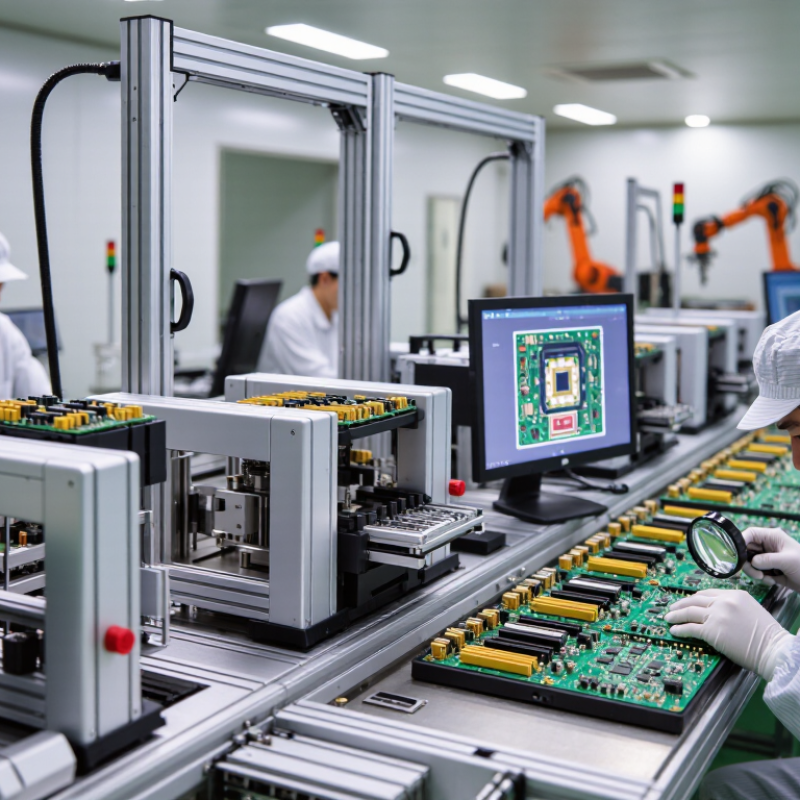
A top printed circuit board assembly manufacturer in China is defined by more than competitive pricing. It combines engineering judgment, stable production, and clear communication throughout the build. Experienced teams review Gerber files, bills of materials, and assembly drawings before production begins. They identify pad limitations, component shortages, thermal risks, and possible soldering defects early.
Reliable factories use documented processes for solder paste inspection, automated optical inspection, and functional testing. X-ray inspection may be necessary for hidden joints or dense packages. Each board should carry traceable lot information, operator records, and inspection results. Quality systems aligned with recognized IPC and ISO requirements also provide useful evidence of process control. Certificates alone are not enough.
Strong manufacturers can support prototypes without treating them as unimportant. They adjust feeders, refine reflow profiles, and record lessons from early samples. Production data should remain accessible, not disappear after shipment. That said, no factory gets every build perfect. A polished audit can still miss communication gaps or a weak supplier relationship. Practical customers ask for sample reports, corrective-action records, and realistic delivery plans. They also check how the manufacturer handles mistakes. The response matters. Honest explanations often reveal more experience than impressive sales language.

China’s leading PCB assembly manufacturers combine engineering depth with disciplined production control. They support prototypes, pilot builds, and stable high-volume manufacturing. Strong teams review schematics, layouts, and bills of materials before quoting. Their engineers identify weak tolerances, unsuitable components, and difficult solder joints early.
Modern facilities use solder paste inspection, automated optical inspection, and X-ray testing. These tools reveal hidden voids, alignment problems, and insufficient solder coverage. Reliable manufacturers also maintain component traceability from receiving to final shipment. Clear records make failure analysis faster and more credible. Production should follow recognized IPC practices and certified quality systems. Still, equipment alone cannot prevent every mistake. Human review remains necessary, especially for unusual assemblies.
Tips: Request a sample inspection report and a process flow before placing an order. Ask how the factory handles counterfeit-risk components, substitutions, and engineering changes. Check whether functional testing matches your product’s real operating conditions. Visit the facility when possible. A clean line is useful evidence, but it is not proof of consistent quality. Evaluate communication speed, technical questions, and corrective-action records. The best supplier may challenge your design instead of accepting every detail. That can feel inconvenient. It may also prevent an expensive field failure.
Chinese PCB assembly facilities combine automation, process control, and practical engineering judgment. Prismark’s 2024 industry review estimates that mainland China produced over half of global printed circuit board value in 2023. This scale supports dense supplier networks and rapid production changes.
The process usually begins with solder-paste printing. A steel stencil deposits controlled paste onto copper pads. Automated optical inspection then checks alignment and paste volume. Pick-and-place machines mount components at high speed. Reflow ovens follow carefully controlled thermal profiles, often with several heating zones. IPC-7095 guidance remains useful for evaluating land patterns and component connections.
Inspection is continuous. High-resolution optical systems examine solder joints, while X-ray inspection checks hidden connections under package bodies. Selective soldering or hand touch-up may follow for through-hole parts. Traceability software records feeder settings, lot numbers, and inspection results.
Small details matter.
Moisture-sensitive components require sealed storage and controlled floor life. Electrostatic discharge controls protect vulnerable devices during handling. According to IPC’s 2024 electronics industry research, supply-chain uncertainty and skilled-labor shortages remain major manufacturing concerns. Chinese facilities increasingly use real-time production dashboards, but automation is not a complete answer. A misplaced component can still pass an early inspection stage. That weakness deserves review. Reliable factories therefore combine machine data with trained technicians, sampling plans, and documented corrective action. Process capability should be measured, not assumed.
China’s top printed circuit board assembly manufacturers are often judged by certification, but certificates tell only part of the story. ISO 9001 shows that a company manages documented quality processes. IPC workmanship standards guide solder joints, component placement, and inspection criteria. Sector-specific certifications, such as ISO 13485 or AS9100, may be necessary for medical or aerospace projects. These credentials should match your product’s risk level.
Reliable assembly companies also provide traceability from incoming materials to final shipment. Ask whether operators record solder paste temperature, reflow profiles, and inspection results. Automated optical inspection can detect misplaced components and solder defects. X-ray inspection helps examine hidden joints under packages. Calibration records matter too. A polished report is useful, but production evidence is stronger. In practice, even certified factories can miss a defect during a busy production week. That weakness deserves an honest corrective-action process.
Tips: Request current certificates, audit dates, and scope details. Check whether the certificate covers the actual assembly site. Review sample inspection reports and failure-analysis records. Ask how nonconforming boards are isolated, repaired, and documented. Visit the facility when possible. Look for labeled materials, clean workstations, controlled storage, and operators following clear instructions. Do not select a manufacturer by certification count alone. Consistent records, transparent communication, and repeatable inspection results usually reveal deeper quality.
| Standard or Certification | Primary Quality Focus | Typical PCB Assembly Application | Common Verification Evidence | Practical Importance |
|---|---|---|---|---|
| ISO 9001:2015 | Quality management systems, process control, corrective action, and continual improvement | General commercial, industrial, consumer, and electronic assembly production | Valid certificate, defined site and scope, internal audits, nonconformance records, and management reviews | Baseline indicator of a documented and auditable quality management system |
| IPC-A-610 | Acceptability of electronic assemblies, including solder joints, component placement, and workmanship | Inspection and acceptance of through-hole and surface-mount assemblies | Controlled workmanship criteria, trained inspectors, visual inspection records, and defect classification by product class | Important for consistent inspection standards and customer acceptance criteria |
| IPC J-STD-001 | Requirements for soldered electrical and electronic assemblies | Soldering process control, materials, heating methods, and operator workmanship | Soldering procedures, operator qualification records, process parameters, and inspection results | Useful for controlling soldering reliability across production batches |
| ANSI/ESD S20.20 | Electrostatic discharge control programs for protecting sensitive electronic devices | Component receiving, storage, assembly, inspection, repair, and packaging areas | ESD control plan, grounding tests, workstation audits, wrist-strap checks, and personnel training records | Reduces latent and immediate damage to electrostatic-sensitive components |
| ISO 13485:2016 | Quality management systems for medical devices and related regulatory requirements | Electronic assemblies used in medical equipment and regulated healthcare products | Certification scope, traceability records, risk controls, supplier controls, and validation documentation | Relevant when assembly activities support medical-device production |
| IATF 16949:2016 | Automotive quality management, defect prevention, traceability, and variation reduction | Automotive electronic assemblies and components supplied through automotive supply chains | Valid site certificate, customer-specific requirements, process capability data, control plans, and traceability records | Strong indicator for automotive-grade production discipline |
| AS9100D | Aerospace and defense quality management, risk management, and product safety | High-reliability aerospace, defense, and aviation electronic assemblies | Certification scope, configuration records, counterfeit-part controls, inspection data, and special-process controls | Relevant for demanding applications requiring extensive documentation and traceability |
| ISO 14001:2015 | Environmental management, waste reduction, resource use, and legal compliance | PCB assembly facilities managing chemicals, soldering materials, wastewater, and production waste | Environmental policy, aspect-impact assessment, waste records, compliance evaluations, and audit reports | Supports responsible manufacturing and environmental risk management |
| RoHS Compliance | Restriction of specified hazardous substances in electrical and electronic products | Lead-free soldering and material compliance for products placed on applicable markets | Supplier declarations, material declarations, component records, and laboratory test reports when required | Important for market access and controlled materials management; it is generally a product compliance requirement rather than a factory certification |
| REACH Compliance | Control and communication of chemical substances in products and supply chains | Material and component supply-chain reviews for products entering applicable markets | Supplier declarations, substance disclosures, technical files, and restricted-substance assessments | Helps demonstrate chemical-substance transparency and regulatory preparedness |
| Product Traceability Controls | Linking finished assemblies to materials, machines, operators, inspection results, and production lots | High-reliability, regulated, automotive, aerospace, medical, and industrial electronics | Barcode or serial tracking, lot records, component date codes, inspection history, and repair documentation | Enables root-cause analysis, targeted recalls, and effective corrective action |
| Automated Optical Inspection and X-Ray Inspection | Detection of solder, placement, polarity, voiding, and hidden-joint defects | Surface-mount assemblies, fine-pitch devices, bottom-terminated components, and hidden solder joints | Inspection programs, defect libraries, calibration records, sample images, and first-article reports | Provides objective process monitoring when combined with qualified operators and calibrated equipment |
Note: Certification validity, issuing body, covered site, product scope, and expiration date should be verified directly from current controlled documentation. A certification applies only to the stated scope and does not automatically guarantee the quality of every product or production line.
Selecting a Chinese PCB assembly manufacturer requires more than comparing unit prices. Request evidence of production experience with your board type, package density, and order volume. A factory handling fine-pitch components should provide clear details about SPI, AOI, X-ray inspection, and rework controls. Ask for sample inspection reports, not only attractive factory photographs.
Check whether the manufacturer follows recognized standards such as IPC-A-610 and maintains a documented quality system. Traceability should cover component batches, operator records, machine settings, and test results. Confirm how the team manages counterfeit-risk screening, moisture-sensitive components, and engineering changes. Communication matters too. During a trial order, measure response time and technical accuracy. A fast reply is not always a useful reply.
Visit the facility when possible, or arrange a live video audit. Look at material storage, humidity control, line cleanliness, and labeling. One overlooked detail can damage an otherwise strong process. I once focused too heavily on pricing and ignored test coverage; the prototype passed assembly but failed during functional testing. That mistake changed my supplier checklist. Ask for a pilot build, define acceptance criteria, and review defect data openly. Be cautious when a supplier promises zero defects without explaining its measurement method. Reliable partnerships grow through evidence, direct questions, and steady process improvement.
| Cookie | Duration | Description |
|---|---|---|
| cookielawinfo-checkbox-analytics | 11 months | This cookie is set by GDPR Cookie Consent plugin. The cookie is used to store the user consent for the cookies in the category "Analytics". |
| cookielawinfo-checkbox-functional | 11 months | The cookie is set by GDPR cookie consent to record the user consent for the cookies in the category "Functional". |
| cookielawinfo-checkbox-necessary | 11 months | This cookie is set by GDPR Cookie Consent plugin. The cookies is used to store the user consent for the cookies in the category "Necessary". |
| cookielawinfo-checkbox-others | 11 months | This cookie is set by GDPR Cookie Consent plugin. The cookie is used to store the user consent for the cookies in the category "Other. |
| cookielawinfo-checkbox-performance | 11 months | This cookie is set by GDPR Cookie Consent plugin. The cookie is used to store the user consent for the cookies in the category "Performance". |
| viewed_cookie_policy | 11 months | The cookie is set by the GDPR Cookie Consent plugin and is used to store whether or not user has consented to the use of cookies. It does not store any personal data. |