Top Silicon Nitride Types for Global Buyers in 2026
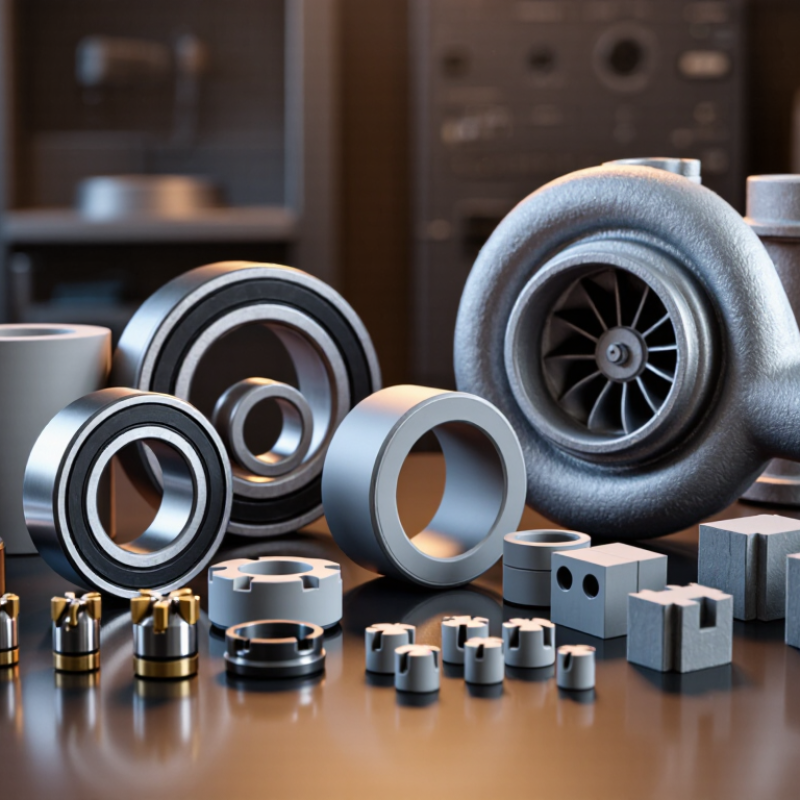
Silicon Nitride is becoming a strategic ceramic choice for global buyers in 2026. Its strength, low density, thermal stability, and wear resistance support demanding industrial applications. These include ceramic bearings, semiconductor equipment, cutting tools, turbochargers, and electrical insulation.
Dr. Robert W. Rice, a respected ceramics researcher, emphasized a practical design principle: “The best ceramic is the one designed for its application.” That idea remains highly relevant. Reaction-bonded Silicon Nitride offers economical production and useful dimensional stability. Pressureless-sintered grades provide balanced strength and cost. Hot-pressed types deliver higher density and reliable mechanical performance. Gas-pressure-sintered grades can offer exceptional strength for severe environments.
The right type depends on operating temperature, load, surface finish, dielectric requirements, and production volume. Buyers should examine flexural strength, fracture toughness, thermal conductivity, porosity, and batch consistency. Supplier audits matter too. A polished datasheet is not enough.
Ask for test methods.
Different laboratories may report different results. This can create costly misunderstandings during qualification. Certificates, traceability records, and sample testing improve purchasing confidence. Regional supply conditions also influence lead times and total cost. A technically excellent grade may still be unsuitable if machining capacity is limited.
No universal ranking exists. That is easy to forget. This guide compares leading Silicon Nitride types through practical buyer priorities, not marketing claims. Some recommendations may change after real-world testing. That is part of responsible materials selection. The strongest decision usually combines expert consultation, documented evidence, and application-specific trials.
Silicon Nitride Fundamentals and Key Material Properties
Silicon nitride is an engineered ceramic, not a single uniform material. Its performance depends on powder purity, additives, porosity, and firing pressure. Common commercial types include reaction-bonded, hot-pressed, gas-pressure-sintered, and HIP-treated silicon nitride. Each route changes cost, density, strength, and machinability.
The material typically has a density near 3.1–3.3 g/cm³ and a hardness around 8–9 on the Mohs scale. Technical property databases and ceramic supplier reports commonly list flexural strength from 600 to over 1,000 MPa for dense grades. Fracture toughness often falls near 5–8 MPa√m. These figures explain its use around bearings, cutting tools, engine components, and electrical insulators. It is light for a structural ceramic.
Thermal shock resistance is a major advantage. Thermal conductivity varies widely, often from about 20 to 90 W/m·K, depending on composition and processing. Hot-pressed grades can provide excellent strength, while reaction-bonded grades may offer lower cost and easier production. Market analyses from Grand View Research and MarketsandMarkets identify electronics, automotive, and energy systems as important demand areas through the decade. However, reported values are not interchangeable. Test temperature, specimen direction, surface finish, and standards can shift results substantially. Buyers should request full datasheets and test methods. A low price can hide higher porosity. That matters.
Main Silicon Nitride Types and Their Distinctive Features
Top Silicon Nitride Types for Global Buyers in 2026
Main Silicon Nitride Types and Their Distinctive Features
Reaction-bonded silicon nitride is made by nitriding compacted silicon powder. It offers low shrinkage and useful dimensional stability. Its open porosity can remain higher than other grades. This makes it suitable for thermal components, furnace supports, and complex shapes. Buyers should check gas permeability and surface finish before approving it.
Pressureless-sintered silicon nitride provides strong mechanical performance without external pressure during firing. It commonly delivers good wear resistance, thermal shock resistance, and consistent production quality. Engineers often consider it for bearings, seals, cutting tools, and high-temperature parts. However, performance depends heavily on powder purity, additives, and firing control. A datasheet alone may not reveal long-term behavior.
Hot-pressed silicon nitride receives pressure during sintering. The process can produce high density, low porosity, and strong strength retention at elevated temperatures. It suits demanding wear parts and precision components, although shape size and cost may become limitations. Hot isostatic pressing can further reduce internal defects and improve reliability. Still, “highest density” does not automatically mean best value. Buyers should compare thermal conductivity, fracture toughness, tolerances, and batch testing records. Ask for lot-specific results. That practical step is often overlooked.
Top Silicon Nitride Types for Global Buyers in 2026 — Main Silicon Nitride Types and Their Distinctive Features
Typical flexural-strength comparison of major silicon nitride material families. Actual performance depends on composition, porosity, processing conditions, geometry, and test standards.
Reaction-Bonded Silicon Nitride (RBSN)
Low-shrinkage processing, good thermal-shock resistance, and relatively high open porosity compared with sintered grades. Typical flexural strength: 350–700 MPa.
Pressureless-Sintered Silicon Nitride (SSN)
Balanced strength, wear resistance, and production scalability; widely used for bearings, seals, nozzles, and engineering components. Typical flexural strength: 600–1,000 MPa.
Hot-Pressed Silicon Nitride (HPSN)
High density and strong mechanical performance, generally with anisotropic properties caused by the pressing process. Typical flexural strength: 800–1,200 MPa.
Hot-Isostatically-Pressed Silicon Nitride (HIP-SN)
Very low porosity and high reliability, making it suitable for demanding wear, fatigue, and high-temperature applications. Typical flexural strength: 900–1,400 MPa.
Values shown are representative midpoints of commonly reported engineering ranges, not supplier-specific guarantees. Strength is measured under different standards across published datasets and should be verified for each grade.
Global Buyer Criteria for Selecting Silicon Nitride in 2026
Top Silicon Nitride Types for Global Buyers in 2026
Global buyers should select silicon nitride by application, not by price alone. Powder grade, reaction-bonded, pressureless-sintered, and hot-pressed types behave differently. Ceramic bearing parts need high purity, low porosity, and consistent dimensional control. Cutting tools require hardness, fracture resistance, and stable performance at elevated temperatures. For thermal components, buyers should examine thermal conductivity and thermal-shock resistance. A lower-cost grade can become an expensive decision.
Grand View Research’s 2024 analysis identifies automotive, aerospace, energy, and medical uses as major silicon nitride demand areas. MarketsandMarkets also forecasts continued market growth through 2028, supported by advanced ceramics and electric-mobility applications. These reports suggest broader demand, but their market definitions differ. Numbers are not perfectly comparable. Buyers should check test methods before trusting a specification sheet.
Supplier evaluation needs measurable evidence. Request alpha-to-beta phase data, oxygen content, particle-size distribution, density, flexural strength, and Weibull statistics. Confirm whether results come from production batches or laboratory samples. ISO 9001 certification supports process control, but it does not prove application performance. Ask for lot traceability, sample retention, packaging details, and lead-time records. Regional warehousing can reduce delays, although it may increase handling risk. The best choice is rarely the strongest material on paper. It is the grade that remains stable across real batches, real temperatures, and real delivery conditions.
Supply, Compliance, and Quality Checks for International Purchasing
For global buyers in 2026, silicon nitride selection begins with the application, not the lowest quotation. Powder, reaction-bonded, hot-pressed, and sintered grades behave differently under heat, stress, and chemical exposure. Ask for phase composition, purity, particle-size distribution, density, porosity, and mechanical test methods. ISO 9001 remains a useful process signal; the ISO Survey 2023 recorded more than 1.26 million certified organizations worldwide. However, certification alone does not prove consistent silicon nitride quality.
Supply continuity also requires evidence. Request batch-level certificates, production capacity, lead-time history, and a documented change-notification process. Check the supplier’s export classification, origin records, safety documentation, and destination-market requirements. The World Bank Logistics Performance Index 2023 highlights continuing differences in customs efficiency, tracking, and delivery reliability across economies. Build safety stock around those gaps. A cheaper grade can become expensive after re-testing, delays, or rejected lots.
Tips: Compare three retained samples before approval. Use the same test standard for every supplier. Confirm whether strength values are room-temperature or high-temperature results. Inspect packaging for moisture barriers and lot identification. Do not accept “high purity” without a numerical limit. Documents can mislead. One practical weakness remains common: buyers sometimes approve a technically strong sample without auditing repeat production. That decision needs reconsideration before a long-term contract. Cite: ISO Survey 2023; World Bank Logistics Performance Index 2023.