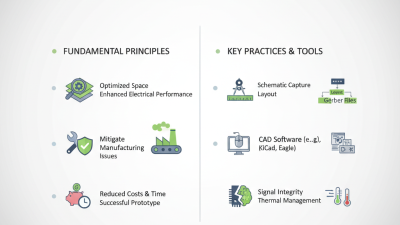
Choosing among the top 10 circuit board design services can feel difficult for global buyers. Every provider promises accuracy, speed, and lower production risk. Yet a polished website proves very little.
A dependable partner should show practical engineering experience. Look for clear workflows covering schematics, PCB layout, stack-up planning, impedance control, and design for manufacturing. Ask whether engineers review Gerber files before fabrication. Strong teams also explain component availability, thermal limits, signal integrity, and prototype testing. These details matter when a board must fit inside a compact industrial controller or medical monitoring device.
Evidence builds confidence. Check documented quality procedures, relevant IPC practices, secure file handling, and transparent revision control. ISO 9001 certification may support reliability, but it should not replace technical evaluation. Request sample reports, engineering references, and realistic delivery schedules. A provider that admits design limitations can be more trustworthy than one offering impossible guarantees.
No ranking is perfect. Buyer priorities differ. One company may excel at high-speed electronics, while another handles flexible circuits or cost-sensitive consumer products better. Regional communication, time-zone coverage, supplier networks, and regulatory awareness also affect the final result. This guide compares ten leading services through those practical criteria. It aims to help purchasing teams, hardware startups, and established manufacturers make informed decisions. Still, readers should verify current capabilities directly before sharing confidential designs or approving production. Small oversights, such as an unreviewed connector clearance, can create expensive delays. Careful comparison remains essential.

Circuit board design services cover more than placing components on a digital canvas. Engineers convert schematics into manufacturable layouts, define layer stacks, route high-speed signals, and control power distribution. They also select footprints, calculate clearances, and prepare fabrication files. In practice, the work begins with a review of voltage, current, thermal, enclosure, and assembly requirements.
A capable team usually performs design-for-manufacturing and design-for-assembly checks before ordering prototypes. These checks examine trace widths, via sizes, solder access, panelization, and component availability. Signal-integrity analysis can expose impedance problems before a fast interface reaches the laboratory. Power-integrity analysis can identify voltage drops near processors or converters.
The Fortune Business Insights Printed Circuit Board Market Report estimated the market at 89.7 billion dollars in 2023, showing the scale behind these engineering decisions. Services may also include prototype coordination, electrical testing, compliance preparation, revision control, and production documentation. IPC’s 2024 Technology Roadmap highlights rising demands for higher density, faster signaling, and improved thermal management. That pressure makes stackup planning important from the beginning.
A first layout is rarely final. Experienced engineers still miss details, especially when suppliers change materials or package dimensions. Therefore, reliable providers record assumptions, run peer reviews, and preserve editable source files. Buyers should request test evidence, inspection criteria, and clear ownership of every design revision.

Choosing among the top 10 circuit board design services requires more than comparing hourly rates. Global buyers should examine engineering evidence, communication habits, and production readiness. A capable provider should show controlled design reviews, traceable revisions, and practical experience with multilayer boards. Ask for anonymized examples, not polished promises. The IPC-2221 design standard can help buyers check spacing, materials, thermal paths, and manufacturability.
Quality systems also deserve careful attention. The ISO Survey 2023 recorded 1,265,216 ISO 9001 certificates worldwide, showing how widely quality management is adopted. Certification alone proves little, however. Request the provider’s corrective-action process, inspection records, and approval workflow. Also confirm whether engineers understand IPC-A-600 acceptance criteria. A beautiful layout can still fail during assembly. This happens more often than buyers expect.
Tips:
Compare at least three providers using the same technical brief. Include layer count, impedance targets, copper weight, tolerances, and expected volume. Measure response time with a real question. Review how clearly the team explains trade-offs. Ask for a design-for-manufacturing report before signing. IPC’s 2024 electronics technology guidance emphasizes supply-chain resilience and manufacturability, but each project still needs local validation. Delivery estimates can be optimistic. Leave room for prototype changes, supplier substitutions, and incomplete specifications.
For global buyers, circuit board design services should be compared by core capabilities, not attractive promises. A strong partner may provide schematic capture, multilayer PCB layout, high-speed signal analysis, and power integrity checks. It should also handle thermal planning, component library management, design for manufacturing, and design for assembly. Two further capabilities matter: prototype coordination and compliance documentation.
In practical projects, I review stackup control, impedance notes, Gerber accuracy, and revision history before approving a supplier. A capable engineering team asks about operating temperature, enclosure limits, production volume, and future revisions. That conversation reveals more than a polished portfolio. I have seen layouts pass visual review yet fail during assembly because a connector lacked tool clearance. Small omissions become expensive.
Tips: Request a sample design review, not only a quotation. Ask for controlled-impedance evidence, manufacturing feedback, and clear ownership of source files. Confirm response times across time zones. Do not assume low pricing means efficiency; unclear revisions can consume the savings. My own selection process is still imperfect, especially when schedules pressure technical judgment. A checklist helps, but it cannot replace careful questions.
Comparison of commonly evaluated capabilities in professional PCB design services. Scores use a standardized 0–100 capability index and do not represent any specific company or brand.
Signal integrity, design-for-manufacturing, and multilayer layout are core priorities for global buyers because they directly affect electrical performance, manufacturability, and product reliability. Compliance documentation and thermal analysis are also important for regulated and high-power applications.
For global buyers, the strongest circuit board design services are not defined by sleek portfolios alone. They should show practical experience across industrial controls, automotive electronics, medical equipment, telecommunications, and consumer devices. Each sector has different constraints. A medical board may require controlled documentation, while an automotive design needs vibration awareness and traceable revisions. Ask whether engineers can produce schematics, stack-up plans, impedance calculations, and manufacturing files. Real evidence matters. Request anonymized test reports, design review records, and failure-analysis examples. No supplier gets every handoff right. That is why transparent corrective-action processes deserve attention, even when the answer is uncomfortable.
Compliance must be checked at project level, not treated as a website claim. Strong providers can align designs with relevant IPC practices and support RoHS, REACH, ISO-based quality systems, or customer-specific rules. They should explain material declarations, component lifecycle risks, and data protection controls in plain language. Regional support also affects delivery. A local engineering contact can reduce delays caused by time zones, customs documents, or unclear approval ownership. Ask how quickly they respond during layout reviews and whether technical files remain accessible after team changes. Coverage across North America, Europe, and Asia is valuable, but broad coverage can hide uneven capability. Confirm local testing access, language support, and escalation routes before trusting a global service map.
| Rank | Service Category | Primary Design Scope | Typical Industry Coverage | Common Standards and Compliance Alignment | Regional Support | Typical Deliverables |
|---|---|---|---|---|---|---|
| 1 | High-Speed Digital PCB Design | Multilayer boards, DDR memory, PCI Express, Ethernet, USB, controlled-impedance routing, signal-integrity analysis, and power-integrity review. | Networking equipment, servers, industrial computing, telecommunications, and data-acquisition systems. | IPC-2221 design principles, IPC-2222 guidance for rigid boards, IPC-2141 impedance considerations, and customer-specific stack-up rules. | Remote engineering support across North America, Europe, and Asia-Pacific; documentation can be prepared in English. | Schematic capture, stack-up proposal, PCB layout, impedance table, signal-integrity report, and manufacturing files. |
| 2 | Automotive Electronics PCB Design | Powertrain, body-control, infotainment, battery-management, sensor-interface, and vehicle-network circuit boards. | Passenger vehicles, commercial vehicles, electric vehicles, charging equipment, and automotive test systems. | IATF 16949 supplier environment, Automotive SPICE process expectations where applicable, IPC-2221, IPC-6012, and customer PPAP requirements. | Engineering coordination for European, North American, Japanese, Korean, and Chinese vehicle programs. | Design files, design-for-manufacturing review, thermal analysis, creepage and clearance checks, revision records, and test-point planning. |
| 3 | Medical and Healthcare PCB Design | Low-noise analog circuits, sensor acquisition, patient-monitoring electronics, portable instruments, and embedded control boards. | Diagnostic equipment, monitoring devices, laboratory instruments, rehabilitation equipment, and non-implantable medical products. | ISO 13485 quality-system expectations, IEC 60601-1 safety considerations, IEC 62304 software interface awareness, IPC-2221, and risk-management documentation. | Support for regulated product teams in North America, Europe, and Asia-Pacific; traceable documentation is commonly available. | Schematic and layout files, risk-control inputs, isolation review, creepage analysis, design verification support, and controlled release packages. |
| 4 | Industrial Control and Automation PCB Design | Motor control, PLC interface boards, industrial communication, I/O modules, relay drivers, and ruggedized control electronics. | Factory automation, robotics, process control, energy management, instrumentation, and machine builders. | IEC 61000 electromagnetic-compatibility considerations, IEC 60204-1 equipment safety interface considerations, IPC-2221, IPC-6012, and UL-related design requirements where required. | Regional design-for-manufacturing coordination for European, North American, and Asian production sites. | Functional schematics, multilayer layout, EMC pre-checks, thermal review, connector mapping, BOM, and fabrication outputs. |
| 5 | Power Electronics PCB Design | AC/DC and DC/DC converters, battery chargers, inverters, power distribution, high-current copper layouts, and thermal management. | Renewable energy, transportation, industrial power supplies, battery systems, consumer appliances, and charging infrastructure. | IPC-2221 spacing guidance, IPC-9592 considerations for power-conversion assemblies, IEC 62368-1 or IEC 60601-1 where applicable, and creepage and clearance requirements. | Support for global input-voltage requirements, including common 100–240 V AC markets and low-voltage DC systems. | Power-tree review, thermal calculations, copper-weight selection, isolation analysis, layout, simulation inputs, and prototype test documentation. |
| 6 | RF, Microwave, and Wireless PCB Design | RF front ends, antennas, filters, transmission lines, mixed-signal layouts, Bluetooth, Wi-Fi, cellular, GNSS, and sub-GHz systems. | Wireless devices, industrial IoT, telecommunications, test equipment, navigation, smart-home products, and connected sensors. | IPC-2221, controlled-impedance fabrication requirements, regional radio approval considerations such as FCC, CE, UKCA, and ISED, subject to final product testing. | Design support for North American, European, and Asia-Pacific frequency bands; regional certification must be confirmed for each product. | RF stack-up, transmission-line calculations, antenna keep-out definition, electromagnetic review, layout, Gerber files, and tuning provisions. |
| 7 | Flexible and Rigid-Flex PCB Design | Flexible interconnects, dynamic-bend circuits, rigid-flex assemblies, compact wearable designs, and constrained mechanical packaging. | Wearables, medical instruments, cameras, aerospace systems, automotive modules, and compact consumer electronics. | IPC-2223 flexible-board guidance, IPC-6013 qualification guidance, IPC-A-600 acceptance criteria, bend-radius rules, and material-specific requirements. | Global mechanical and electrical coordination for low-profile products manufactured in Europe, North America, and Asia. | Flexible stack-up, bend-zone definition, mechanical integration, bend-cycle considerations, fabrication drawings, and assembly documentation. |
| 8 | Aerospace and Defense PCB Design | High-reliability digital, analog, RF, power, and ruggedized electronics with strict configuration and documentation control. | Avionics, unmanned systems, radar support electronics, secure communications, navigation, and aerospace test equipment. | AS9100 quality-system environment, IPC-6012 or applicable high-reliability requirements, IPC-A-600, environmental testing plans, and customer-controlled standards. | Program support for North American and European aerospace supply chains, with export-control screening required when applicable. | Controlled schematics, layout, reliability inputs, derating review, configuration records, manufacturing data, and verification support. |
| 9 | IoT and Embedded Product PCB Design | Microcontroller boards, sensor hubs, low-power electronics, battery operation, embedded wireless modules, and edge-computing platforms. | Smart buildings, agriculture technology, asset tracking, environmental monitoring, retail devices, and connected consumer products. | IPC-2221, IPC-A-610 assembly criteria, RoHS and REACH material requirements, electromagnetic-compatibility planning, and regional radio requirements where applicable. | Support for global cellular, Wi-Fi, Bluetooth, and low-power wireless product variants, subject to regional certification. | Architecture review, schematic, PCB layout, antenna keep-out, power-budget review, firmware-interface documentation, and prototype files. |
| 10 | Design for Manufacturing and PCB Optimization | Existing-board redesign, cost reduction, yield improvement, component replacement, assembly review, and supply-chain localization. | Consumer electronics, industrial products, automotive subsystems, medical equipment, and contract-manufacturing programs. | IPC-2221, IPC-6012, IPC-A-600, IPC-A-610, IPC-J-STD-001, RoHS, REACH, and manufacturer-specific fabrication rules. | Useful for transferring production among North American, European, and Asian manufacturing facilities. | DFM report, updated BOM, alternate-part matrix, panelization proposal, assembly drawings, test-point review, and revised production files. |
Pricing varies sharply by board complexity. A simple two-layer design may require 20–40 engineering hours, while high-speed, HDI, or rigid-flex work can exceed 100 hours. Typical professional rates range from $50 to $150 per hour, depending on region and certification needs. IPC industry data continues to show cost pressure across electronics manufacturing, so unusually low quotes deserve careful review. A low quote can be a trap.
Most providers need two to six weeks for a standard board design. Complex power, RF, or automotive projects may require eight to twelve weeks. The 2024 IPC Electronics Industry Sentiment Report highlighted ongoing delivery uncertainty and material-cost pressure. Therefore, buyers should request a milestone schedule, not only a final date. Ask for schematic review, layout release, design-rule checks, and manufacturing files.
Experience matters more than a polished website. Request anonymized examples, revision records, and evidence of compliance with IPC-2221 and IPC-7351 practices. Confirm whether the fee includes component-library creation, simulation, prototype support, and engineering changes. Some providers charge separately for every revision. That detail can change the final budget substantially.
I have seen teams select the cheapest proposal, then lose weeks correcting unclear tolerances and incomplete documentation. A better comparison uses total cost, response time, technical ownership, and risk exposure.
Pay attention to communication gaps. They often appear before design errors.
| Cookie | Duration | Description |
|---|---|---|
| cookielawinfo-checkbox-analytics | 11 months | This cookie is set by GDPR Cookie Consent plugin. The cookie is used to store the user consent for the cookies in the category "Analytics". |
| cookielawinfo-checkbox-functional | 11 months | The cookie is set by GDPR cookie consent to record the user consent for the cookies in the category "Functional". |
| cookielawinfo-checkbox-necessary | 11 months | This cookie is set by GDPR Cookie Consent plugin. The cookies is used to store the user consent for the cookies in the category "Necessary". |
| cookielawinfo-checkbox-others | 11 months | This cookie is set by GDPR Cookie Consent plugin. The cookie is used to store the user consent for the cookies in the category "Other. |
| cookielawinfo-checkbox-performance | 11 months | This cookie is set by GDPR Cookie Consent plugin. The cookie is used to store the user consent for the cookies in the category "Performance". |
| viewed_cookie_policy | 11 months | The cookie is set by the GDPR Cookie Consent plugin and is used to store whether or not user has consented to the use of cookies. It does not store any personal data. |