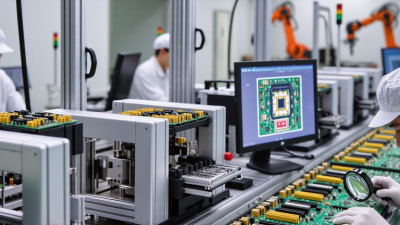
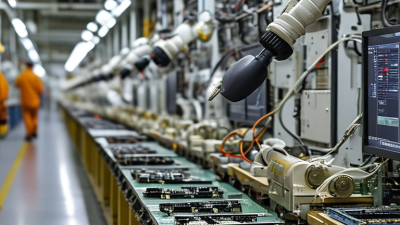
Choosing a PCB assembly service can shape product quality, launch timing, and the workload your team carries. A capable partner brings more than soldering equipment. It coordinates component sourcing, stencil printing, placement, reflow, inspection, and testing. Picture a fine-pitch board moving through a controlled line: paste measured carefully, components placed accurately, and solder joints checked before shipment. Those steps matter. So does communication when a part becomes unavailable or a prototype reveals a design weakness.
IPC president John Mitchell is a recognized electronics manufacturing industry leader. A practical paraphrase of the standards-focused approach associated with his work is: “Build quality into the process, then verify it.” This is a paraphrase, not a verbatim quotation. For your business, that means asking potential providers about inspection methods, traceability, engineering support, and how they handle production changes. Certifications can be useful evidence, but they do not replace clear answers about your specific board. A service that suits a small prototype run may not fit a high-volume product. Not every time. Compare capabilities against your board’s complexity, order size, and schedule—not just the quoted unit price. Even a strong supplier cannot fix every design issue after manufacturing begins. A design review before release may prevent costly rework, though it can add time upfront. The right PCB assembly partner should explain trade-offs plainly and support decisions with documented processes. This guide explores how to evaluate those services, where they can reduce risk, and what questions deserve a closer look. One detail is easy to overlook: ask what happens when the first article fails inspection.

PCB assembly services turn a bare circuit board into a tested electronic assembly. Surface-mount technology (SMT) places compact components directly onto the board, often on both sides. It suits dense layouts and automated production. Through-hole assembly inserts component leads through drilled holes, then solders them in place. It offers sturdy connections for larger parts, connectors, and components exposed to mechanical stress. Mixed-technology builds combine both methods when one design needs compact parts and durable connections.
The choice affects more than component placement. SMT can reduce board size, while through-hole parts may need extra drilling and assembly steps. Mixed builds require careful sequencing and inspection. IPC’s 2023 North American PCB Industry Results reported a 15.5% year-over-year decline in PCB shipments. That shift is a reminder to review production volumes and sourcing assumptions, not just the board layout. Actual costs and lead times depend on design complexity, component availability, and testing requirements.
Tips: Share your bill of materials, Gerber files, expected volumes, and operating conditions with your assembler. Ask how it checks solder joints and handles rework. A small prototype run can reveal issues early. It is not foolproof, though; real-world testing still matters.
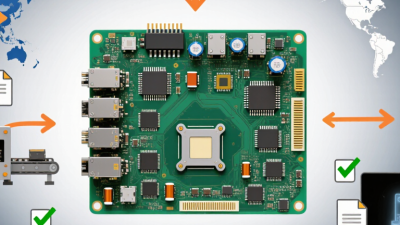
Outsourcing PCB assembly can reduce the cash tied up in pick-and-place machines, soldering equipment, inspection tools, and specialist staff. An established assembler may also spread setup and maintenance costs across many customers. In-house production offers more direct control, but that control has a price: equipment sits idle between runs, and skilled operators still need training. The 2024 Deloitte–Manufacturing Institute workforce study projects that up to 1.9 million U.S. manufacturing jobs could go unfilled by 2033. For a small electronics team, hiring is not a minor detail. Still, outsourcing is not automatically cheaper; setup fees, minimum order quantities, shipping, and rework can erase savings.
Lead time depends on more than the assembly line. A supplier with available capacity may turn a prototype quickly, while a queue or component shortage can push delivery back. In-house teams can change a board file or inspect a misaligned connector face-to-face, often within hours. That matters. Yet internal speed depends on having the right parts, people, and test equipment ready. Ask suppliers for actual turnaround data by order size, and compare it with your own recent builds—not an optimistic estimate.
Control is the harder trade-off. In-house production gives engineers close access to process settings and inspection results. Outsourcing can still provide strong visibility through agreed test records, defect reporting, and clear revision control. But trust alone is weak process control. I would not treat either model as a universal rule; hybrid production can work, though managing two workflows adds friction. Check the details before deciding.
An SMT line rated above 100,000 placements per hour can support fast production when a design suits the equipment. That sounds impressive. But a headline rate is usually a best-case machine figure, not a guarantee for every order. Ask whether the quoted capacity reflects actual production or a machine specification. A board with many small, standard components may run quickly. A mixed design with fine-pitch parts, connectors, or frequent feeder changes can slow the line. Board size and panel layout matter, too.
Request practical evidence: recent output for similar assemblies, first-pass yield, and typical changeover time. Ask how operators handle solder-paste checks, component verification, and inspection between runs. These steps take time, but skipping them can create costly rework. I would not treat the hourly number as a promise. It is one useful clue, and sometimes a misleading one.
A capable service provider should explain expected throughput for your board, including bottlenecks and planned shifts. Share your bill of materials and production forecast, then compare the estimate with a pilot run. The result may be slower than the headline figure, but it gives you a more dependable basis for planning.
Why Choose PCB Assembly Services for Your Business?
A capable PCB assembly partner turns quality expectations into measurable checks. IPC-A-610 provides acceptance criteria for assembled electronic boards, including solder joints, component placement, and workmanship. J-STD-001 defines requirements for soldered electrical and electronic assemblies, covering materials and process controls. These standards support consistent decisions on the production floor. They do not replace clear project requirements. Agree on the applicable class, revision, inspection method, and documentation before production begins. A close-up inspection of a solder joint can reveal issues that a quick visual scan may miss.
Tips: Ask how operators record inspection results. Request sample reports, defect examples, and a clear process for handling nonconforming boards.
Standards help teams communicate, but they are not a guarantee of product performance. A board may meet acceptance criteria and still need better design validation or environmental testing. That distinction is easy to overlook. Share drawings, critical component locations, and expected operating conditions with your assembler. Review early builds together, especially where dense parts or fine-pitch leads make inspection difficult. One useful question: what happens when a borderline defect appears? A specific answer is more reassuring than a broad promise.
An EMS partner can carry a circuit board from first prototype to repeat production without forcing your team to rebuild the process at every stage. Early runs reveal practical issues: a connector that is awkward to place, a test point hidden beneath a component, or a footprint that complicates inspection. Small runs reveal gaps. Reviewing these details with assembly engineers can improve the next revision before larger quantities are committed. Clear drawings, a current bill of materials, and agreed inspection criteria make that review more useful.
As demand grows, the partner can plan component purchasing, line capacity, and production controls around realistic forecasts. A pilot build helps confirm solder quality, test coverage, and assembly time before volume orders begin. Keep revision records aligned across engineering and manufacturing; a small document mismatch can cause avoidable rework. That matters. Ask how the provider handles shortages, design changes, and quality records, not just quoted unit price. No forecast is perfect, and scaling too quickly can tie up cash in parts you may not need. Regular forecast reviews and staged releases offer a more measured path from a handful of boards to dependable production.
A practical comparison of common PCB assembly stages. Order quantities and timelines depend on board complexity, component availability, testing requirements, and production capacity.
| Production stage | Typical order profile | Assembly priorities | Useful EMS capabilities | Scale-up considerations |
|---|---|---|---|---|
| Prototype | Small quantities for design verification and engineering evaluation | Fast design feedback, correct component placement, and clear documentation of revisions | Design-for-manufacturing review, component sourcing support, assembly inspection, and engineering communication | Keep the bill of materials, assembly drawings, and board revision aligned as design changes are made |
| Engineering validation | Builds used to test electrical performance, firmware, and product integration | Repeatable assembly, traceable revisions, and access to inspection or test results | Automated optical inspection, functional-test support, nonconformance tracking, and controlled change management | Resolve design and test issues before freezing the production documentation and approved parts list |
| Pilot production | A limited production run to confirm the manufacturing process and supply plan | Process consistency, yield monitoring, work instructions, and production-ready test coverage | Documented process controls, component traceability, production testing, and corrective-action procedures | Check actual material lead times, test capacity, packaging needs, and any bottlenecks revealed by the run |
| Low-volume production | Recurring builds for early market demand or specialized products | Reliable replenishment, controlled substitutions, and consistent quality across builds | Production scheduling, approved-vendor management, inventory visibility, and ongoing quality reporting | Agree on forecast sharing, order cadence, component ownership, and approval rules for alternate parts |
| Volume production | Larger, repeatable builds supported by established demand forecasts | Stable throughput, predictable quality, material availability, and cost control | Capacity planning, supply-chain coordination, process monitoring, traceability, and structured quality systems | Review forecast accuracy, long-lead components, capacity commitments, inventory exposure, and continuity plans |
| Product change or end-of-life | Engineering updates, component obsolescence, or a planned final build | Clear revision control, risk assessment, and protection against unintended mixed configurations | Change-impact review, material-status reporting, controlled first builds, and lifecycle planning | Coordinate cut-in dates, remaining inventory, customer approvals, and documentation updates before transition |
| Cookie | Duration | Description |
|---|---|---|
| cookielawinfo-checkbox-analytics | 11 months | This cookie is set by GDPR Cookie Consent plugin. The cookie is used to store the user consent for the cookies in the category "Analytics". |
| cookielawinfo-checkbox-functional | 11 months | The cookie is set by GDPR cookie consent to record the user consent for the cookies in the category "Functional". |
| cookielawinfo-checkbox-necessary | 11 months | This cookie is set by GDPR Cookie Consent plugin. The cookies is used to store the user consent for the cookies in the category "Necessary". |
| cookielawinfo-checkbox-others | 11 months | This cookie is set by GDPR Cookie Consent plugin. The cookie is used to store the user consent for the cookies in the category "Other. |
| cookielawinfo-checkbox-performance | 11 months | This cookie is set by GDPR Cookie Consent plugin. The cookie is used to store the user consent for the cookies in the category "Performance". |
| viewed_cookie_policy | 11 months | The cookie is set by the GDPR Cookie Consent plugin and is used to store whether or not user has consented to the use of cookies. It does not store any personal data. |