China Top 10 Circuit Board Components Suppliers?
Choosing reliable circuit board components suppliers in China requires more than comparing prices or browsing polished websites. This guide examines ten prominent companies through practical purchasing criteria, including product range, manufacturing capability, quality systems, delivery consistency, and technical support. It considers suppliers of connectors, capacitors, resistors, integrated circuits, switches, and related PCB assembly parts. Factory audits, sample testing, traceability records, and communication quality also matter during real projects.
No supplier fits every application. A startup may need flexible minimum orders, while an automotive buyer may require strict documentation and stable batch performance. Certification claims should be checked against current records, not accepted automatically. Lead times can change when demand rises, components become scarce, or specifications are revised. Small details matter, such as moisture-sensitive packaging, clear date codes, and properly sealed reels. These observations reflect common sourcing experience, but they should not replace independent verification.
This is not a permanent ranking.
The selected companies are discussed for their apparent strengths, market presence, and suitability for different purchasing goals. Their capabilities may differ by product category, factory location, and customer volume. Some information can become outdated quickly. That limitation deserves attention. Buyers should request recent samples, inspection reports, compliance documents, and written quotations before making commitments. By combining supplier research with engineering review and incoming quality checks, companies can reduce avoidable risks and choose circuit board components with greater confidence.
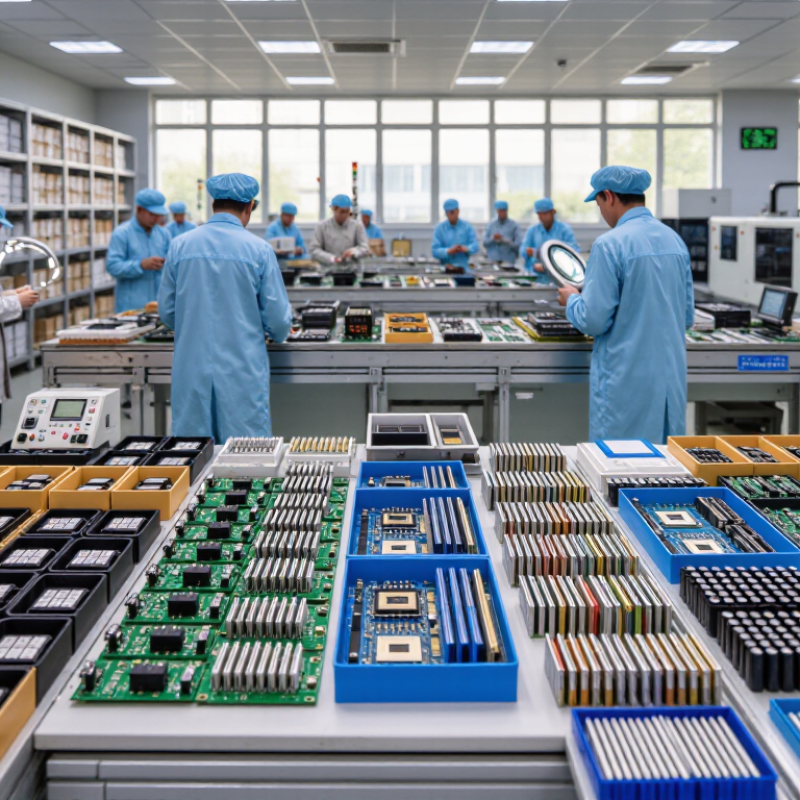
China’s PCB Supply Chain: Over 50% of Global PCB Output
China’s PCB supply chain produces more than half of the world’s printed circuit boards, according to widely cited industry estimates. The exact share changes by year, product type, and reporting method. Still, the scale is difficult to ignore.
Manufacturing clusters connect copper-clad laminate, photoresist, drilling, plating, solder mask, and surface finishing suppliers. Assembly plants then add components, inspection, and functional testing. In a typical supplier audit, I would check traceability records, layer registration, drill accuracy, chemical controls, and defect data. Small delays spread quickly when several processes depend on one production schedule.
Scale matters. However, low pricing alone can hide weak process control. A reliable supplier should explain material sources, inspection frequency, corrective actions, and capacity during peak demand. Sample boards may look excellent while mass production reveals alignment or contamination problems. That gap deserves attention. Buyers should also review lead times, export documentation, environmental practices, and backup production plans. China’s strong ecosystem offers speed and technical depth, but supplier selection still requires factory visits, measured evidence, and repeated communication. The supply chain is powerful, not flawless.
Ranking the Top 10: Revenue, Capacity, Quality, and Export Data
China’s top ten circuit board component suppliers should be ranked through measurable evidence, not online visibility. A practical scorecard combines annual revenue, production capacity, quality performance, and export strength. Revenue shows commercial scale. Capacity reveals whether a supplier can support large, repeated orders. Quality requires more detail, including defect rates, inspection coverage, traceability, and corrective-action speed.
Export data adds another useful test. Review customs records, destination markets, shipment consistency, and overseas service capability. A supplier shipping steadily to several regulated markets may offer stronger process control. However, export volume alone can mislead. Trading companies sometimes appear larger than their manufacturing base. On-site audits remain important. Check automated placement lines, humidity control, warehouse labeling, and sample retention. Small details matter.
A transparent ranking can assign 30% to revenue, 25% to capacity, 25% to quality, and 20% to exports. The weighting should change by project. Medical and industrial buyers may value quality more than volume. Consumer electronics buyers may prioritize flexible capacity and delivery speed. Public figures also need caution. Some suppliers report group revenue, while others report factory revenue. The comparison is imperfect. It should be reviewed each year using audited statements, customer references, factory records, and recent shipment evidence. Supplier rankings can change quickly when equipment, demand, or inspection systems change.
China’s Top 10 Circuit Board Component Suppliers by Product Type
China’s top 10 circuit board component suppliers should be assessed by product type, not visibility alone. The leading groups usually cover bare PCBs, integrated circuits, memory, power devices, capacitors, resistors, connectors, sensors, electromechanical parts, and thermal components. This structure reflects real purchasing needs. WSTS forecast the global semiconductor market at about US$611 billion in 2024, with continued growth expected in 2025. China remains a major electronics manufacturing base, although domestic supply depth differs across categories.
For buyers, supplier quality depends on traceability, testing, delivery stability, and engineering support. PCB producers should show layer capability, impedance control, and defect data. Passive-component suppliers need clear tolerance and lifetime records. Semiconductor vendors should provide package details, qualification reports, and change-notification procedures. Connector suppliers require mating-cycle and salt-spray evidence. Sensor and power-device suppliers need temperature, voltage, and failure-rate data. IPC industry guidance also stresses process control and documented inspection. That sounds simple. It is not always consistent.
Tips:
Build the top-10 list by product category and application risk. Request recent certificates, sample lots, and factory audit records. Compare at least three quotations, but do not select the lowest price automatically. WSTS data measures market value, not every supplier’s reliability. Public information is uneven, so rankings may need revision after site visits, pilot orders, and field feedback. A supplier can look strong on paper and still miss a tight delivery window.
AI, EVs, and 5G: China’s PCB Component Demand Through 2030
China’s PCB component demand is entering a more demanding cycle. Artificial intelligence servers need high-speed connectors, stable power modules, and dense memory interfaces. These assemblies must manage heat, signal loss, and continuous workloads inside compact racks. Supplier evaluations now involve more than unit price.
Electric vehicles are creating another strong demand channel. Battery management systems, charging controls, radar units, and vehicle computers require reliable passive and active components. Automotive buyers usually request traceability, vibration testing, and long-term supply commitments. A supplier may offer excellent samples but struggle with consistent mass production. That risk deserves attention.
5G infrastructure adds pressure through base stations, routers, and edge devices. Components must perform across temperature changes and demanding signal environments. By 2030, leading Chinese suppliers will likely compete through process control, rapid customization, and stronger testing data. Procurement teams should examine failure records, incoming inspection methods, and delivery performance. Ask for real production evidence.
Forecasts remain imperfect. Technology changes quickly. Some expected demand may shift toward new architectures, reducing orders for older components. Buyers also need dual sourcing, because one efficient factory cannot remove every supply risk. In practice, the strongest supplier is not always the largest one. It is the partner that communicates problems early, documents corrective action, and improves before a small defect becomes a vehicle or network failure.
China Top 10 Circuit Board Components Suppliers? — AI, EVs, and 5G: China’s PCB Component Demand Through 2030
China PCB component demand indicators, indexed to 2020 = 100
The chart compares three measurable demand drivers for China’s PCB ecosystem: new energy vehicle sales, 5G base-station deployment, and integrated-circuit output as a proxy for AI and computing hardware demand. Historical figures are based on public Chinese industry statistics for 2020–2024. Values for 2025–2030 are directional extensions using moderate annual growth assumptions and are intended to illustrate demand momentum rather than represent company revenue forecasts.
Sources: China Association of Automobile Manufacturers, Ministry of Industry and Information Technology of China, and National Bureau of Statistics of China.