Choosing a pcb assembly usa supplier is not simply a price comparison. It is a decision about process control, communication, delivery risk, and what happens when a board fails inspection. The Reshoring Initiative’s 2023 Annual Report recorded 287,000 announced U.S. reshoring and foreign direct investment manufacturing jobs. That figure covers manufacturing broadly; it does not prove that every PCB order should move stateside. Still, it highlights why buyers are taking domestic capacity seriously.
IPC President and CEO John W. Mitchell has advocated strengthening the U.S. electronics manufacturing base. In brief, his public position supports building resilient domestic capacity—not choosing a supplier on location alone. Buyers should check whether a supplier’s capabilities match the actual design: fine-pitch components, controlled impedance, traceability, testing, and expected volume. Ask to see process documentation, not just a polished capability sheet. A quick factory tour can reveal more than a dozen sales calls. Sometimes, the answer is still no.
These seven tips focus on practical checks: verify technical fit, review quality records, compare total landed cost, assess lead times, confirm component sourcing, test communication, and examine risk plans. IPC’s industry reports are useful context, but supplier-level evidence matters more when a board is on the line. Request sample records and clarify who handles rework before approving a build. A domestic supplier may shorten feedback loops, yet it cannot guarantee flawless boards or uninterrupted supply. That is worth admitting. The strongest choice is the supplier that can explain its limits, show measurable controls, and respond clearly when something goes wrong.
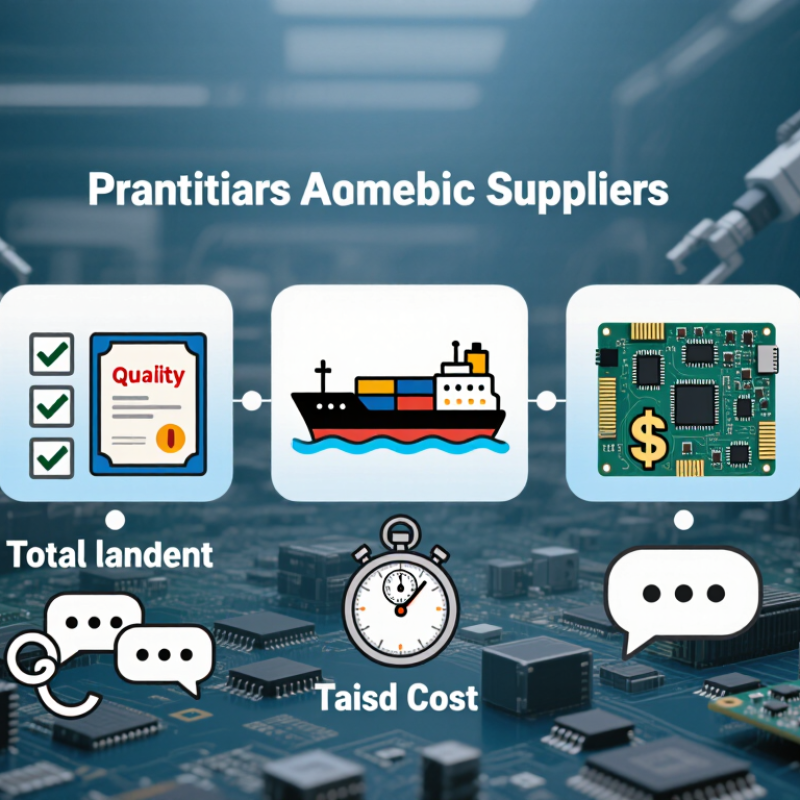
Choosing a PCB assembly USA supplier starts with a clear project brief, not a broad request for a quote. Record the board revision, dimensions, layer count, materials, finish, and required quantities. Attach current design files and a complete bill of materials, including approved component alternatives. Specify operating temperatures, expected service life, and any coating or cleanliness requirements. Small details matter. A connector’s orientation or an omitted test point can delay a build.
Set selection criteria before comparing suppliers. Rank factors such as assembly capability, inspection methods, production capacity, communication, and delivery expectations. Ask how the supplier handles component shortages, engineering questions, and changes after approval. Compare quotes against the same scope; a low price may exclude testing, programming, or packaging. Define acceptance criteria, such as inspection records and functional test results. For overseas teams, agree on update frequency, time-zone overlap, and shipping responsibilities. A small pilot run can reveal issues before larger production begins. No checklist catches everything; review the requirements with an engineer and revise them when the design changes.
Define requirements before requesting quotes. Lead times, capabilities, and compliance obligations vary by project and supplier; confirm them in writing rather than treating examples as universal requirements.
| Selection Dimension | Define Your Project Requirement | Information to Request | How to Evaluate the Supplier |
|---|---|---|---|
| 1. Board and assembly specifications | Document board dimensions, layer count, material, copper weight, surface finish, component package types, and any controlled-impedance or special-process needs. | Ask what design files and manufacturing data are needed for a complete quotation, such as Gerber or ODB++ files, a bill of materials, assembly drawings, and pick-and-place data. | Check that the supplier identifies missing or conflicting information and provides a design-for-manufacturability review before production. |
| 2. Order volume and production stages | State prototype, pilot, and expected recurring quantities separately. Include forecast assumptions, order frequency, and any planned design revisions. | Request separate pricing and quoted lead times for prototypes and production orders, along with minimum order quantities and repeat-order terms, if applicable. | Compare quotes at the same quantities and revision level. Confirm how changes in forecast, component availability, or design revision affect cost and schedule. |
| 3. Quality and acceptance criteria | Specify inspection and acceptance expectations, test coverage, documentation needs, and the required IPC workmanship class where applicable. | Ask about process controls, incoming-material checks, inspection methods, functional testing options, defect reporting, and corrective-action procedures. | Verify that the proposed inspection and test plan matches the product’s risk and intended use. Agree on acceptance criteria before placing the order. |
| 4. Certifications and regulatory needs | Identify relevant customer, industry, environmental, or legal requirements. For regulated or controlled projects, determine obligations with your compliance team. | Request current certificates and confirm their scope, site coverage, expiration dates, and any applicable material or product declarations. | Check that claimed certifications apply to the facility and processes handling your order. Requirements such as export controls or restricted substances depend on the project. |
| 5. Component sourcing and traceability | Specify whether parts will be customer-supplied or sourced by the assembler. Define approved-part rules, substitution approval, and traceability needs. | Ask how the supplier evaluates component sources, handles shortages and obsolete parts, records lot information, and obtains approval for alternatives. | Confirm that no substitutions are made without written authorization and that the agreed records can be provided with the shipment. |
| 6. Schedule, shipping, and import planning | Set required delivery dates, shipping destination, preferred shipping terms, packaging needs, and any customs or export documentation requirements. | Request a schedule that separates material procurement, fabrication, assembly, testing, and dispatch. Ask how delays and schedule changes are communicated. | Compare the full delivery plan, not just the assembly lead time. For cross-border shipments, clarify responsibility for freight, duties, taxes, and customs paperwork. |
| 7. Commercial terms and communication | Define quotation validity, payment expectations, warranty or rework terms, confidentiality needs, and the designated technical and purchasing contacts. | Request a written quote that states scope, exclusions, tooling or setup charges, payment terms, and the process for engineering changes and nonconforming items. | Assess whether responses are clear and timely, responsibilities are documented, and the supplier can provide a reliable escalation path throughout the order. |

A supplier’s equipment list is only a starting point. Match its process to your board’s real demands: layer count, smallest pitch, component height, and expected volume. If the design uses fine-pitch parts or BGAs, ask how the line verifies hidden solder joints; X-ray inspection may be appropriate. For mixed-technology boards, confirm the hand-soldering or selective-soldering process and how operators control consistency. Details matter. Request evidence from a comparable build, such as inspection records, first-article results, and yield data, rather than relying on a polished capability sheet.
Technology fit also includes engineering support. Ask whether the team reviews Gerber files, bills of materials, and assembly drawings before quoting. A practical design-for-manufacturing review should flag pad geometry, spacing, panelization, and parts with long lead times. Check that test options match product risk: in-circuit testing can identify assembly faults, while functional testing checks behavior under defined conditions. Ask how revisions are tracked and how nonconforming boards are contained. Ask for evidence. A fast SMT line may still be a poor fit if your product needs low-volume builds, frequent changes, or careful handling of unusual components. Compare prototype and production workflows, not just headline capacity. It is easy to overvalue machine counts; less visible process controls often determine whether a first build is usable.
When evaluating PCB assembly USA suppliers, request current quality-system certificates and verify their scope, site, and expiry date. A certificate is useful, but it does not prove that a specific production line follows controlled procedures. Ask how the supplier handles incoming inspection, process changes, nonconforming boards, and corrective actions. Ask for evidence.
The Deloitte–MAPI 2019 Smart Factory study found that 86% of surveyed manufacturers expected smart-factory initiatives to drive competitiveness within five years. That finding makes digital records worth examining, not accepting at face value.
For traceability, request a sample build record tied to one board serial number or panel. It should connect the approved bill of materials and revision to component lots, solder-paste lot, inspection results, and any rework. Check whether records are searchable and retained for an agreed period. A tidy dashboard is not enough. Compare it with a real traveler or production packet, with sensitive customer details removed.
Ask the supplier to explain what happens when a component lot is found suspect after shipment. I would also check a small sample manually; records can lag the actual line. Suppliers may describe full traceability, yet define it differently. Confirm exactly which components, process steps, and test results are captured.
Price alone misleads. For global buyers comparing U.S. PCB assembly suppliers, request a line-by-line quote covering boards, components, tooling, testing, packaging, and freight. Ask whether quoted lead times begin after order approval, material availability, or payment. Those starting points can differ. A four-week build may become a much longer wait if a component is scarce.
Compare landed cost, not just the assembly price. Include shipping, insurance, customs brokerage, duties, and any fees for expedited delivery. Request separate air and ocean estimates, plus shipment dimensions and weight. McKinsey Global Institute reported that companies can expect supply-chain disruptions lasting a month or longer about every 3.7 years. That makes schedule buffers worth pricing, not merely discussing.
International freight can shift sharply. UNCTAD’s Review of Maritime Transport 2021 reported that spot rates on the Shanghai–Europe route rose from about $1,000 per 40-foot container in June 2020 to $7,395 in July 2021. That is historical evidence, not a current quote. Still, it shows why buyers should ask suppliers about routing options, shipment consolidation, and how delays are communicated. Compare the promised delivery date with your own receiving, inspection, and production schedule. A low quote can still be a poor choice. Sometimes the awkward detail is the useful one: request assumptions in writing, then check whether they match your actual shipping lane.
For global buyers, a U.S. PCB assembler’s communication shows in small moments: a timely answer about an impedance note, a clear engineering-change acknowledgment, and a named escalation contact. Ask who owns questions after engineering review and how schedule changes reach your team. A quotation is only the start. Request a sample status update with the lot number, revision, open risks, and next decision date. It can reveal whether support is operational or mostly sales-facing.
Long-term reliability needs evidence, not reassuring language. Check whether the supplier uses IPC-A-610 workmanship criteria and can maintain traceability under IPC-1782. Ask for corrective-action examples, audit frequency, component-substitution approval steps, and inspection-record retention periods. McKinsey Global Institute’s 2020 report, Risk, Resilience, and Rebalancing in Global Value Chains, estimated that disruptions could erase about 42% of one year’s EBITDA over a decade. This estimate is broad, not PCB-specific. Still, recovery planning deserves scrutiny: who alerts you if a key laminate is delayed, and what documented alternatives are available?
Support should remain consistent after the first production run. Compare response ownership and engineering access across quoting, pilot builds, and repeat orders. Ask how field returns are investigated, and request anonymized closure records. A dashboard helps. People matter more. If a supplier cannot explain a missed update plainly, treat it as a warning—not proof of failure.
| Cookie | Duration | Description |
|---|---|---|
| cookielawinfo-checkbox-analytics | 11 months | This cookie is set by GDPR Cookie Consent plugin. The cookie is used to store the user consent for the cookies in the category "Analytics". |
| cookielawinfo-checkbox-functional | 11 months | The cookie is set by GDPR cookie consent to record the user consent for the cookies in the category "Functional". |
| cookielawinfo-checkbox-necessary | 11 months | This cookie is set by GDPR Cookie Consent plugin. The cookies is used to store the user consent for the cookies in the category "Necessary". |
| cookielawinfo-checkbox-others | 11 months | This cookie is set by GDPR Cookie Consent plugin. The cookie is used to store the user consent for the cookies in the category "Other. |
| cookielawinfo-checkbox-performance | 11 months | This cookie is set by GDPR Cookie Consent plugin. The cookie is used to store the user consent for the cookies in the category "Performance". |
| viewed_cookie_policy | 11 months | The cookie is set by the GDPR Cookie Consent plugin and is used to store whether or not user has consented to the use of cookies. It does not store any personal data. |