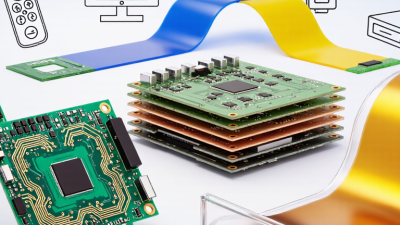
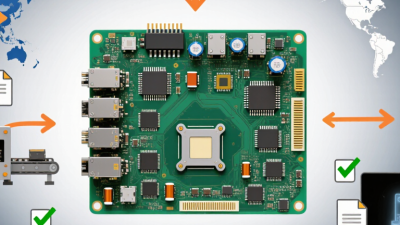
Sourcing multi circuit boards in 2026 means balancing electrical performance, production capacity, delivery risk, and total cost. A low unit price can look attractive until a small impedance mismatch, late material substitution, or missed shipment disrupts a product launch. The details matter. Buyers should define layer count, copper weight, finished thickness, controlled impedance, surface finish, annual volume, and qualification requirements before requesting quotes. Clear specifications make supplier comparisons more meaningful.
The market is large and changing. Prismark’s 2024 industry analysis estimated global printed circuit board production at approximately $73.6 billion, reflecting the scale and competition behind today’s supply base. IPC’s industry reporting also tracks changing demand and business conditions across electronics manufacturing, a useful reminder that capacity and lead times can shift. Figures vary by report scope and methodology. Treat forecasts as planning inputs, not guarantees.
Walt Custer, a longtime electronics-market analyst, has described PCB activity as a “leading indicator” of broader electronics demand. For sourcing teams, that perspective supports checking supplier capacity and material availability early, especially for complex multi circuit boards. Ask for recent quality results, process controls, traceability, and evidence of experience with similar designs. Then compare landed cost and realistic lead times, not just quoted prices. A useful sourcing plan is never perfect. It should make assumptions visible, test them, and leave room to revise them when production realities change.

Before sourcing a multi circuit board, define what the board must do and where it will operate. List its dimensions, layer count, finished thickness, copper weight, and required impedance. Record voltage, current, connector locations, and any thermal limits. Include the expected operating temperature, vibration exposure, and moisture conditions. These details help suppliers assess whether the design is practical and quote comparable options. A first specification is rarely perfect; mark assumptions clearly rather than presenting guesses as final requirements.
Provide current design files, such as fabrication data, schematics, and a bill of materials if assembly is included. State the prototype and production quantities, target delivery window, inspection needs, and electrical tests. Specify tolerances for critical features, including board outline, plated holes, and controlled-impedance traces. If a requirement is uncertain, ask the fabricator to identify the design choice that needs review. A common planning mistake is to focus on price before checking whether the board fits its enclosure or handles heat.
Tips: Share a marked-up drawing showing keep-out zones and connector positions. Ask for a design-for-manufacturing review before release. Confirm how changes will be documented, especially when a prototype reveals an overlooked constraint.
How to Source Multi Circuit Boards in 2026?
Identify Qualified PCB Suppliers and Manufacturing Capabilities
A qualified PCB supplier should be able to build your actual stack-up, not just show an impressive equipment list. Share the layer count, board dimensions, copper weight, material requirements, and expected volume. Ask whether its process supports your via types, minimum trace spacing, and controlled impedance targets. Request a design-for-manufacturing review before production. Specific feedback on clearances or panel layout is more useful than a generic promise.
Tips: Ask for recent examples of comparable boards, inspection records, and test methods. Check how the supplier handles first articles, electrical testing, and nonconforming boards. Ask for evidence. Small details matter.
Compare suppliers using the same drawing package and questions. Confirm stated tolerances with process data, and clarify which steps are performed in-house or subcontracted. A certificate alone does not prove that a supplier can reliably meet your requirements. Review sample inspection reports and ask how production changes are documented. One detail buyers sometimes overlook is communication: slow answers during quoting may signal trouble when a build needs urgent clarification. Still, a detailed audit cannot remove every risk; pilot quantities can reveal issues that paperwork misses. Keep the review practical, and record any assumptions that remain unresolved.
PCB supplier screening guide — capability ranges below are planning references, not guaranteed limits. Confirm each requirement against the supplier’s current process documentation, quote, and sample results.
| Evaluation dimension | Planning reference / capability to assess | Evidence to request | Qualification check |
|---|---|---|---|
| Layer count and construction | Standard rigid multilayer production commonly covers 4–16 layers; some facilities support higher layer counts. Confirm stack-up, finished thickness, and sequential lamination needs. | Proposed stack-up, lamination schedule, material list, and examples of comparable layer-count builds. | Check that the quoted construction matches the released fabrication data and impedance requirements. |
| Line, space, and feature size | A 4/4 mil (about 0.10/0.10 mm) line/space is a common advanced production screening target, but achievable limits depend on copper weight, layer, and process. | Capability table by copper weight and layer, plus inspection criteria for etched features. | Ask for a design-for-manufacturing review of the narrowest traces, spaces, and annular rings. |
| Drilling and via technology | Assess mechanical through-holes, blind/buried vias, and laser-drilled microvias separately. Aspect ratio and via geometry limits vary by board thickness and process. | Drill-size and aspect-ratio limits, microvia structure details, and cross-section samples or reports. | Confirm stacked or staggered microvia construction, via-fill requirements, and reliability testing where applicable. |
| Controlled impedance | Common controlled-impedance targets include 50 Ω single-ended and 90 Ω or 100 Ω differential; the required tolerance must be specified by the design. | Field-solver stack-up proposal, impedance coupon design, and test-report format. | Agree on target values, tolerance, test method, and whether results are reported per panel or per lot. |
| Base materials and copper | Specify laminate family, glass-transition temperature (Tg), dielectric properties, copper weight, and any high-frequency, halogen-free, or thermal requirements. | Material datasheets, lot traceability information, and confirmation of approved substitutions. | Ensure substitutions require written approval and that the selected material meets the application’s thermal and electrical needs. |
| Board size and thickness | Panel size, board outline, finished thickness, thickness tolerance, and aspect ratio are equipment- and construction-dependent; request limits for the exact design. | Fabrication capability sheet and a panelization proposal showing rails, tooling holes, and coupons. | Verify dimensional tolerances, edge treatment, and panel handling fit the assembly process. |
| Solder mask and surface finish | Common finishes include lead-free HASL, ENIG, immersion silver, and OSP. Selection depends on component pitch, storage, soldering process, and end-use requirements. | Finish process details, thickness controls where specified, shelf-life guidance, and applicable inspection records. | Match the finish to assembly needs; specify any restrictions such as lead-free compliance or wire-bond compatibility. |
| Inspection and electrical test | For production boards, assess automated optical inspection (AOI), electrical continuity/isolation testing, and additional checks such as X-ray or microsection when relevant. | Inspection plan, electrical test coverage, sample test reports, and nonconformance handling procedure. | Define acceptance criteria and required records before purchase; confirm test coverage against the supplied netlist. |
| Quality system and standards | IPC-6012 covers qualification and performance requirements for rigid printed boards; IPC-A-600 provides acceptability criteria. The applicable revision and class should be agreed. | Current quality-system certificates, process-control plan, audit summary, and corrective-action workflow. | Verify certificate scope and validity directly, and state the required IPC class in the purchase documentation. |
| Prototype and production lead time | Lead time varies with layer count, materials, finish, quantity, and process complexity. Compare quoted calendar or business days from data approval, not a generic advertised estimate. | Separate prototype and repeat-production schedules, capacity assumptions, and expedited-order conditions. | Confirm milestone dates, shipment terms, and the process for communicating schedule changes. |
| Traceability and change control | A qualified process should maintain lot identification and controlled revisions for fabrication data, materials, and approved process changes. | Example lot traveler or certificate of conformance, revision-control procedure, and change-notification policy. | Require approval before material, site, process, or drawing changes that could affect form, fit, or function. |
| Commercial and supply continuity | Evaluate quoted price by panel utilization, tooling or setup charges, minimum order quantity, yield assumptions, shipping, and repeat-order pricing. | Itemized quotation, payment and delivery terms, capacity plan, and documented escalation contacts. | Compare total landed cost and confirm ownership and secure handling of design files and tooling data. |
Suggested sourcing workflow: Share controlled fabrication data → request a documented DFM review and stack-up → compare capability evidence and quotations → qualify sample boards against agreed acceptance criteria → approve production with revision and change controls.
When sourcing several circuit-board designs, compare quotes against one controlled specification. List layer count, board thickness, copper weight, surface finish, tolerances, and expected order volume. Ask suppliers to separate tooling, testing, setup, and unit costs. Otherwise, a low quote may simply omit a required process. Lead-time promises need the same scrutiny. Request dates for engineering review, fabrication, inspection, and shipment, not one optimistic delivery estimate. Fastest is not always safest. Leave room for a revision; even a clear drawing can contain a mismatch.
Quality systems should be checked with evidence, not a polished capability sheet. Ask for the inspection plan, electrical-test coverage, material traceability, and sample records for similar board types. Clarify how defects are reported and corrected, and who approves a process change. For compliance, identify the destination markets and the materials or declarations your product requires. Request current supporting documents and confirm they match the quoted stackup and finish. A certificate alone is not proof that every supplied board meets your needs. One detail buyers can overlook: quote comparisons often assume different panel sizes or test coverage. Put those assumptions in writing, then review them before placing an order.
For multi-circuit boards, qualify the factory, not just the quotation. Request samples built on the proposed line, with the same materials, layer count, copper weight, and finish as production. Inspect drill registration, solder mask, edge quality, and board thickness under magnification. Ask for a microsection report and impedance results where controlled-impedance traces matter. A sample that passes visual inspection can still hide weak plating.
Test it.
Use acceptance criteria tied to the board’s class and application, referencing IPC-6012 and IPC-A-600 where appropriate. The World Semiconductor Trade Statistics November 2024 forecast projected global semiconductor sales of about $697 billion in 2025, showing the scale and pace of electronics demand. That is context, not proof that any supplier can deliver consistent boards.
Review the supplier’s test records, calibration dates, nonconformance logs, and lot traceability. During an audit, follow one order from incoming laminate to final inspection; check whether corrective actions are documented and actually closed.
A polished audit file is not enough.
Compare sample results with the first production lot, and repeat checks after material or process changes. This takes time, and it can feel excessive for a small order. It is still cheaper than discovering a plating defect after assembly.
Sourcing multi-circuit boards in 2026 requires more than comparing unit prices. Production planning should begin with a controlled drawing set, approved materials, and a realistic demand forecast. Ask the supplier to identify capacity limits, component risks, and process changes before the first build. Small details matter. A missing revision note can send an otherwise sound batch down the wrong path.
Inspection should match the board’s risks, not just a generic checklist. Define acceptance criteria for dimensions, solder joints, electrical tests, and traceability before production starts. Review first-article results and request clear records for any defects or rework. A clean report helps, but it does not replace a sensible sample review. Inspection can also slow delivery if requirements are agreed too late.
For delivery, confirm packaging, shipping milestones, and who will report delays. Track lot numbers so incoming boards can be linked to inspection records and later performance. After installation, monitor failures, returns, and changes in operating conditions. This feedback can guide the next order. Forecasts will still be wrong sometimes; ours would be too. The useful question is whether production data gives both sides enough warning to adjust quantities, schedules, or inspection focus before a small issue repeats.
Example Planning Timeline: Production, Inspection, Delivery, and Ongoing Performance
These figures are illustrative planning estimates in business days, not guaranteed lead times. Actual schedules depend on board complexity, materials, order quantity, inspection scope, and shipping route. Confirm milestones and ongoing quality metrics with your supplier.
| Cookie | Duration | Description |
|---|---|---|
| cookielawinfo-checkbox-analytics | 11 months | This cookie is set by GDPR Cookie Consent plugin. The cookie is used to store the user consent for the cookies in the category "Analytics". |
| cookielawinfo-checkbox-functional | 11 months | The cookie is set by GDPR cookie consent to record the user consent for the cookies in the category "Functional". |
| cookielawinfo-checkbox-necessary | 11 months | This cookie is set by GDPR Cookie Consent plugin. The cookies is used to store the user consent for the cookies in the category "Necessary". |
| cookielawinfo-checkbox-others | 11 months | This cookie is set by GDPR Cookie Consent plugin. The cookie is used to store the user consent for the cookies in the category "Other. |
| cookielawinfo-checkbox-performance | 11 months | This cookie is set by GDPR Cookie Consent plugin. The cookie is used to store the user consent for the cookies in the category "Performance". |
| viewed_cookie_policy | 11 months | The cookie is set by the GDPR Cookie Consent plugin and is used to store whether or not user has consented to the use of cookies. It does not store any personal data. |