How to Order PCBs Online in 2026?

How to Order PCBs Online in 2026?

Ordering a printed circuit board online in 2026 can be quick, but a good result depends on details entered before checkout. The market is substantial: Prismark’s 2024 global PCB industry analysis estimated that industry revenue grew 5.8% to approximately $73.6 billion. That figure describes the wider market, not a guarantee of lower prices or faster delivery. Still, it shows why online manufacturers compete on capabilities, turnaround, and service.

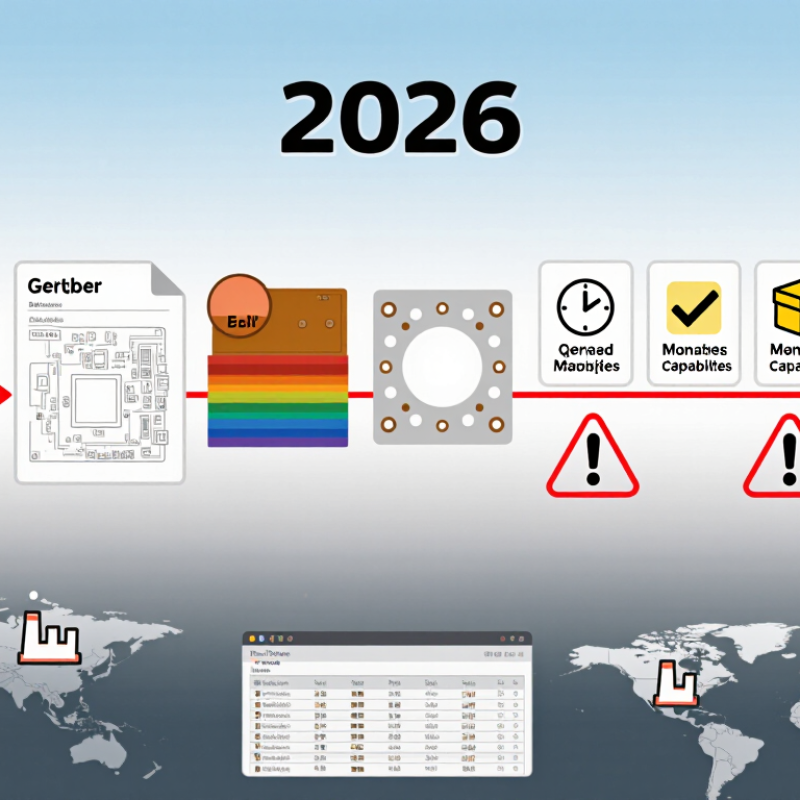
A dependable pcb order starts with production-ready files. Prepare Gerber or ODB++ data, a drill file, board dimensions, layer count, copper weight, and finish requirements. Add a bill of materials and assembly drawings when requesting assembly. Then compare quotes using the same specifications. Check tolerances, electrical testing, panelization, shipping, and stated lead times—not just the unit price. Small details matter. A missing stackup or unclear impedance target can trigger questions, delays, or a board that does not fit its intended use. I would not treat an instant quote as proof that every design rule has been checked. Review the manufacturer’s capabilities, request clarification on ambiguous requirements, and inspect the order summary before payment. This guide explains how to prepare files, choose a supplier, evaluate quotes, and track production. It also covers a practical truth: the cheapest option may cost more when revisions, missed deadlines, or unsuitable boards enter the picture.
How to Order PCBs Online in 2026?

Define Your PCB Requirements and Design Files

Define Your PCB Requirements and Design Files

Before requesting a quote, write down the board’s purpose and operating conditions. Specify its length, width, layer count, finished thickness, copper weight, and surface finish. Include the order quantity and target delivery date. These details help a fabricator assess the job accurately. For assembly, prepare a bill of materials and a component-placement file as well. A missing connector part number can delay a build. It is an easy detail to overlook.

Tips: Export Gerber files and a drill file from your design software. Check that units, board outline, and layer names are consistent. Open the exported files in a viewer before uploading. It takes a few minutes.

Compare the files against your latest schematic and layout, not an old folder copy. Look closely at the board edges, small holes, and copper clearances. If a dimension or material choice is uncertain, flag it rather than guessing. Ask the fabricator to confirm any unusual requirements before production. One caveat: file previews can reveal obvious mistakes, but they do not replace an electrical design review. Keep a dated copy of the approved files so later revisions are easy to track.

Choose an Online PCB Manufacturer

Choosing an online PCB manufacturer in 2026 takes more than comparing the lowest quote.

Prismark’s 2024 industry review estimated global PCB production at about $69.5 billion in 2023, then forecast roughly 5% growth for 2024. That changing market makes capacity, material availability, and delivery estimates worth checking carefully.

Ask whether the quote specifies board thickness, copper weight, surface finish, layer count, and accepted tolerances. Small omissions matter. A missing finish detail can change both price and assembly compatibility.

Look for a manufacturer that provides an accessible design-for-manufacturing review before production. Confirm how it reports electrical testing, panelization, impedance control, and inspection criteria; IPC-6012 and IPC-A-600 are useful references for rigid-board performance and acceptability.

Request a sample inspection report or test record, and check whether order updates identify actual production stages. Compare the stated lead time with shipping time, not just the factory estimate.

No website removes every risk. I would still review the final Gerber files and order notes twice; online forms can make a flawed assumption look official. A clear quote, traceable process, and direct technical answers are better signals than a polished storefront.

Configure Board Specifications and Request a Quote

When ordering a PCB online in 2026, prepare the board details before requesting a quote.

Enter the finished dimensions, layer count, board thickness, copper weight, and required quantity. Specify solder-mask and silkscreen colors, surface finish, and any unusual edge or cutout requirements. Small choices matter. A 1.6 mm board may suit a simple controller, while a thinner design may fit a compact enclosure. Check that your trace widths, clearances, and drill sizes match the fabricator’s stated capabilities.

Upload fabrication files, such as Gerber data and a drill file, then review the automated preview carefully. Confirm the outline, plated holes, and layer alignment; a misplaced dimension can change the price or delay production. Request a quote with the same options you intend to order, including panelization if needed. Compare lead time, shipping, testing, and any setup charges, not just the unit price.

If a design rule is unclear, ask the supplier to confirm it in writing. I have seen a tiny assumption about finished thickness create avoidable back-and-forth. It is easy to miss. Recheck the order summary before payment, especially when a last-minute file revision has been uploaded.

Review Production Details and Place Your Order

Before placing a PCB order, compare the production preview with your source files. Check board dimensions, layer count, finished thickness, copper weight, solder-mask color, and surface finish. Confirm that drill files match the fabrication drawing, and review controlled-impedance values and tolerances where relevant. A small mismatch can affect fit or signal performance. Small details matter.

Also verify quantity, panelization, shipping method, and the quoted production lead time. WSTS’s Fall 2024 Semiconductor Market Forecast projected global semiconductor sales of $626 billion for 2024, up 19% year over year. That figure signals growth in a related electronics market, not PCB demand itself, so it should inform context rather than dictate order volume. Make sure the quotation reflects the exact revision and quantity you intend to buy. Then inspect.

A clear production preview helps, but it cannot replace checking the underlying Gerber, drill, and fabrication files. I would not treat a clean-looking preview as proof that every specification is correct; ambiguous notes can still cause avoidable delays. If a stack-up, tolerance, or finish description seems unclear, resolve it before checkout. Keep the approved files and order confirmation together, so any later change can be compared against the version sent for production.

How to Order PCBs Online in 2026? - Review Production Details and Place Your Order

Order Stage Production Detail Example Selection What to Review Before Ordering
Prepare design files Gerber files define copper, solder mask, silkscreen, and board outline; drill files specify hole locations and sizes. Gerber X2 or clearly named Gerber layers, plus Excellon drill files Check that every required layer is included, the board outline is closed, and drill files use the intended units and origin.
Choose layer count The layer count should match the stack-up used in the PCB layout. 2 layers for simpler circuits; 4 or more layers when the design needs additional routing or dedicated reference planes Confirm the selected layer count matches the design files. Do not add layers unless the layout and stack-up support them.
Set board dimensions Board size is based on the dimensions of the finished outline. For example, 50 × 30 mm Verify the outline in the fabrication files and specify whether dimensions refer to one board or a panel.
Select base material Material choice affects thermal behavior, electrical performance, and cost. FR-4 is commonly used for general-purpose rigid PCBs; specify a required glass-transition temperature (Tg) when the design calls for one. Check operating temperature and any project requirements. Material properties and available options vary by fabricator.
Specify board thickness Finished thickness includes the PCB layers and insulating materials. 1.6 mm is a common nominal thickness for many rigid FR-4 boards. Confirm thickness against connector fit, enclosure clearance, and mechanical drawings.
Choose copper weight Copper thickness influences current-carrying capacity and etching requirements. 1 oz/ft² is a common starting point for standard designs. Check current, temperature-rise, and trace-width requirements. Do not assume a copper weight alone guarantees a particular current capacity.
Review design rules Minimum trace width, spacing, hole size, and annular ring depend on the design and manufacturing process. Use the limits published for the selected process, or request a design-for-manufacturing review. Compare the design-rule check results with the fabricator’s current capabilities before paying for production.
Select surface finish The finish protects exposed copper and affects solderability and contact surfaces. Choose a finish appropriate to component type, assembly process, and storage needs. Review compatibility with fine-pitch components, edge contacts, and any project or compliance requirements.
Choose solder mask and legend Solder mask covers most copper areas; the legend carries component labels and markings. Green solder mask is a common option; legend color and placement are selected separately. Check mask openings, text size, polarity marks, and whether silkscreen overlaps exposed pads.
Set quantity and delivery Order quantity, fabrication schedule, and shipping method affect total cost and arrival date. Enter the required number of finished boards and compare available production and shipping options. Check whether quoted lead time is for fabrication or includes transit. Confirm the delivery address and import requirements.
Review the quote Pricing may depend on board size, layer count, material, finish, quantity, and selected services. Review the itemized configuration before checkout. Check currency, taxes, shipping, panelization, inspection options, and any setup or tooling charges.
Approve and track the order Production may begin after file checks and order confirmation. Save the order confirmation and retain the exact files submitted. Respond promptly to file questions and inspect delivered boards for dimensions, finish, and visible defects before assembly.

Note: Example specifications are general planning references, not guaranteed manufacturing limits. Confirm capabilities, tolerances, pricing, and delivery estimates with the selected fabricator before placing an order.

Track Manufacturing, Delivery, and Quality Checks

How to Order PCBs Online in 2026?

Track Manufacturing, Delivery, and Quality Checks

Track each order from file review to dispatch, not just from payment to delivery. Check whether the supplier has accepted your fabrication files and confirmed the layer count, material, and finish. During production, look for dated status updates, such as imaging, drilling, plating, and final inspection. A status marked “in progress” is vague. Ask which stage is active and whether anything needs your approval. Small checks matter.

Delivery tracking starts when the parcel receives a carrier scan, not when a label is printed. Compare the estimated arrival date with your assembly schedule, and leave room for customs or weather delays. When the boards arrive, inspect the packaging for moisture or impact damage. Then check the board dimensions, surface finish, and hole alignment against your order notes. A polished tracking page cannot prove that every board is usable, so inspect a sample before assembly. This step takes time, and sometimes the first sample reveals a detail you missed.

Tips: Save the order confirmation, production updates, and inspection photos together. Record defects with clear images and measurements before contacting support. If a deadline is tight, ask for a realistic shipping estimate; faster shipping does not shorten fabrication. Delays happen.

How to Order PCBs Online in 2026?

Track typical planning time for each step, from design review to incoming quality checks.

These illustrative planning ranges are in business days, not guarantees. Actual timelines vary with board complexity, specifications, production capacity, shipping method, and inspection requirements. Track order status at each stage and check the delivered boards against your approved files and specifications.