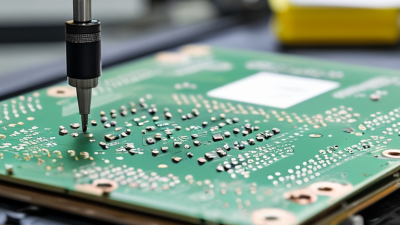
Choosing a circuit board manufacturer in China is not simply a search for the lowest quotation. It is a decision about process control, engineering support, and reliable delivery. A sample may look clean under bright factory lights, yet still hide uneven plating, weak solder-mask registration, or inconsistent copper thickness. The details matter.
Signal-integrity educator Eric Bogatin offers a useful reminder: “The interconnect is part of the circuit.” That principle applies beyond design. A supplier’s material choices, impedance controls, and inspection methods can affect how a finished board performs. Buyers should ask how the manufacturer verifies these steps, not rely on a polished capability sheet alone. Ask for relevant certifications, test reports, and examples of comparable work. Then check whether the answers are specific.
This guide examines leading Chinese manufacturers through practical criteria: product range, production capacity, quality systems, technical communication, and export experience. Some companies excel at prototypes; others are better suited to high-volume orders or complex multilayer boards. The comparison cannot capture every factory’s day-to-day performance. That deserves scrutiny. A strong name is only a starting point, and a low price can conceal trade-offs. Use the shortlist to frame better questions, request current evidence, and judge each supplier against your own board design and delivery needs.

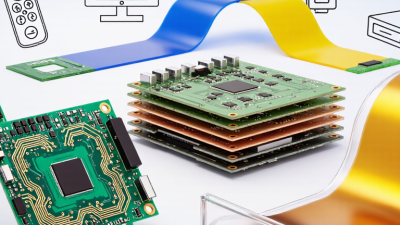
Chinese circuit board manufacturers produce far more than basic green boards. Their output includes single- and multilayer rigid PCBs, high-density interconnect boards, flexible circuits, rigid-flex assemblies, and metal-core boards for heat control. Some facilities also make advanced IC substrates, though capability varies widely. Details matter.
Prismark’s 2024 industry update estimated global PCB production value at roughly US$73 billion in 2023. That scale reflects demand across computing, communications, vehicles, and industrial equipment; it does not guarantee equal expertise at every factory. Manufacturers may handle circuit layout review, material selection, layer stacking, lamination, drilling, copper plating, solder-mask application, and electrical testing. A four-layer control board and a fine-pitch HDI board need different process controls. Ask for evidence of relevant production experience, inspection methods, and test coverage—not just a broad product list. Even good suppliers can miss a design risk.
Tips: Share your board files, layer count, copper weight, material requirements, and expected order volume when requesting a quote. Ask how the factory verifies holes, trace spacing, and finished-board continuity. For flex circuits, discuss bend radius and expected flex cycles early. A low quote may exclude testing or special materials. Check the details.
China’s PCB industry is a network of specialized producers, not a single category of factory. Prismark’s 2024 industry analysis estimates that China accounted for about 54% of global PCB production value in 2023, in a market worth roughly US$73.6 billion. Scale matters. Large plants often serve high-volume electronics orders, while smaller specialists focus on flexible circuits, high-density interconnect boards, or rapid prototypes. The production mix varies by region: coastal clusters benefit from nearby component suppliers, skilled labor, and export logistics; inland sites may compete through lower operating costs and expanding industrial parks.
The structure also follows the board’s complexity. Standard multilayer boards need reliable drilling, plating, and lamination at scale. HDI and advanced substrate production demand tighter process control, cleaner environments, and heavier equipment investment. This creates a broad supplier base, but capacity alone is a poor measure of capability. Buyers should examine layer count, line-width tolerances, yield data, and quality certifications relevant to their application. Public market reports rarely separate every technology segment cleanly, so headline market shares can hide real differences. A factory’s advertised capability may not reflect stable production across every material or design. That gap deserves careful checking.
Which Capabilities Distinguish Leading Chinese PCB Manufacturers?
Leading PCB manufacturers stand out through engineering support, not just low quotes. Their teams review Gerber files, stack-ups, and controlled-impedance requirements before production. They can flag narrow spacing, unsuitable drill sizes, or copper weights that may reduce yield. That feedback is most useful when it includes clear alternatives and measured trade-offs. Details matter.
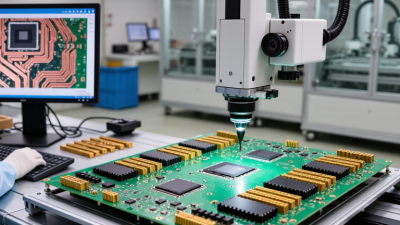
Reliable process control is another key capability. Ask how the factory monitors trace width, plating thickness, and layer registration across production lots. Automated optical inspection can catch visible defects, while electrical testing checks continuity and isolation. For complex boards, microsection reports offer evidence about plated vias and copper layers. A capable supplier should also explain its inspection limits and provide traceable records. Not every board needs the same test plan.
Tips: Request a sample build, a documented stack-up, and recent inspection data for a similar design. Check whether the quoted lead time includes engineering review and testing. Then compare the supplier’s answers with the actual board requirements. A polished presentation is not proof of consistent output; I would verify the details before committing to volume.
When comparing circuit board manufacturers in China, look beyond advertised layer counts. Ask which materials they process and what minimum trace width and spacing they can hold consistently. For demanding designs, discuss controlled impedance, via structures, copper thickness, and inspection methods. Request sample inspection reports or test data tied to similar board designs. That matters.
Production scale is not just factory size. Check whether the manufacturer can move from prototypes to repeat orders without changing process controls. Ask about monthly capacity, typical lead times, equipment availability, and how quality issues are tracked. A large line may be busy; a smaller one may offer closer engineering support. Neither is automatically better. A capability sheet is only a starting point, and I would not treat it as proof of stable output.
Tips: Share your stack-up, drawings, and expected order pattern before comparing quotes. Ask what could delay your design, too. The answer may reveal more than a low unit price.
When choosing a circuit board manufacturer in China, match its process to your board’s actual requirements. Share the stack-up, copper weight, controlled-impedance targets, and expected order volume. Ask how engineers review files before production, and whether they flag issues such as tight spacing or small annular rings. A polished sales response is useful, but documented process controls matter more. Small details matter.
Tips: Request sample inspection records and electrical-test results for comparable boards. Ask what each report covers; test methods can differ. Confirm how the factory tracks material batches and handles design changes. Check whether quoted lead times include fabrication, testing, and packing, not just production.
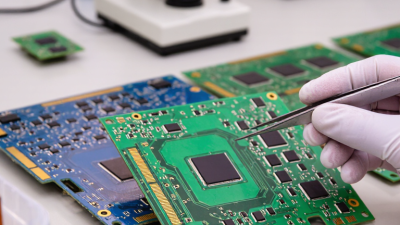
Reliability also depends on communication after the first quote. Send a few technical questions and note whether answers are specific, consistent, and supported by evidence. If possible, review a sample or run a small pilot order before committing to larger volumes. Inspect solder-mask alignment, drilled holes, board edges, and labeling under good light. No checklist catches everything, and a rushed review can miss defects. Keep written records of agreed tolerances, acceptance criteria, and revision numbers so both sides can resolve discrepancies clearly.
| Selection Dimension | What to Check | Evidence to Request | Why It Matters |
|---|---|---|---|
| Manufacturing Capability | Confirm the factory can produce your board type, layer count, dimensions, copper weight, and required tolerances. | Capability matrix, design rules, and a review of the actual Gerber, drill, and stack-up files. | Published maximum capabilities do not guarantee that every combination is available for every order. |
| Board Technology | Check experience with the relevant construction, such as rigid, flex, rigid-flex, HDI, heavy copper, or high-frequency boards. | Process description, representative anonymized examples, and confirmation of which steps are performed in-house. | Specialized constructions require appropriate process controls and may involve different materials or production partners. |
| Quality Management | Check whether the quality system fits the product and end market. ISO 9001 is a general quality-management standard; IATF 16949 is relevant to automotive supply chains, and ISO 13485 is relevant to medical-device quality management. | Current certificates, issuing-body details, scope, site address, and validity dates. Verify certificates with the issuer where possible. | A certificate applies to a defined scope and site; it does not by itself establish that a particular board will meet your requirements. |
| Product and Market Compliance | Identify applicable requirements for the finished product and destination market, including material, safety, and environmental requirements. | Relevant declarations, test reports, material information, and applicable UL recognition or listing details when required by the product design. | Requirements vary by product and market. Confirm that documentation covers the specific materials and construction being quoted. |
| Inspection and Testing | Ask how the manufacturer checks electrical continuity and isolation, drilling, plating, solder mask, dimensions, and visual quality. | Inspection plan, test coverage, sample inspection records, and the proposed acceptance criteria for your order. | Clear inspection criteria help prevent disagreements about defects and acceptance after delivery. |
| Design Review and Engineering Support | Check whether engineering staff review manufacturability, stack-up, impedance requirements, and fabrication notes before production. | Example design-for-manufacturing feedback and a documented process for approving changes. | Early review can identify missing or conflicting specifications before they affect production. |
| Materials and Traceability | Specify laminate type, copper weight, surface finish, and any required material restrictions or approved sources. | Material specifications, certificates or declarations where applicable, and lot or batch traceability records. | Traceability supports investigations and helps confirm that production used the specified materials. |
| Lead Time and Capacity | Request separate quoted schedules for prototypes and production orders, including the start point, working-day basis, and shipping time. | Written lead-time assumptions, capacity confirmation, and a schedule for tooling, fabrication, inspection, and dispatch. | Lead times depend on board complexity, materials, order quantity, and current factory capacity; avoid relying on an unqualified estimate. |
| Quotation Transparency | Compare the same revision, quantity, panelization, finish, testing, packaging, shipping terms, and payment terms across quotations. | Itemized quotation with stated assumptions, exclusions, tooling charges, and costs for engineering changes or expedited work. | A low headline price may not include the same specifications or services as another quotation. |
| Communication and Change Control | Check who handles technical questions, how production changes are approved, and how order status and nonconformities are communicated. | Named points of contact, written revision-approval procedure, and examples of status or corrective-action reporting. | Controlled communication reduces the risk of building from outdated files or unapproved instructions. |
| Sample and Pilot Evaluation | Before a larger order, consider a prototype or pilot lot using the intended production specifications. | First-article or inspection report, sample boards, and documented results against agreed requirements. | A pilot helps evaluate workmanship and process consistency before committing to higher quantities. |
| Logistics and Order Terms | Confirm shipping method, Incoterms® rule and named place, export documentation, packaging, and responsibility for duties and taxes. | Written shipping terms, packing details, dispatch documents, and an agreed process for handling transport damage. | Clear logistics terms help establish delivery responsibilities and the total landed cost. |
| Cookie | Duration | Description |
|---|---|---|
| cookielawinfo-checkbox-analytics | 11 months | This cookie is set by GDPR Cookie Consent plugin. The cookie is used to store the user consent for the cookies in the category "Analytics". |
| cookielawinfo-checkbox-functional | 11 months | The cookie is set by GDPR cookie consent to record the user consent for the cookies in the category "Functional". |
| cookielawinfo-checkbox-necessary | 11 months | This cookie is set by GDPR Cookie Consent plugin. The cookies is used to store the user consent for the cookies in the category "Necessary". |
| cookielawinfo-checkbox-others | 11 months | This cookie is set by GDPR Cookie Consent plugin. The cookie is used to store the user consent for the cookies in the category "Other. |
| cookielawinfo-checkbox-performance | 11 months | This cookie is set by GDPR Cookie Consent plugin. The cookie is used to store the user consent for the cookies in the category "Performance". |
| viewed_cookie_policy | 11 months | The cookie is set by the GDPR Cookie Consent plugin and is used to store whether or not user has consented to the use of cookies. It does not store any personal data. |